








Soundproofing Elevator Shafts – Solutions for Quiet Elevators
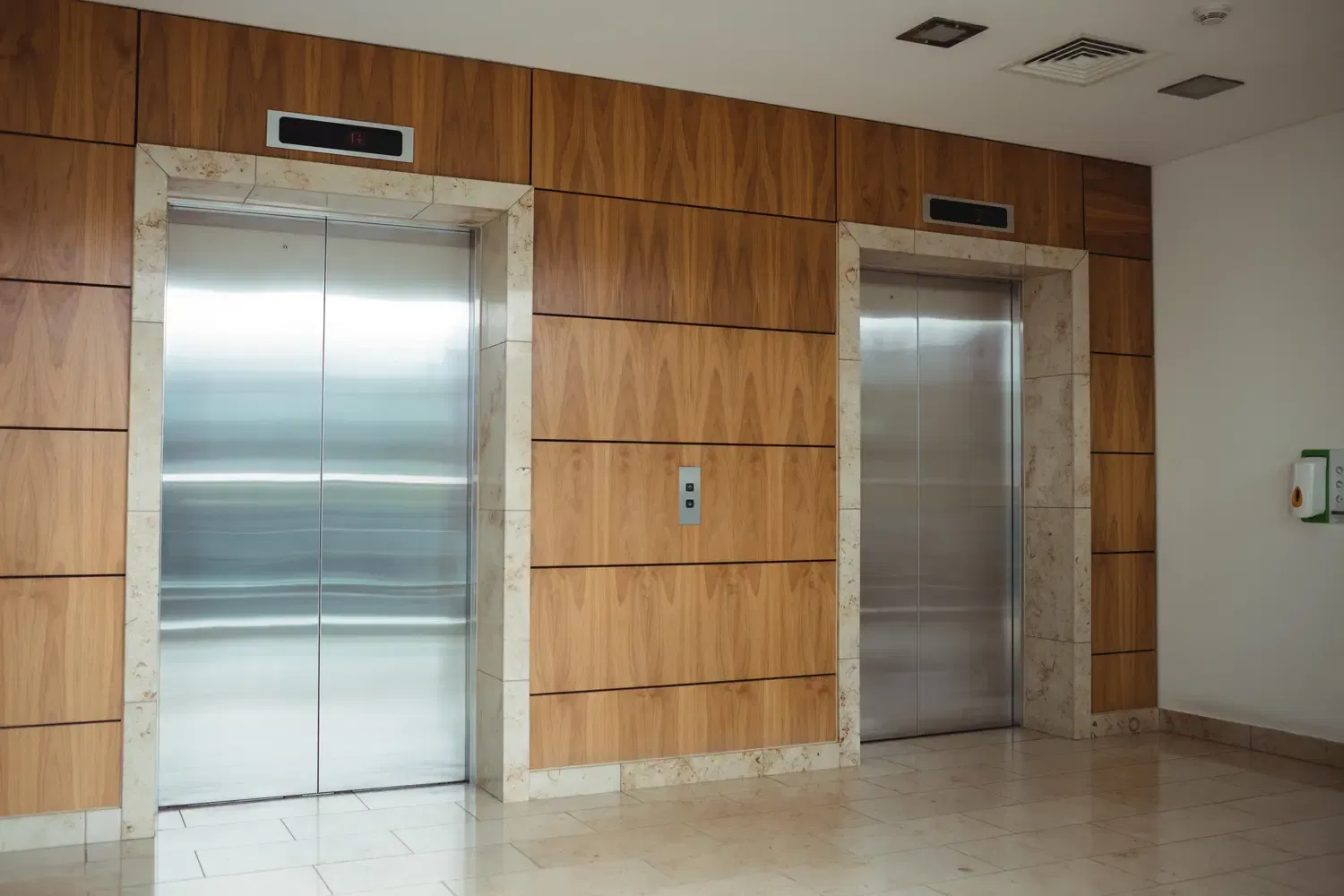
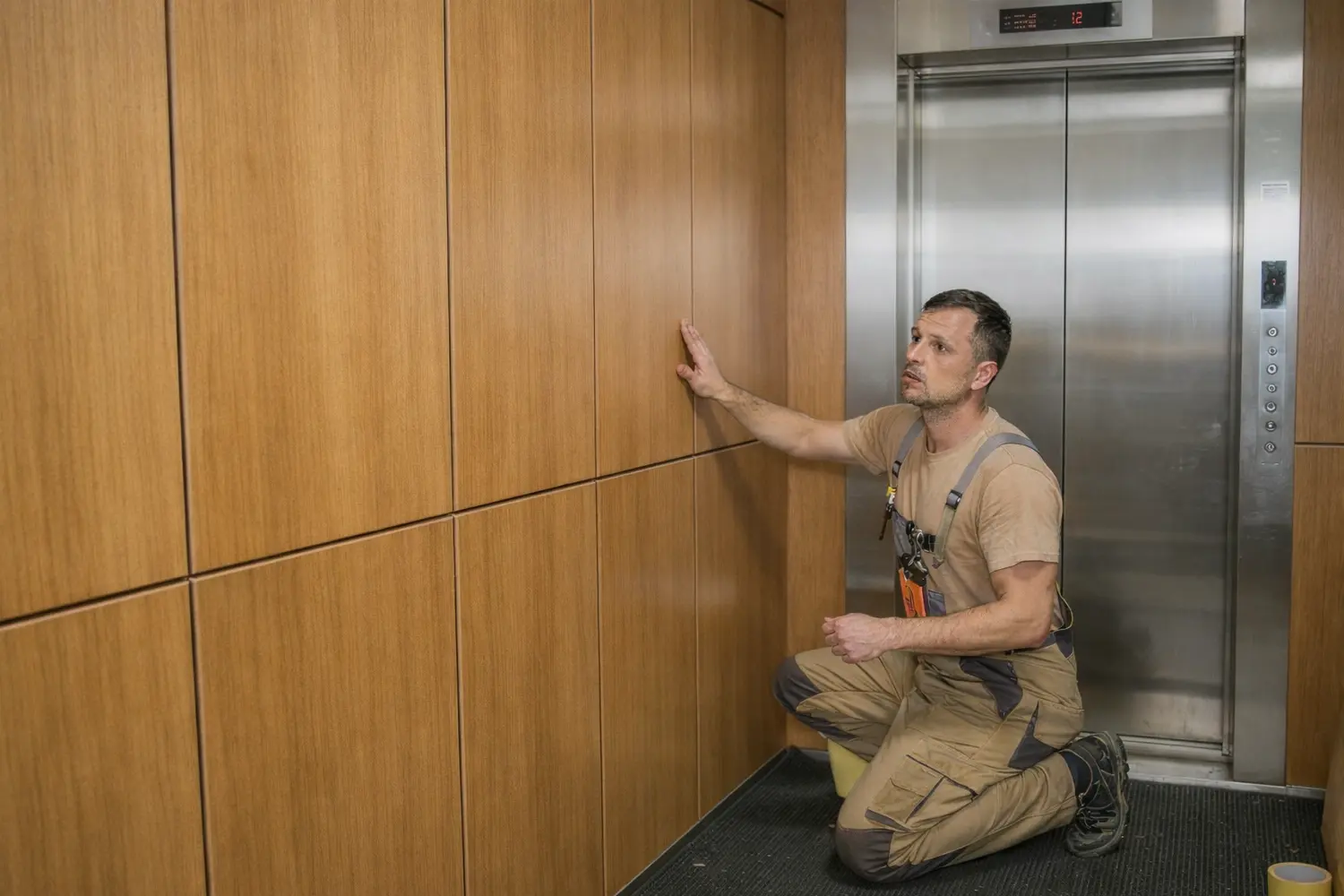
Disturbing noise from elevators is a common problem in apartment buildings, office buildings, and hotels. Elevator shafts often act as acoustic amplifiers where vibrations and noise from the motor, car, control system, and elevator rails are amplified and transmitted to walls, floors, and adjacent rooms. To achieve a quieter indoor environment, therefore, meticulous soundproofing is required—not only for the elevator shaft walls, but also for its interior space and technical installations.
Why Elevators Make Noise
Noise from elevators can be divided into airborne noise and structure-borne noise. Airborne noise travels through the air and enters apartments or premises through thin walls, ceilings, and unsealed penetrations. Structure-borne noise, on the other hand, occurs when vibrations from the elevator’s drive system, rails, or wheels travel through concrete, steel, and wood—meaning the noise is not only heard but also felt. This becomes particularly problematic in elevator shafts where the space between the shaft walls and interior walls is left empty. These spaces then act as resonance chambers that further amplify the noise. Without sound-absorbing materials, the shaft acts as a sound amplifier, meaning that even small noises from the elevator’s movement or brakes can be perceived as highly disruptive.
Insulate walls and ceilings adjacent to the elevator shaft
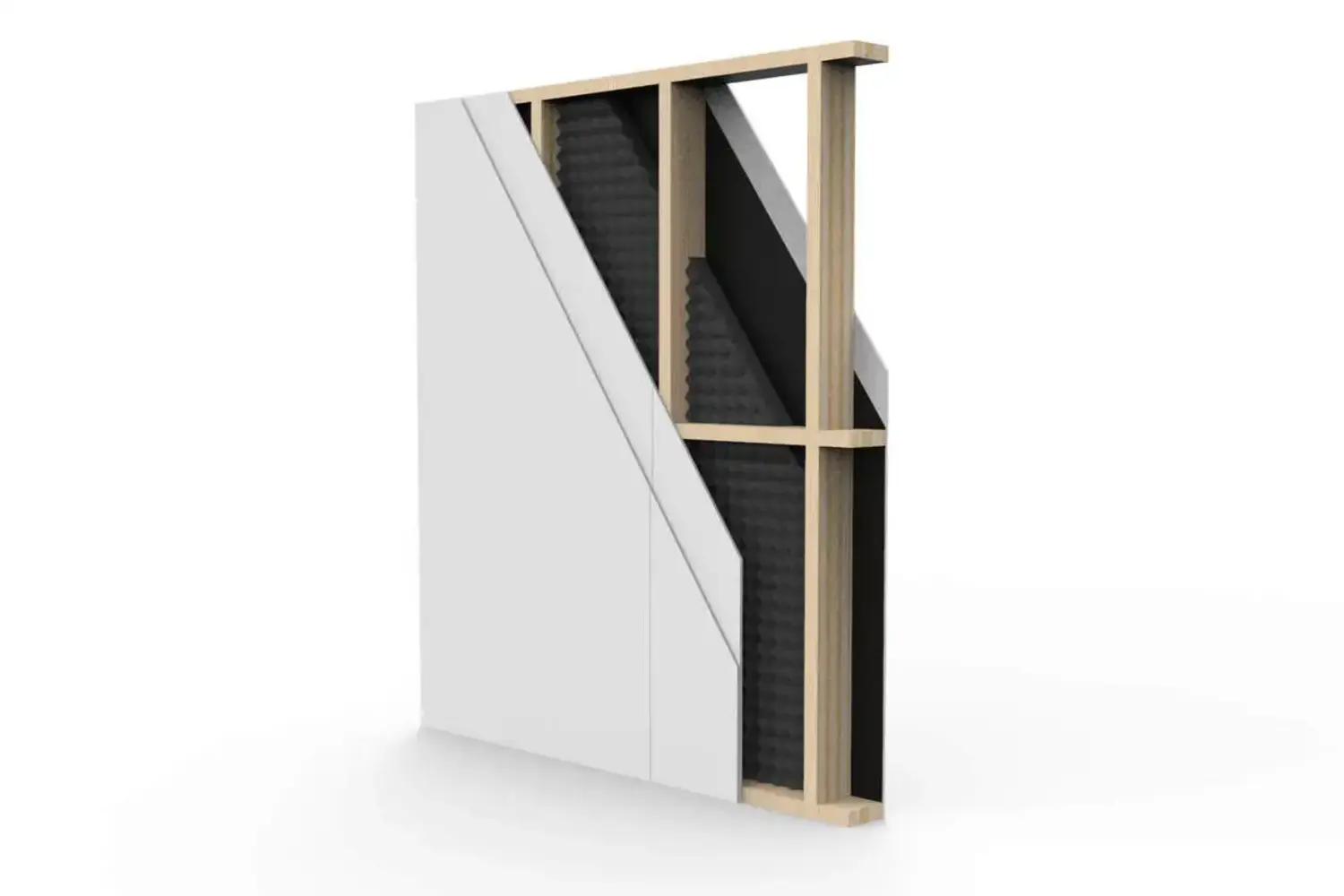
To stop airborne sound, walls and ceilings adjacent to the elevator shaft should be soundproofed using a decoupled construction. A stud frame is built in front of the existing wall using wood or steel studs that do not come into contact with the shaft. All stud surfaces are carefully covered with SilentDirect Seal to prevent sound transmission. Inside the frame, SilentDirect Egg is installed to capture sound waves before they have a chance to bounce further. One or more layers of SilentDirect MLV are attached to the front of the stud frame to block airborne sound. Finish with double layers of drywall, or even better, a combination of OSB and drywall. The ceiling is insulated in the same way. If the elevator machine room is located directly above, both the ceiling surface and penetrations should be soundproofed. SilentDirect Neo or SilentDirect Polaric then acts as a vibration-damping base, combined with MLV to reduce high-frequency sound.
Dampen structure-borne noise at the source
Structure-borne noise is often the most disruptive and the hardest to control. To reduce it, vibrations from the elevator’s motor, control system, and mechanics must be isolated directly at the source. The equipment can be mounted on SilentDirect Dampio, which reduces contact surfaces with the building’s structure. At the same time, it is crucial that the entire elevator shaft—including rail systems and machine rooms—is not left completely empty inside. A shaft without sound absorption acts as a sound box. Therefore, you should always combine vibration damping with sound-absorbing materials on the walls inside the shaft. SilentDirect Egg or SilentDirect Neo absorbs both high- and low-frequency sound waves and breaks down reverberation and resonance before the sound spreads further into surrounding spaces.
Improve the acoustic environment in adjacent rooms
In spaces where elevator noise is already noticeable, additional sound absorption can contribute to a more pleasant environment. SilentDirect PES Ceiling is mounted on the ceiling to reduce reverberation, while SilentDirect PES Wall is installed on walls to break up sound reflections. This reduces perceived noise in stairwells, lobbies, and hallways—especially when complete soundproofing of the elevator shaft is not possible.
A quieter building requires the right combination
Effective sound insulation of an elevator shaft requires a comprehensive approach that addresses both airborne and structure-borne noise. Simply installing heavy materials is not enough—the combination of vibration damping, airborne sound insulation, and internal sound absorption is crucial. By working systematically and using professional products such as SilentDirect Seal, MLV, Neo, Polaric, Egg, and the PES series, you achieve long-term results. The end result is a quieter and more pleasant building—for residents, guests, and staff alike.