






Find the cause before installing damping material
Vibration in a vehicle can originate in the drivetrain, wheels, fixings or body panels. Start by distinguishing a mechanical fault from an acoustic comfort issue. New shaking, changes in handling or vibration during braking must be investigated by a workshop. Damping material does not repair imbalance, worn bearings or damaged engine mounts.
Once the vehicle is in working order, targeted damping of sheet metal and loose panels can reduce certain resonances and rattles. Material selection must also take account of space, weight, temperature and the intended location.
Panel resonance and airborne noise require different measures
A large sheet-metal surface can vibrate and radiate sound. A damping layer in good contact with the metal is used to limit this movement. Airborne engine or road noise may instead require a continuous sound barrier with sufficient mass. Absorbent material has a further role: reducing reflected sound in suitable cavities or spaces. A thin absorber therefore does not replace a sound barrier or a panel-damping layer.
Choose materials according to verified applications
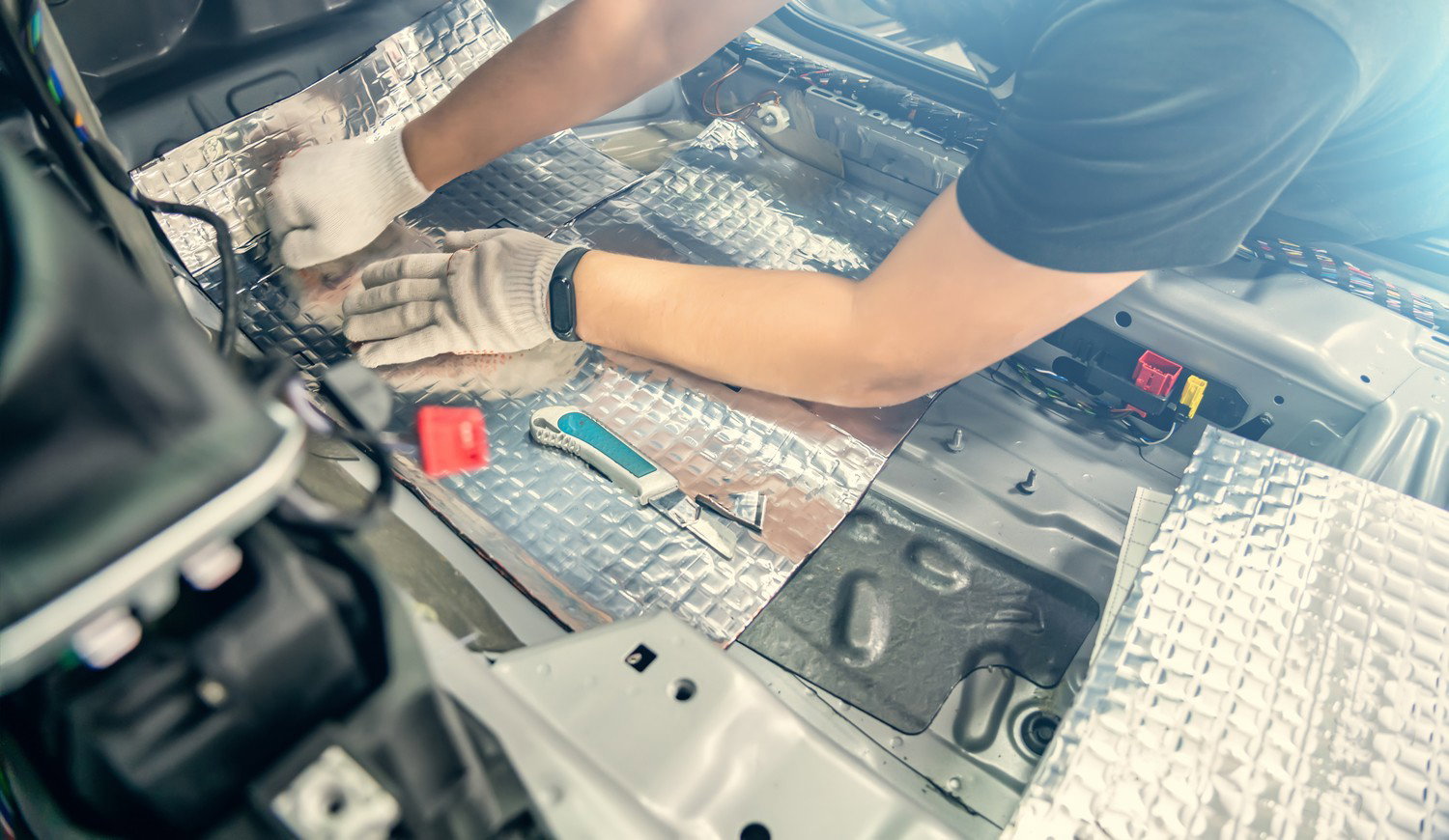
SilentDirect Polaric is described in the product documentation as a butyl-based damping mat with an aluminium surface and self-adhesive backing, intended for applications including vehicle sheet metal. Check the current installation instructions and technical data sheet for the variant you choose. The aluminium surface can have sharp edges; wear suitable gloves when handling it.
SilentDirect MLV is a heavy barrier material for airborne sound. It needs an installation that supports its own weight while allowing components to function and move freely. Neither a metallised surface nor a general statement about vehicle use means that a material is suitable close to every heat source.
Work step by step on a limited area
- Note the character of the noise and when it occurs. Record comparable conditions before starting work.
- Follow the vehicle manufacturer’s dismantling instructions. Work near airbags, seat-belt anchorages, electrical systems and high-voltage components requires the appropriate expertise.
- Check the substrate. Deal with corrosion and moisture problems before covering anything. Clean and dry it according to the material instructions.
- Test-fit the pieces before removing the protective film. Install them on the intended surfaces and press the material into place as instructed, without loose edges.
- Check that trim, clips, access covers and mechanisms can be refitted without force. Do not trap material at fixing points.
- Evaluate the result before treating more surfaces.
Preserve drainage, ventilation and safety
Doors may contain drainage routes, cables, crash sensors and window mechanisms. Do not block drainage holes or obstruct the glass. Preserve ventilation routes and access to service points. Do not drill or screw into body parts without knowing what is behind them.
On roof surfaces, the material’s own weight creates particular requirements. Polaric’s instructions specify additional fixing with a suitable adhesive for vehicle roofs and the use of smaller pieces. The vehicle construction and material suitability must still be checked; do not use a generic screw-fixing approach on the roof sheet. Do not cover airbags, labels, heat sources or safety features.
Check the effect under the same conditions
Compare results on the same road, at the same speed and with similar loads and tyre conditions. The driver must focus on driving. Afterwards, also check that the material remains secure and that no new rattles or functional problems have appeared. Explore the categories car sound insulation and doors to choose measures according to location.