How to Choose Materials That Best Dampen Vibrations
To determine which materials are most effective at dampening vibrations, you first need to understand what vibrations do. Vibrations are movements within materials. When they propagate through a structure, they can be converted into audible structure-borne sound, resonance, impact sound, or a dull rumble. That is why not all sound-absorbing materials work the same way. A material that is good at absorbing echoes in a room is not automatically good at reducing vibrations in a floor, a machine, or a wall structure.
The first step is to distinguish between airborne sound, room acoustics, and structural noise. Airborne sound includes, for example, voices, music, or traffic noise that travels through the air. Room acoustics deals with echoes and reverberation within a single room. Structural noise, on the other hand, occurs when motion travels through solid materials. Examples include a treadmill vibrating through the floor, a machine generating structure-borne noise in a wall, footsteps transmitted through the floor joists, or sheet metal in a vehicle that begins to resonate.
The best materials for vibration damping are therefore often elastic, heavy, or a combination of both. Elastic materials are used to break direct contact between hard surfaces. Heavy and flexible materials are used to reduce vibrations in the surface itself and increase the structure’s resistance to movement. In practice, the best results are often achieved by combining several principles: decoupling, mass, sealing, and the correct layer sequence.
1. Choose elastic shims when vibrations are transmitted through contact points
If the vibrations originate from a machine, a stand, a support, an installation, or a structural component that is in direct contact with another hard surface, an elastic spacer is often the most important material. The goal is to break the rigid contact. Rubber, NBR, cellular rubber, and similar materials can reduce the amount of motion that is transmitted. SilentDirect Seal is particularly useful here when a damping layer is needed between studs and surrounding surfaces in walls, ceilings, or floors.
When working with sound insulation and vibration damping, one of the most important principles is to decouple materials from one another. If different building components are in direct contact with each other, vibrations, structure-borne sound, and sound energy can easily be transmitted through the structure. This applies, for example, when constructing a stud frame for a wall, ceiling, or floor. SilentDirect Seal is placed between the stud and the surfaces it would otherwise be in direct contact with—such as the floor, ceiling, an existing wall, or a new wall structure. This creates a decoupling between the materials.
2. Choose point-mounted vibration dampers under machinery and equipment
If the problem originates from a machine or piece of equipment standing on the floor, the vibrations should ideally be stopped right beneath the machine. In such cases, point-mounted vibration dampers are often more effective than large wall absorbers or general acoustic materials. Dampio PRO is designed for point-mounted vibration damping beneath machines and equipment. This type of solution is particularly relevant when vibrations travel down into the floor and spread throughout the building.
With machines, the load is a critical factor. A material that is too soft can be compressed too much and lose its damping function. A material that is too hard, on the other hand, can transmit vibrations almost as if there were no cushioning at all. Therefore, vibration dampers should be selected based on weight, contact area, and type of movement. The goal is not simply to place something soft under the machine, but to create a controlled suspension system that reduces vibration transmission.
3. Choose heavy and flexible mats when the surface vibrates
If the surface itself vibrates—such as sheet metal, a panel, a floor, or a lightweight structure—a material that adds mass and dampens resonance is often needed. SilentDirect Polaric is suitable for sound insulation, vibration damping, sealing, and sheet metal damping. It is used when you want to reduce vibrations in a surface while simultaneously improving sound insulation. In vehicles, machine enclosures, and other thin structures, a damping mat can make a significant difference because it prevents the material from resonating with the vibrations as easily.
SilentDirect MLV works differently by providing high mass and sealing properties. MLV is particularly useful when you need to block sound and create a heavier barrier. For vibration issues, MLV can be an important layer, but it works best when used in a well-designed structure alongside damping or decoupling materials. Mass dampens sound energy, while elastic layers help reduce transmission between materials.
4. Choose damping foam and rubber-based materials for resonance and mechanical noise
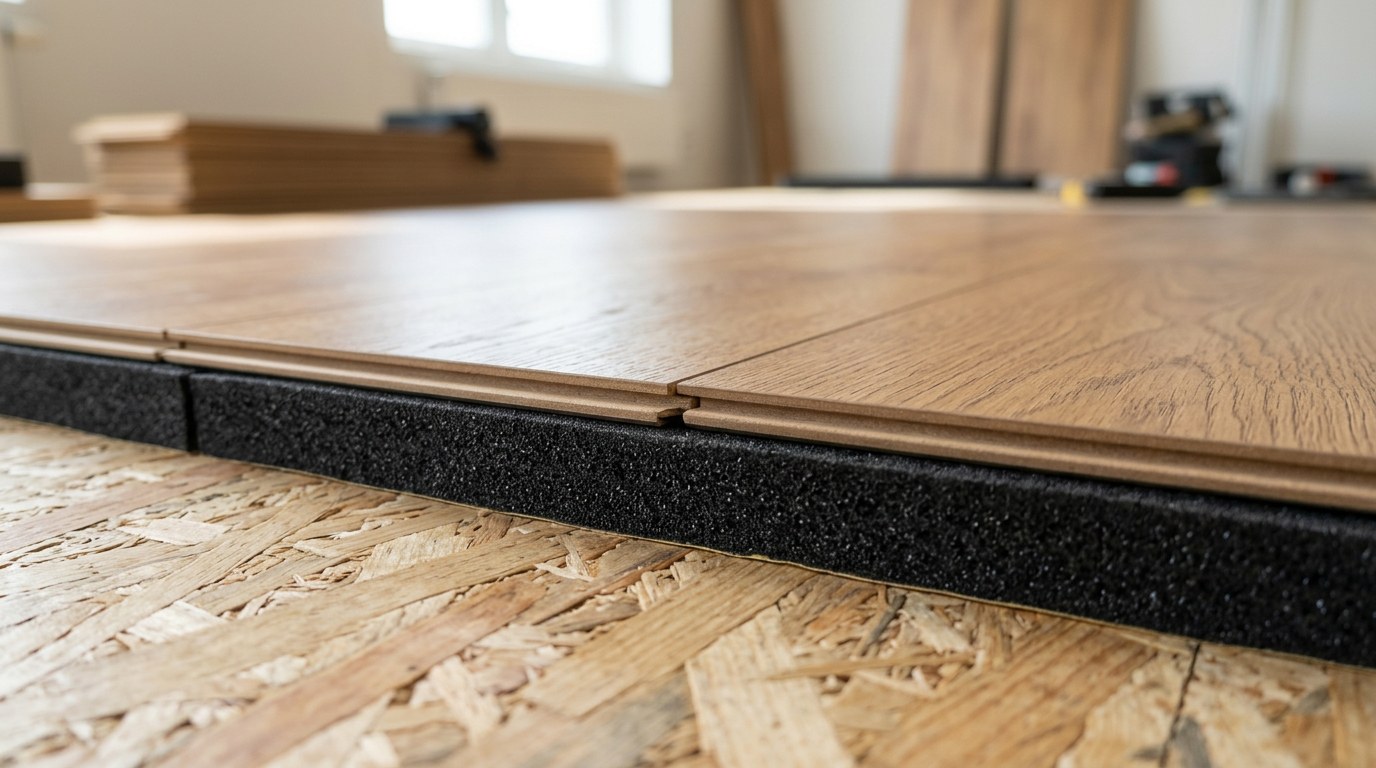
For mechanical noise, resonances, and vibrations in vehicles, structures, and certain technical environments, foam- and rubber-based products can be very useful. SilentDirect Neo is effective for vibrations, resonances, and mechanical noise. It can be used as a damping intermediate layer in various types of structures, such as between an existing surface and new cladding, or as a damping layer under flooring, depending on the construction.
SilentDirect Neo roll is particularly practical when larger areas need to be covered and you want to combine sound insulation, vibration damping, and some sound absorption. For floors, thinner variants may be suitable under new flooring installations, while thicker layers may be appropriate where the structure allows for greater installation height. It is important that the material is installed evenly and that seams, edges, and joints do not create new rigid contact points.
5. For floors, the combination of damping and stability is crucial
When it comes to flooring issues, vibrations often involve impact noise, structure-borne noise, or mechanical movement from equipment. An effective flooring system can consist of an existing floor, a damping or heavy layer, an elastic intermediate layer, and then a new, stable floor surface. SilentDirect Polaric or SilentDirect MLV can be used as a heavy and damping layer, while SilentDirect Neo can be used as an intermediate layer to reduce vibrations and resonance. Before installing the new floor, you should normally create a stable surface using floor particleboard or floor gypsum board when the construction requires it.
It is also important to seal joints and edges. Vibrations and sound can travel through small gaps, and an unsealed floor edge can compromise the overall performance. Therefore, damping mats or MLV should be extended toward the edges in a controlled manner and sealed thoroughly. The goal is to create a cohesive structure where both vibrations and sound leakage are minimized.
6. For walls and ceilings, decoupling is often more important than thickness alone
In walls and ceilings, sound typically propagates through studs, panels, and joints. In such cases, simply adding a thick material is not always sufficient. If the new structure still has direct, rigid contact with the old one, vibrations can continue to be transmitted. That is why decoupling is essential. SilentDirect Seal can be used on contact surfaces where studs would otherwise rest directly against the ceiling, floor, side walls, or existing surfaces. SilentDirect Neo can also serve as a damping intermediate layer in certain constructions.
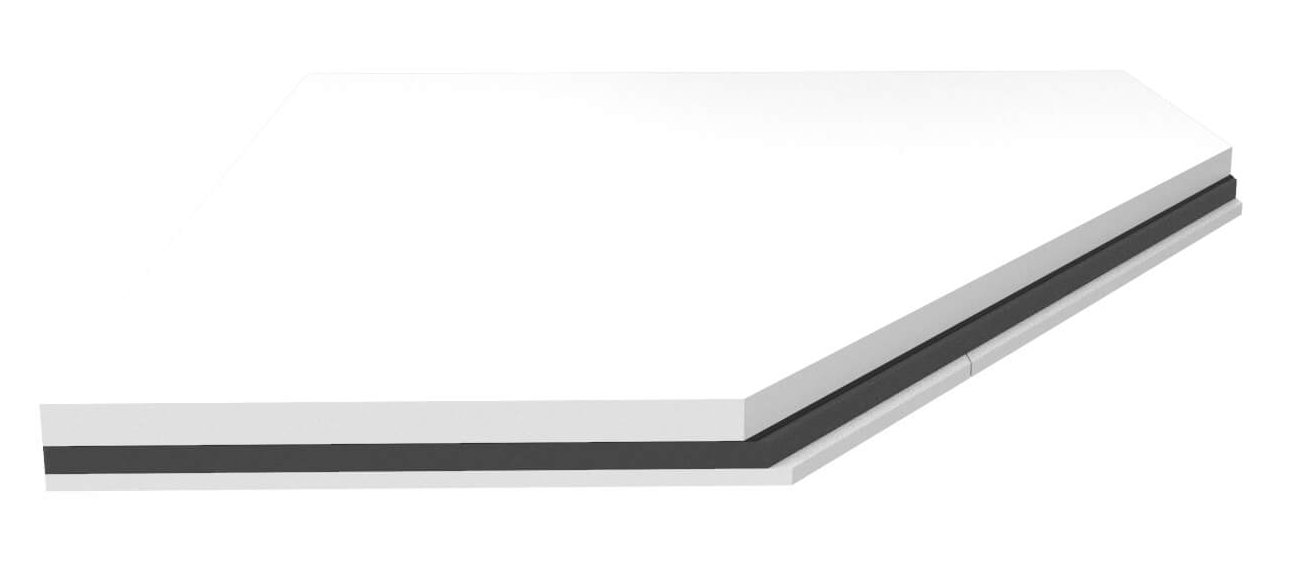
In more comprehensive wall and ceiling structures, multiple layers are often combined: a heavy damping mat or MLV, a damping intermediate layer, an air gap, an absorbent material in the cavity, and new panel layers such as OSB and drywall. This type of structure reduces vibrations more effectively than a single panel because it utilizes multiple mechanisms simultaneously. It breaks direct contact, increases mass, reduces resonance, and limits sound leakage.
7. Sheet metal and vehicles require materials that dampen resonance
In vehicles, machine enclosures, and other sheet metal surfaces, vibrations are often linked to resonance. The sheet metal then acts almost like a membrane that amplifies the sound. In these cases, damping mats and heat-resistant soundproofing mats are often more effective than standard room absorbers. SilentDirect Heat is suitable for soundproofing, vibration damping, and sheet metal damping where heat resistance is required, while SilentDirect Hood is designed for engine hoods and automotive environments.
Installation on sheet metal is especially important. The material must fit snugly against the surface so that vibrations are effectively dampened. If the mat is only loosely attached or has poor contact, the effectiveness is reduced. The surface should be clean, dry, and smooth, and the material should be selected based on temperature, moisture, flexibility, and load.
8. Avoid choosing material based solely on thickness
The thickest material is not automatically the best. For vibration damping, the material’s density, elasticity, load-bearing capacity, placement, and contact with the surface play a major role. A thin but heavy damping material may perform better on sheet metal than a thick, porous foam. A relatively thin, elastic spacer can make a big difference between two studs, while a soft material without the proper load capacity may provide poorer performance under a heavy machine.
Therefore, you should always choose materials based on their function. Is the material intended to dampen a surface, support a machine, decouple a joist, seal a joint, or reduce footfall noise in a floor? Once the function is clear, choosing the right material becomes much easier.
Practical Example
If a washing machine causes vibrations in a floor, a point-mounted vibration dampener under the machine is often the first step. If the vibrations also spread through the floor structure, a damping floor layer may be needed. If the same problem instead involves a wall where sound is transmitted through studs, SilentDirect Seal or SilentDirect Neo may be more appropriate for reducing direct contact. If the problem involves sheet metal in a vehicle, SilentDirect Polaric or SilentDirect Heat is often a more logical choice than a standard acoustic panel.
Conclusion
The materials that best dampen vibrations are those placed where the vibrations originate or are transmitted. For machinery, point-mounted vibration dampers are often best. For studs and building connections, elastic spacers and sealing strips are important. For sheet metal and large surfaces, heavy, flexible damping mats are effective. For floors, walls, and ceilings, the best results are often achieved when mass, decoupling, sealing, and damping layers are combined in the same construction.