






Create quieter zones in an open room
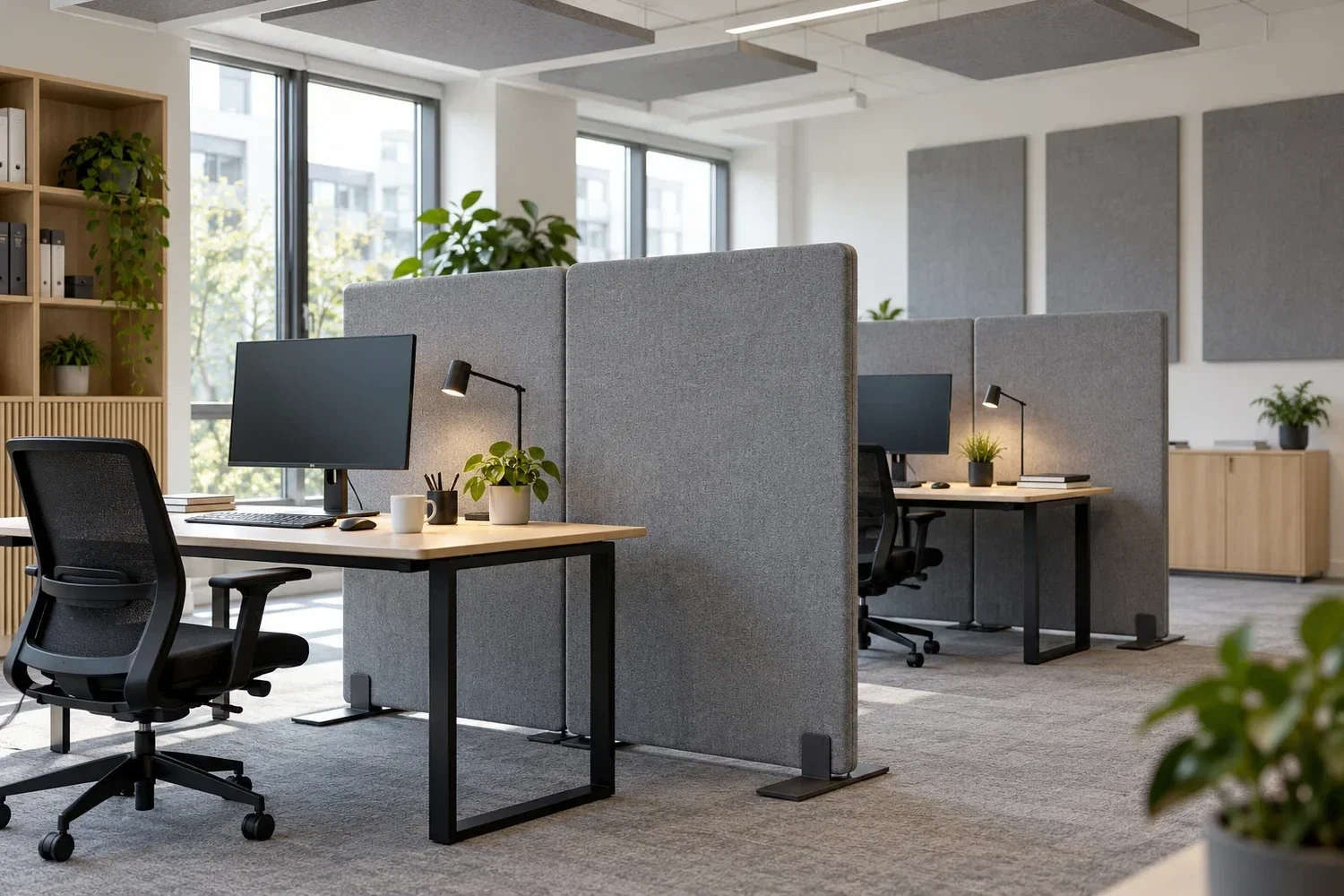
Sound-absorbing room dividers and screens can define workstations, reduce certain sound reflections and limit the direct sound path between people. They suit open rooms that need clearer zones without a permanent wall. The result depends on both the screen’s construction and the acoustics of the entire room.
A freestanding screen does not seal against the ceiling, walls and floor. Sound can travel around its edges, over the screen and via reflections. A screened area therefore does not automatically become a sound-insulated room or a place for confidential conversations.
Absorption and screening serve different functions
An absorbent surface reduces sound that would otherwise be reflected back into the room. Screening interrupts the direct sound path. The screen’s airtightness, height, width and position matter here. A thin textile that mainly absorbs reflections does not necessarily provide the same screening as a denser screen construction.
Ask what the product’s stated measurements describe. An absorption value does not measure sound insulation between two workstations. A sound reduction claim needs a documented test method and a relevant installation to be assessed properly.
Position the screen where it is useful
Start with where people speak and where the person experiencing the disturbance sits. Place the screen between these positions, as close to the source or receiver as furniture and safety allow. Check the actual line of sight between mouths and ears for both seated and standing work. A low screen may provide visual separation while leaving the direct sound path open.
The screen also needs enough width to limit the relevant sound paths. Large gaps at the sides make it easier for sound to pass around it. Plan walkways, wheelchair access and usable workstation space at the same time. Do not position screens in front of ventilation, escape routes or safety equipment.
Complement the screen with ceiling and wall treatments
In a room with a hard ceiling and large glazed surfaces, speech can reach the listener via reflections even when the direct path is screened. Ceiling absorbers and absorbers on suitable wall surfaces may therefore be needed alongside the room divider. Workstation spacing and clearly positioned conversation zones also matter.
In an office, for example, a screen between two desks can be combined with ceiling absorption and a separate space for longer phone calls. This provides several measures with different roles. Simply making the screen taller does not always solve problems in a room where sound bounces around.
Choose the construction according to how the room is used
- Freestanding screen: check stability, space for the feet, weight and the stated application.
- Desk screen: check that the fixings and load suit the desk, including when its height changes.
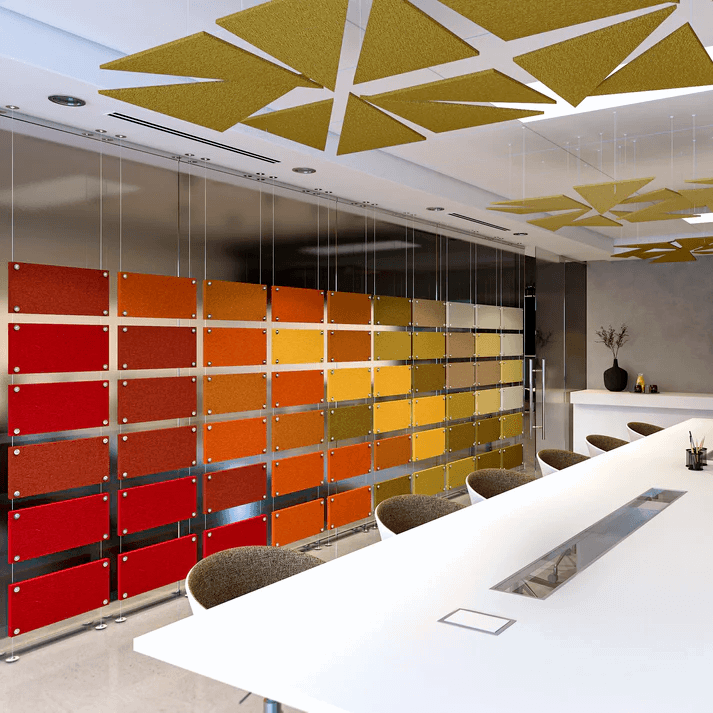
- Textile room divider: check the suspension, movement clearance and documented acoustic properties.
- Movable solution: check movement, any wheel locks and how repositioning affects performance.
Try the position before rearranging the whole room
Set up a limited trial with the normal furniture. Listen from the position where the disturbance is actually experienced and have the conversation in the intended conversation zone. Also check visibility, lighting, ventilation and access. High speech-privacy requirements need an acoustic assessment and often an enclosed building solution.
Explore sound-absorbing room dividers and solutions for offices. Choose according to verified data for the actual product, rather than appearance or name alone.