








How can you effectively soundproof a treatment room?
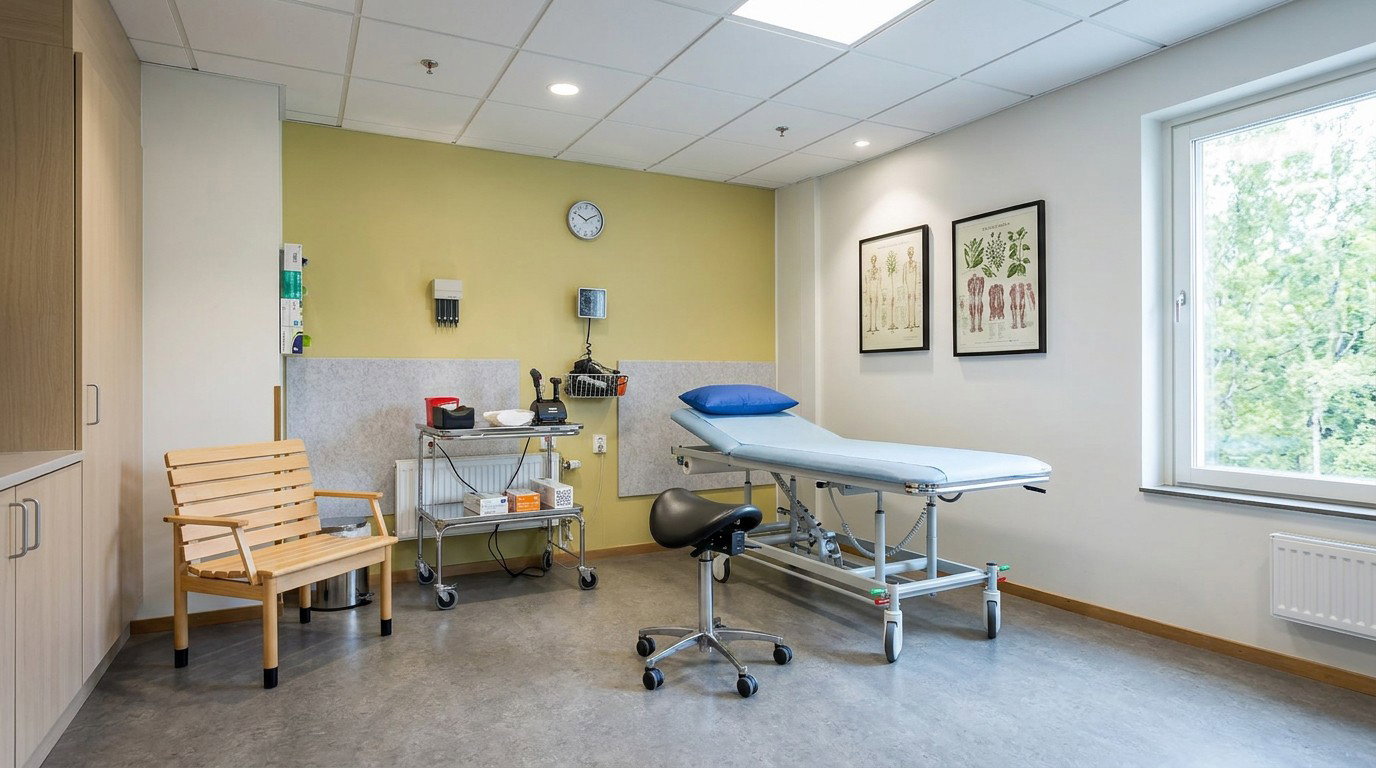
A treatment room needs to be calm, clear, and safe. When the room is used for healthcare, massage, physical therapy, therapy, beauty treatments, or counseling, the acoustic environment affects both the conversation and the experience. Hard walls, smooth ceilings, glass partitions, treatment tables, and easy-to-clean floors often cause voices, footsteps, and small movements to bounce off the surfaces. This creates echoes, long reverberation, and a sharper sound character that can make the room more stressful than it needs to be.
Sound absorption is the primary solution within the room itself
To improve the acoustics in a treatment room, the first step is to focus on sound absorption. Sound absorption reduces reflections within the room and causes sound to fade more quickly. This should not be confused with sound insulation, which is about blocking sound between rooms. If the problem is that conversations can be heard in the hallway, sound insulation, door seals, or a more soundproof construction may be needed as a supplement, but for echoes, harsh reflections, and tiring reverberation, sound-absorbing surfaces are the most important measure.
Start with the ceiling for an even and discreet effect
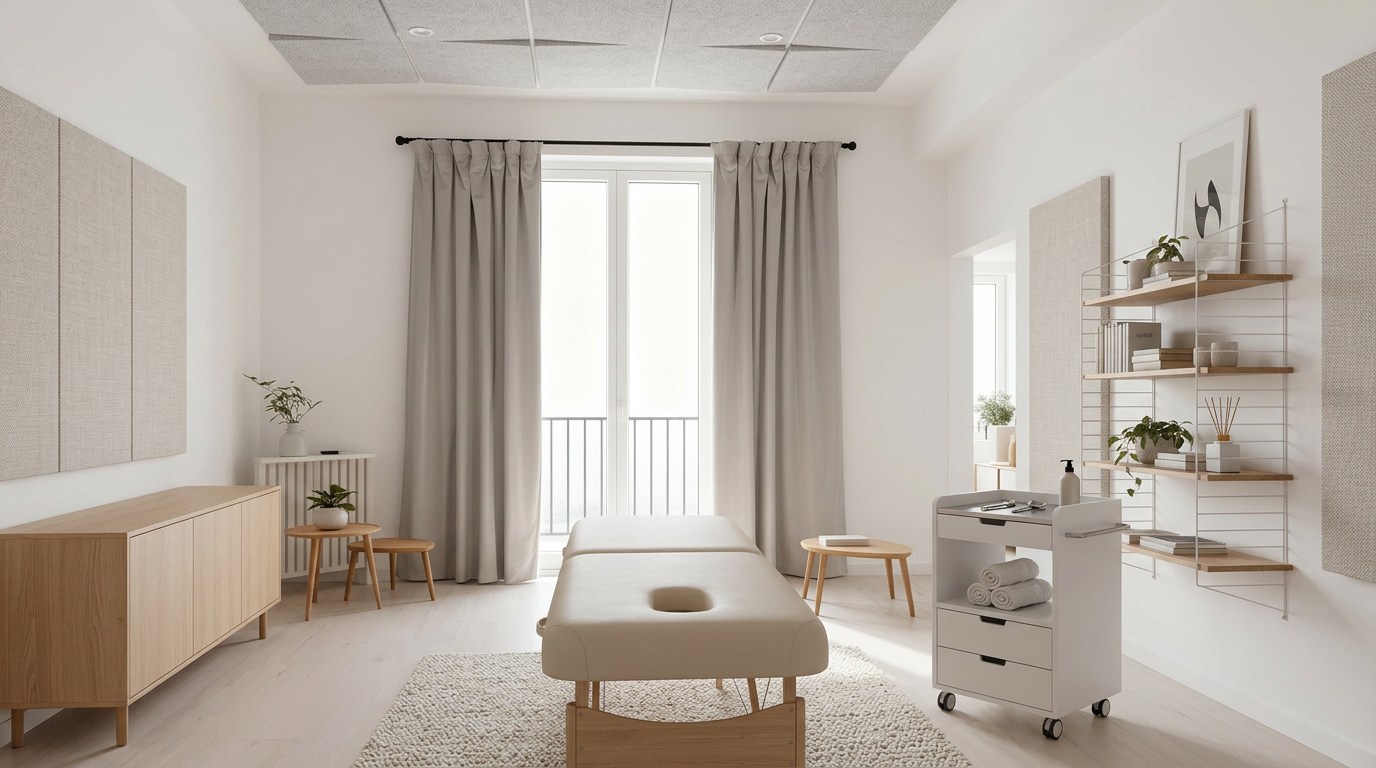
The ceiling is often the best starting point because it is a large, open, and hard surface that affects the entire room. Ceiling absorbers can reduce reverberation without taking up floor space or interfering with treatment tables, storage, hygiene routines, and workflow. In a smaller treatment room, the ceiling can provide a noticeable basic improvement, especially over the area where conversations, treatments, and instructions take place. This softens voices, reduces sharp sounds from equipment, and contributes to a more professional acoustic environment.
Treat walls where sound reflects the most
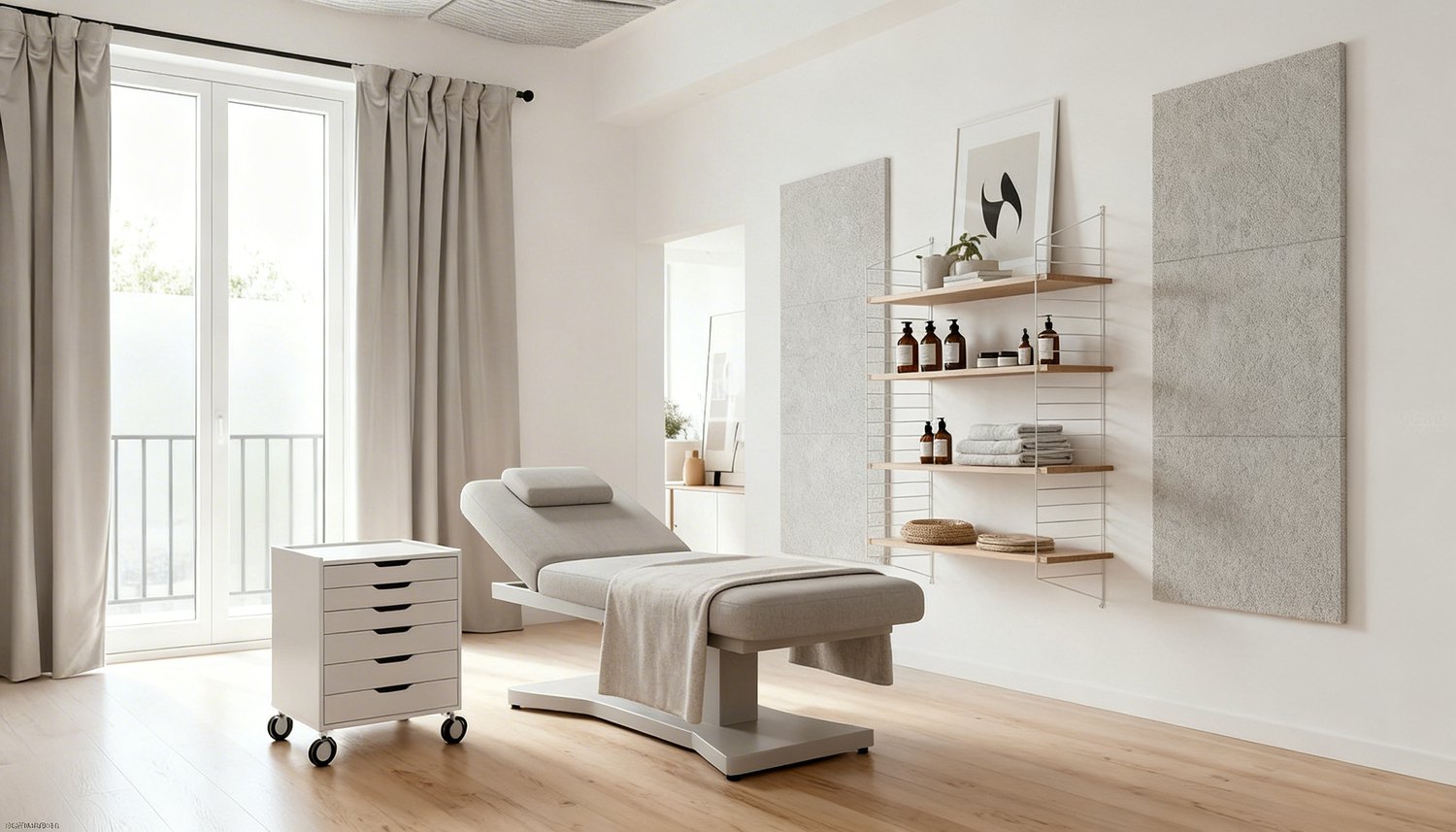
Once the ceiling has been addressed, the walls should be assessed. Wall absorbers are most effective on large empty wall surfaces, behind or to the side of the treatment table, and on surfaces opposite hard, reflective areas. In rooms where the patient lies or sits still for long periods, wall absorbers can also contribute to a calmer, more intimate atmosphere. They should be placed so that they do not hinder cleaning, passage, or professional use of the room.
Adapt the solution to treatment and consultation
A treatment room is often used in multiple ways throughout the day. In some situations, treatment is the priority; in others, conversations, counseling, documentation, or concentration are more critical. Therefore, absorbers should be placed where sound is generated and where people actually spend time. If staff and visitors are seated at a desk, a sound-absorbing desk screen can be a good addition near the conversation area. If the treatment table is the room’s focal point, the ceiling area above and adjacent wall sections should receive extra attention.
Curtains and room dividers can provide flexible acoustics
If the treatment room has glass, window sections, or a need for softer screening, sound-absorbing curtains can be a practical addition. Room dividers can be used when a larger room is divided into zones or when you want to create more privacy around the treatment area. These solutions rarely replace ceiling absorbers in a hard-surfaced room, but they can enhance the overall effect and make the acoustic environment more pleasant.
A better acoustic environment enhances both privacy and a peaceful working atmosphere
Effective sound absorption makes it easier to converse in the treatment room, reduces sound fatigue, and creates a more reassuring experience for the visitor. The goal is not to make the room completely silent, but to make the sound feel controlled, soft, and clear. By starting with the ceiling and then supplementing with wall absorbers, curtains, room dividers, or table screens, the treatment room achieves more balanced acoustics without losing its functionality.