




• Free shipping
  • 5-year warranty
  • Fast delivery

How to Soundproof Health Clinics – Creating Calm Environments

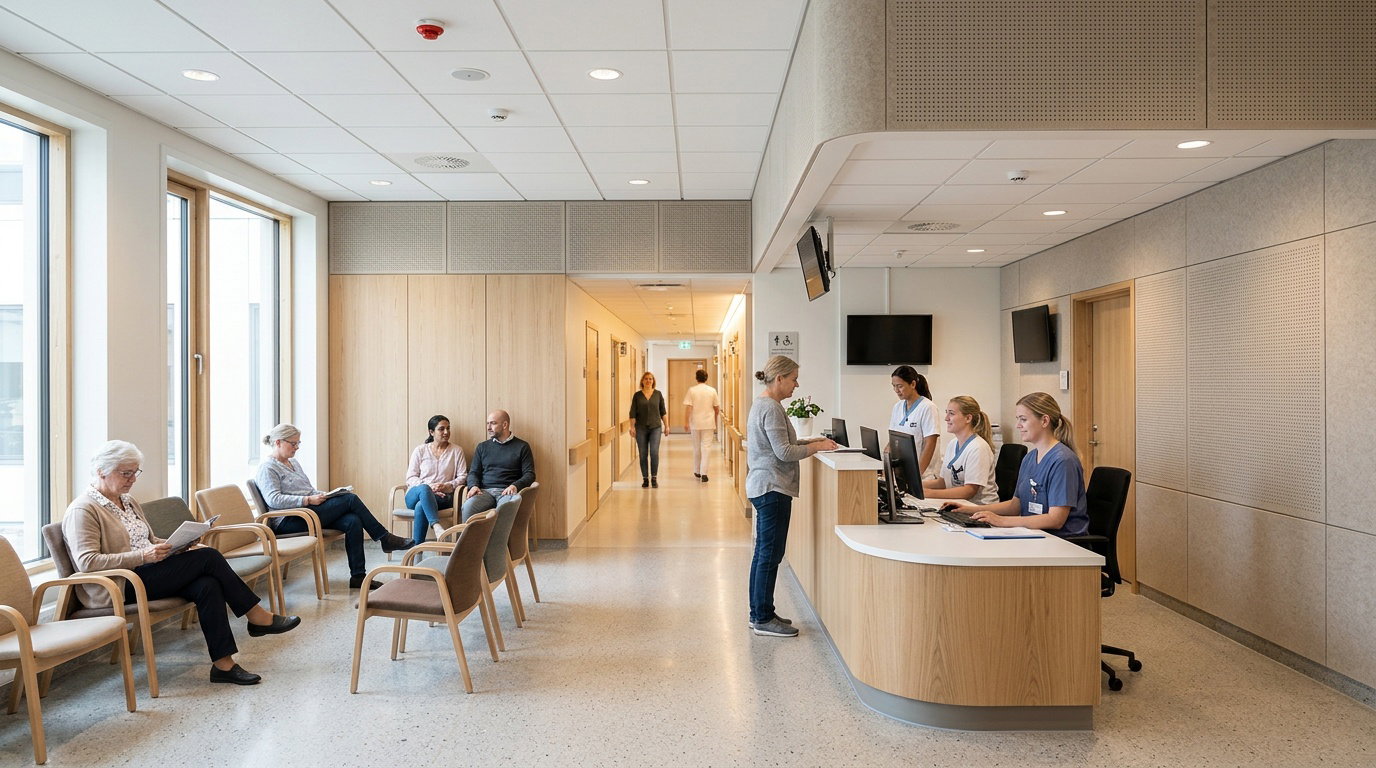
To soundproof a health center, you first need to understand where the sound originates and how it travels through the space. Health clinics, health centers, and medical offices often consist of several different acoustic environments within a small area: waiting rooms where patients sit close to one another, reception areas where conversations and phone calls take place, hallways where staff and visitors move about, and treatment rooms and consultation rooms where clear communication is essential. When many such functions are concentrated in spaces with hard walls, smooth ceilings, glass partitions, hard floors, and minimal furnishings, the sound often becomes sharper than desired.

Sound absorption reduces echoes and reverberation within the same room. This means that sound absorbers do not primarily block sound between different rooms, but rather improve how sound is perceived where people are present. In a health center, this can make a significant difference for both patients and staff. Voices become easier to make out, the buzz of conversation from waiting rooms becomes less intrusive, and hallways take on a calmer atmosphere. For a patient who is already feeling anxious, stressed, or uncertain, a softer sound environment can contribute to a more reassuring experience.

The most important first step is often the ceiling. The ceiling surface is large, unobstructed, and affects the reverberation of the entire room. In waiting rooms, reception areas, and hallways, ceiling absorbers can reduce harsh reflections from voices, footsteps, doors, and movement without taking up space from seating, work surfaces, or walkways. This is particularly valuable in healthcare settings where hygiene, accessibility, and open spaces are key aspects of the facility’s function.

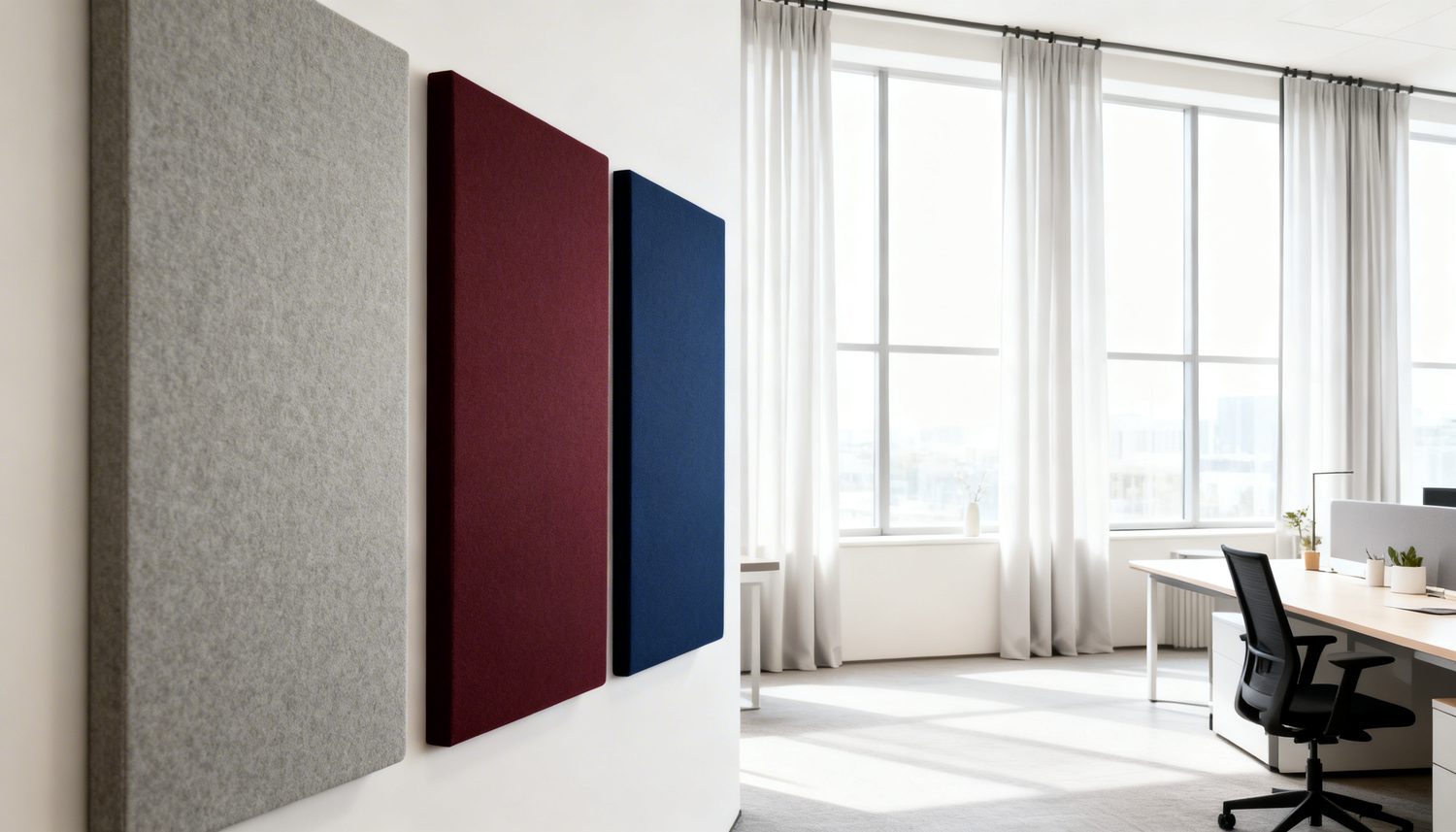
Once the ceiling has been treated, wall absorbers can be used to complement the treatment in areas where sound reflections are still noticeable. This could be near seating areas, along hallways, behind the reception desk, or in consultation rooms where speech intelligibility and concentration are important. Wall absorbers can also help make the room feel less sterile and more inviting, which is important in environments where patients wait, receive information, or meet with healthcare staff.

Sound-absorbing curtains and room dividers can be useful where the health center has glass partitions, open waiting areas, or a need for flexible zones. They can dampen sound reflections, provide visual screening, and make larger spaces more manageable without the need to build permanent walls. In reception areas and waiting rooms, this can contribute to a more organized experience, while hallways and adjacent areas take on a softer acoustic character.

In some cases, sound insulation or vibration damping may be needed as supplementary measures—for example, if sound leaks through doors or if technical equipment causes vibrations. However, it is important to distinguish these measures from sound absorption. If the problem is echo, long reverberation, and harsh sound reflections, sound-absorbing solutions should be prioritized. By starting with ceiling absorbers and then supplementing them with wall absorbers, curtains, or room dividers, health centers can create calmer, clearer, and more professional environments for patients, staff, and visitors.

Recommended Products

The Benefits of Sound Absorption in a Health Care Center

Reduces echo in waiting rooms
Sound absorption prevents voices, footsteps, and movements from bouncing as much off ceilings, walls, floors, and glass partitions.

Creates quieter reception areas
When reverberation is reduced, it becomes easier for staff to hear patients, handle conversations, and work with focus.

Improves speech intelligibility
A shorter and softer reverberation makes conversations clearer in treatment rooms, examination rooms, and consultation rooms.

Provides a more comfortable patient experience
A less harsh acoustic environment can make waiting, receiving information, and medical appointments more pleasant for patients and visitors.

Suitable for spaces with hard surfaces
Ceiling absorbers, wall absorbers, curtains, and room dividers compensate for sound reflections from hygienic and easy-to-clean materials.

Can be adapted to different healthcare rooms
Waiting rooms, hallways, reception areas, and consultation rooms can be treated in different ways depending on acoustic issues and usage.

Does not interfere with the room’s function
Thoughtful placement ensures that sound absorption can improve acoustics without blocking traffic flow, workspaces, or accessibility.

Contributes to a professional overall impression
Properly selected sound absorbers can make the health center more welcoming, organized, and pleasant without compromising the environment’s professional atmosphere.

Step-by-Step: How to Effectively Soundproof Health Clinics

Step 1: Assess the acoustic environment in each area of the health center

  1. Go through the waiting room, reception area, hallways, treatment rooms, examination rooms, and consultation rooms one by one.
  2. Listen for where the sound feels the sharpest, where voices blend together, and where reverberation makes it difficult to understand speech.
  3. Note hard surfaces such as painted walls, smooth ceilings, glass partitions, hard floors, doors, and reception desks.
  4. Distinguish between sound that bounces within a room and sound that leaks between rooms. Echoes and reverberation are primarily addressed with sound absorption, while sound leakage requires sound insulation as a complementary measure.

Product features and benefits:

Results
You’ll get a clear picture of which rooms need sound absorption first and avoid treating all surfaces the same way.

Step 2: Start with ceiling absorbers in waiting rooms, reception areas, and hallways

  1. Prioritize areas where many people gather or pass through at the same time.
  2. Install ceiling absorbers where sound from voices, footsteps, doors, and chairs would otherwise bounce between the ceiling, floor, and walls.
  3. Use the ceiling as the primary acoustic surface, as it is often large, unobstructed, and does not interfere with seating areas, walkways, or workstations.
  4. Choose a solution that complements the room’s design and does not interfere with lighting, signage, ventilation, or access for maintenance and cleaning.

Product features and benefits:

Results
Reverberation is reduced across larger areas, and the acoustic environment becomes calmer without requiring changes to the health center’s furnishings or workflows.

Step 3: Supplement with wall absorbers where speech and movement create reflections

  1. Place wall absorbers behind or near seating areas in waiting rooms where conversations and movement cause harsh reflections.
  2. Use wall absorbers along hallways where sounds from footsteps, doors, and passersby would otherwise be amplified.
  3. Install them in consultation rooms and treatment rooms where clear speech intelligibility and calm communication are important.
  4. Avoid placements that obstruct doorways, signage, handles, medical equipment, or daily cleaning.

Product features and benefits:

Results
The walls no longer contribute as much to harsh sound reflections, and the rooms feel softer, clearer, and more welcoming.

Step 4: Use curtains and room dividers to create flexible zones

  1. Identify glass partitions, large windows, and open waiting areas where sound feels harsh or where patients sit close to one another.
  2. Use sound-absorbing curtains to soften reflections from glass and create a more subdued atmosphere.
  3. Use room dividers in larger waiting rooms or areas near the reception desk where you want to divide the space into quieter zones.
  4. Position the partitions so that sightlines, accessibility, and staff oversight are not compromised.

Product features and benefits:

Results
Open spaces become more comfortable and easier to use, while the health center can maintain flexibility and clear walkways.

Step 5: Address consultation rooms and examination rooms with a focus on clarity

  1. Listen for whether voices sound harsh, bounce between parallel walls, or feel straining during conversations.
  2. Combine ceiling absorbers with wall absorbers in strategic areas where sound reflections are most pronounced.
  3. Position absorbers so that they support conversations between patients and staff without interfering with examination equipment or furniture.
  4. Avoid overcrowding small rooms with solutions that interfere with movement, cleaning, or care procedures.

Product Features and Benefits:

Results
Conversations become clearer, the room feels calmer, and both patients and staff have better conditions for concentration.

Step 6: Use sound insulation and vibration damping only as a supplement for the right problems

  1. Determine whether the disturbance is caused by echoes within the room or by sound leaking in from adjacent rooms.
  2. If sound is leaking through door gaps, sealing them can be a supportive measure, but it does not replace sound absorption within the room.
  3. If medical or technical equipment causes vibrations, vibration damping should be considered a separate, complementary measure.
  4. Keep sound absorption as the primary solution when the goal is to reduce reverberation, create a quiet environment, and improve speech intelligibility within the same room.

Product features and benefits:

Results
You avoid confusing different acoustic problems and can create a comprehensive solution where sound absorption remains the primary measure.

How many sound absorbers do you need in a health clinic?

How many sound absorbers do you need?

With our free sound absorption calculation tool, you can quickly and easily calculate how many sound absorbers are needed to effectively reduce echoes and disruptive noise in various environments, such as offices, rooms, or other spaces.

Did you know that…

In a waiting room, the same voice can sound much more intrusive if the room has hard walls, a smooth ceiling, glass partitions, and few textile surfaces. This is not only due to the volume of the sound, but also to how long the sound continues to bounce around the room.

A health clinic is often one of the most varied acoustic environments in a public building. The same hallway can be used for quick trips, quiet conversations, opening doors, waiting patients, and work-related communication.

Ceiling absorbers are often particularly practical in healthcare settings because they utilize a surface that rarely competes with furniture, medical equipment, walkways, or seating areas. Therefore, the ceiling is often the most logical first step.

Sound absorption cannot replace privacy protocols or sound insulation between rooms, but it can make the conversation environment calmer and less stressful. This is an important distinction to consider when planning acoustics in healthcare facilities.

Featured Articles

How do you soundproof a ceiling with sound absorbers?

How do you soundproof a wall with sound absorbers?

How can you soundproof and sound-absorb a room with a lot of glass surfaces?

What is the difference between sound insulation and sound absorption?

Products Suitable for Sound Absorption in a Health Care Center

Health care centers need sound-absorbing products that can reduce echoes and reverberation in waiting rooms, reception areas, hallways, treatment rooms, examination rooms, and consultation rooms. Ceiling absorbers are often the first step, while wall absorbers, curtains, room dividers, and bulletin boards can be used to complement them in areas where sound reflections, glass surfaces, or open spaces create a harsh acoustic environment.

Ceiling Sound Absorption - PES Ceiling
This product is ideal when you want to use the ceiling surface to reduce echoes and reverberation in waiting rooms, reception areas, and hallways.

Hypoallergenic ceiling sound absorber - PES Allergy ceiling
This product is ideal for sound-absorbing ceilings in environments where many different patients and visitors are present.

Sound Absorption for Suspended Ceilings - PES for Exposed Ceilings
This product is ideal when you want to improve the acoustics in spaces with suspended ceilings or exposed beam ceilings.

Sound Absorption for Suspended Ceilings – PES Fabric for Exposed Ceilings
This product is ideal when you want to combine sound absorption in suspended ceilings with a more textile-like appearance.

Sound Absorption for Walls - PES Wall
This product is ideal when you want to reduce wall reflections from voices, movement, and activity in healthcare settings.

Hypoallergenic wall sound absorber - PES Allergy wall
This product is ideal when you want to use wall absorbers in environments where special consideration for sensitive users is important.

Wall Sound Absorption - PES Wall Deep Absorb
This product is ideal when you want to enhance sound absorption on walls in consultation rooms, treatment rooms, or larger waiting areas.

Ceiling Sound Absorption - PES Ceiling Deep Absorb
This product is ideal when you want to use the ceiling more actively to reduce reverberation in rooms where clear conversation is essential.

Sound-Absorbing Bulletin Board - SilentDirect Bulletin
This product is ideal when you want to combine a bulletin board with sound absorption in waiting rooms, staff areas, or hallways.

Sound-absorbing curtain—Silent Curtain Feltra
This product is ideal when you want to soften sound reflections from glass partitions, windows, and open spaces.

Extra-Wide Sound-Absorbing Curtain – Silent Curtain Feltra
This product is ideal when you want to cover larger glass surfaces or create a more cohesive fabric sound-absorbing solution.

Sound-absorbing fabric room divider – Silent Divider Feltra
This product is ideal for creating quieter zones in waiting rooms or open reception areas.

Extra-wide sound-absorbing room divider – Silent Divider Feltra
This product is ideal when you want to partition larger spaces while creating a softer acoustic environment.

Desk Screen - Bulletin Desk Screen
This product is ideal when you want to create a quieter workspace at administrative stations, reception areas, or desks near patient care areas.

*Free shipping

Free shipping to a pickup location

5-Year Warranty

5-Year Product Warranty

Fast Delivery

Usually ships the same day

How do you soundproof health clinics?

Sound absorption in healthcare facilities is about reducing echoes, reverberation, and harsh sound reflections within a given room. In waiting rooms, reception areas, hallways, treatment rooms, examination rooms, and consultation rooms, sound is generated by voices, telephones, doors, chairs, footsteps, and medical equipment. When sound bounces off hard walls, smooth ceilings, glass partitions, and floors, the environment often becomes harsh, tiring, and harder to navigate. Properly placed sound absorbers make the room feel calmer, more conducive to conversation, and more professional without needing to alter the health center’s function.

Sound absorption is not the same as sound insulation

Sound absorption improves the acoustic environment inside a room by capturing sound reflections. It reduces reverberation, dampens echoes, and makes speech clearer. Sound insulation, on the other hand, is about blocking sound between rooms, such as between a consultation room and a hallway. In a health clinic, both concepts are often needed in the design process, but when the problem is noisy waiting rooms, clattering hallways, or exhausting reception areas, sound absorption is the most important measure.

Start with the ceiling in waiting rooms and hallways

Ceiling absorbers are often the most effective first step in healthcare settings because the ceiling surface is large, unobstructed, and does not interfere with traffic flow, furniture placement, or hygiene routines. In waiting rooms, reception areas, and hallways, sound absorption in the ceiling can reduce the overall noise level and prevent voices, footsteps, and movements from spreading as widely throughout the space. This is especially important in environments where many people are waiting, passing through, or talking at the same time.

Complement with wall absorbers where conversation and movement intersect

Wall absorbers work well on surfaces where sound reflections from voices and activity are noticeable, such as behind seating areas, along hallways, near reception areas, or in meeting rooms. In healthcare settings, placement should be carefully considered so that the absorbers do not obstruct workflows, doorways, signage, or cleaning. Wall absorbers can also help create a warmer, less clinical atmosphere while maintaining a professional look.

Curtains and room dividers can create quieter zones

Sound-absorbing curtains and room dividers can be valuable additions to waiting rooms, areas near reception desks, and larger reception spaces. They can soften sound from glass partitions, divide open spaces, and create more defined zones for waiting, conversations, or administrative tasks. In a health clinic, this is particularly useful when you want to reduce the perceived hustle and bustle without remodeling the space.

Tailor the solution to hygiene, patient flow, and safety

Acoustic measures in healthcare settings should always be chosen with the room’s use in mind. In waiting rooms, broad sound absorption is often needed to reduce general background noise. In reception areas, speech intelligibility and a quiet working environment are important. In hallways, the focus is on reducing sound transmission from footsteps, doors, and movement. In treatment rooms, examination rooms, and consultation rooms, the goal is a calmer and more focused environment where conversations feel clear and secure. By starting with ceiling absorbers and then supplementing them with wall absorbers, curtains, or room dividers, healthcare centers can create a more pleasant acoustic environment for both patients and staff.