



• Free shipping
  • 5-year warranty
  • Fast delivery

How can you improve the acoustics in children's rooms and playrooms?

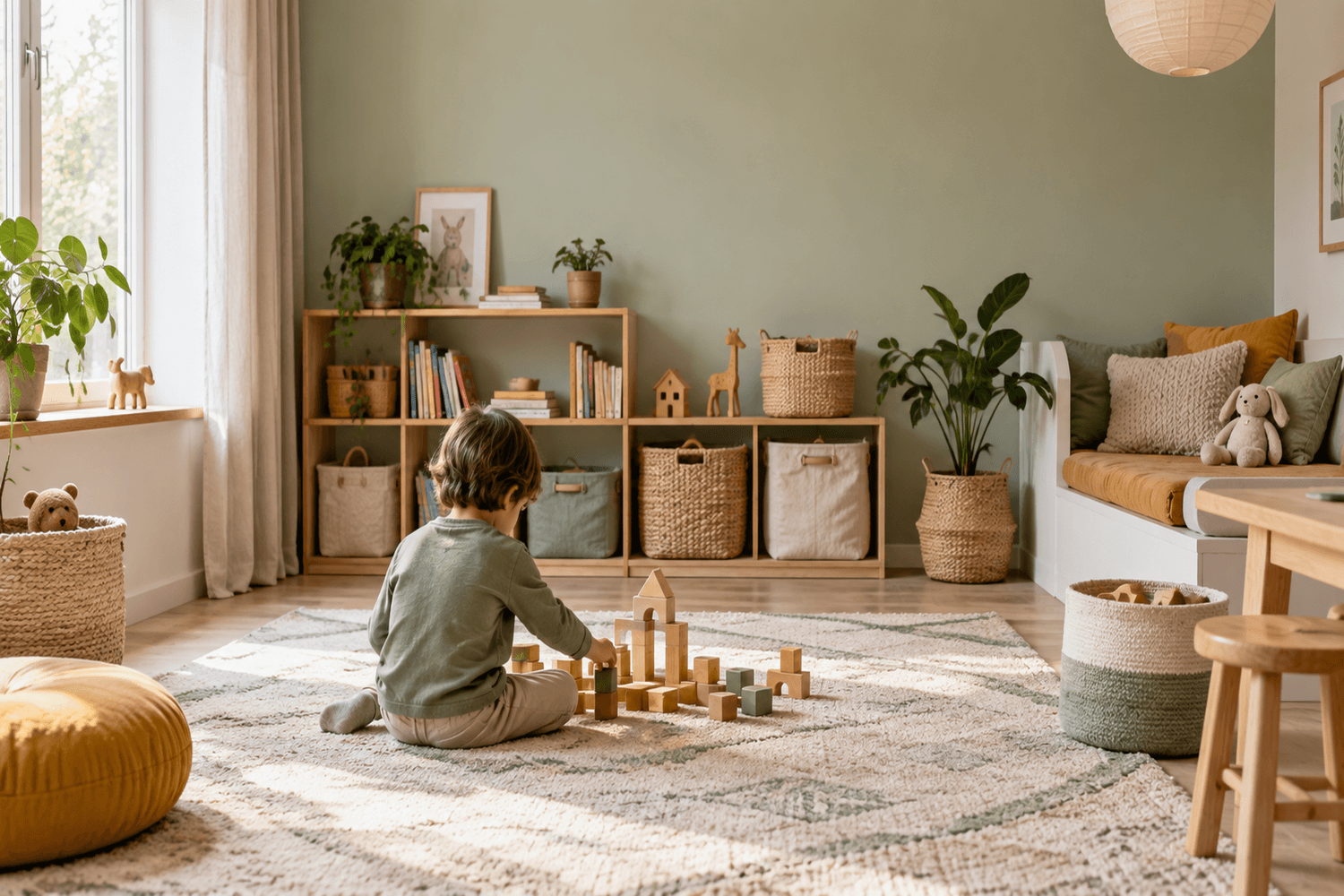
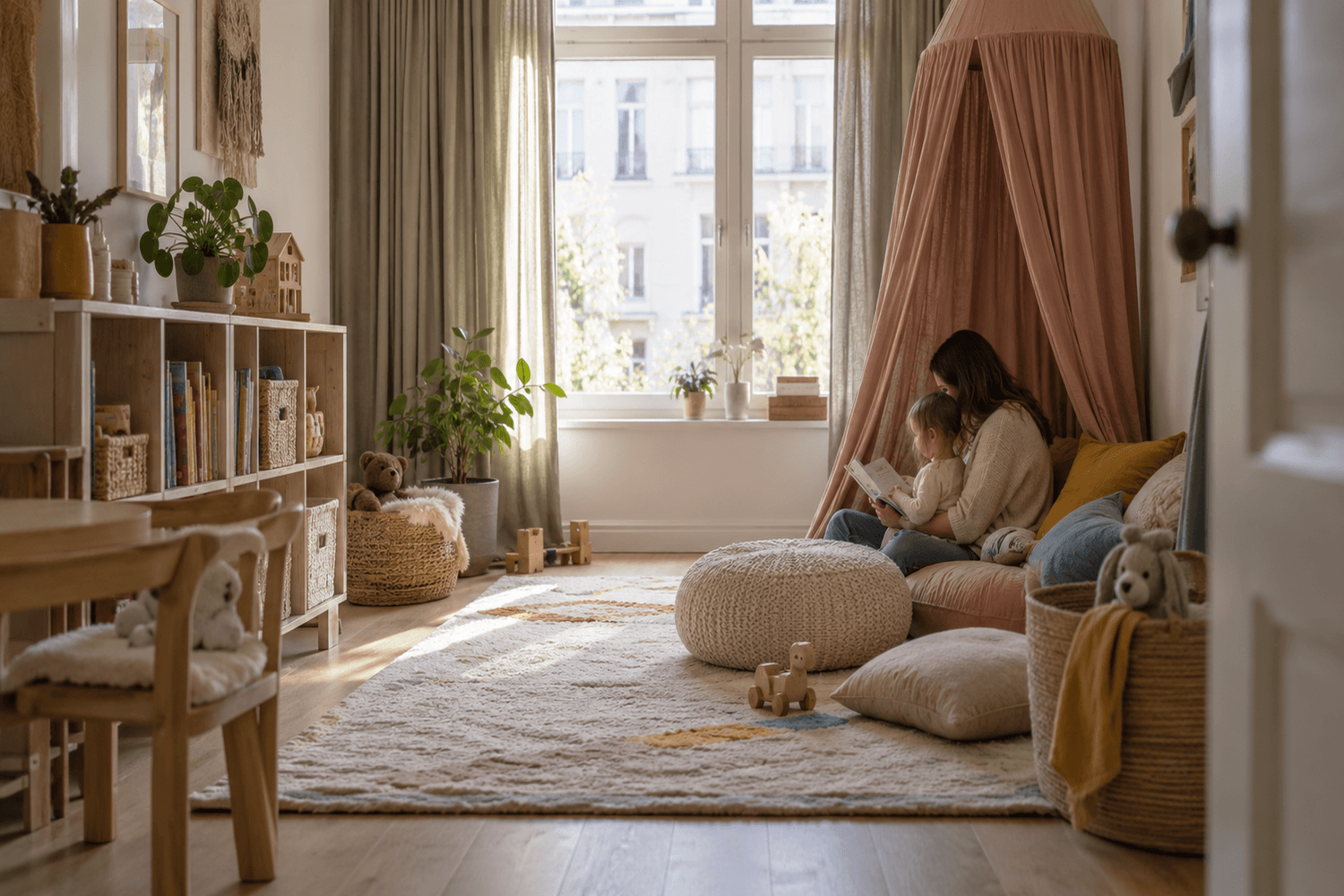
Children’s rooms and playrooms quickly shift between quiet reading and lively play. Voices, building blocks, running, and toys create sounds that bounce off ceilings, walls, windows, and hard floors. The more open and hard surfaces a room has, the greater the risk that sounds will blend together and be perceived as harsh or tiring.

A better acoustic environment isn’t about making the room completely silent. The goal is to shorten reverberation time, reduce bothersome reflections, and make individual voices and activities easier to distinguish. This can create better conditions for play, conversation, concentration, and rest.

Installing sound absorbers is typically one of the most effective measures for improving room acoustics. We recommend prioritizing the ceiling first, as it usually offers a large, unobstructed surface without limiting floor space. Afterward, selected wall sections, windows, and activity zones can be addressed as needed.

Rugs, curtains, upholstered furniture, and fabric storage solutions can help, but they do not always replace true sound absorbers. Start by listening for echoes and identifying where the noisiest activities take place. This will make it easier to choose a solution that suits both the room’s acoustics and the way the children use it.

Recommended Products

Benefits of Better Acoustics in Children's Rooms and Playrooms.

Sound absorbers limit the reflections that would otherwise bounce off the room’s hard surfaces and create a distinct echo.

Shorter reverberation time

When sound fades away more quickly, new voices and activities become easier to distinguish from what just happened.

Clearer conversations

A more balanced acoustic environment makes it easier for children and adults to hear each other without automatically raising their voices.

Quieter reading and rest

A quiet zone becomes more useful when it isn’t dominated by reflected sound from the active part of the room.

Better conditions for play

Multiple activities can take place simultaneously without the room’s reverberation amplifying every sound equally.

Effective use of the ceiling

Ceiling absorbers utilize a surface that is often unused and therefore do not encroach on the floor space for play or storage.

More flexible room layout

By creating active and quiet zones, the interior design can support the room’s various functions throughout the day.

A more pleasant overall environment

The right combination of ceiling absorption, wall absorption, and soft accents can make the soundscape less harsh and more balanced.

How to Improve Acoustics in Children's Rooms and Playrooms

Start by understanding how the room sounds in everyday use, and then build the solution in a clear sequence. We recommend treating the ceiling first, followed by the walls and areas where sound reflections are still noticeable.

1. Determine whether the problem is inside the room

Listen to the room during both quiet and active play. If voices sound sharp, sounds blend together, or clapping is followed by a distinct sound tail, the problem is likely related to echoes and reverberation. If the main issue is instead sound traveling to adjacent rooms, sound insulation is also needed.

2. Identify the room’s hard surfaces

Note exposed ceiling surfaces, painted walls, windows, wooden floors, and other surfaces that reflect sound. Pay particular attention to the part of the room where children run, build, play, or use noisy toys. A large rug can reduce some reflections from the floor, but rarely solves the entire room’s reverberation.

3. Prioritize sound absorption in the ceiling

SilentDirect recommends treating the ceiling for sound absorption first. It is often the room’s largest open surface and can be treated without reducing the play area. PES ceiling is a flexible, all-around solution, while PES circle ceiling and PES hexagon ceiling offer the opportunity to work with rounder or more playful shapes. Choose the mounting method based on the ceiling’s construction and always follow the product’s installation instructions.

4. Add wall absorbers

Listen again once the ceiling solution is in place. If the room still has noticeable wall reflections, you can add absorbers to larger, unobstructed wall sections. PES wall is a suitable, versatile standard solution. PES hexagon wall can be grouped into patterns, and SilentDirect Bulletin is ideal where a pin-friendly surface is also practical.

5. Place everything with children’s activities in mind

Avoid placing them where the panels could be used for climbing, subjected to repeated hard impacts, or block doors, ventilation, and lighting. Use fasteners appropriate for the surface and follow the product instructions. Installation must be performed by an adult and checked afterward to ensure that every part is securely fastened.

6. Soften the look of windows and activity zones

Add curtains, rugs, padded seating, and fabric storage where appropriate. Silent Curtain Feltra can reduce glare from large windows. Feel free to divide a larger playroom into an active zone and a quiet reading or rest zone, but consider the soft furnishings as a complement to the actual sound-absorbing materials.

7. Listen, Compare, and Adjust

Perform the same clapping and conversation tests as you did before making any changes. Check whether the sound fades away more quickly and whether voices have become easier to distinguish. If the reverberation is still noticeable, additional absorbers may be needed on the ceiling or walls. Make changes one at a time so you can assess what actually improves the room.

Sound calculation software.

Sound calculation software.

The amount of sound absorption required depends on the room's size, ceiling height, materials, and intended use. Use SilentDirect’s acoustic calculation program as a guide when planning the scope of the project. You can also calculate the reverberation time to get a clearer picture of the room’s acoustic conditions.

Did you know that…

A rug can make the sounds of footsteps and toys less harsh, but it doesn’t automatically affect all sound reflections in the room. Ceilings and walls often provide significantly larger exposed surfaces. That’s why we recommend prioritizing proper sound absorbers on the ceiling when a child’s room or playroom has a noticeable echo or long reverberation.

Featured Articles

How do you soundproof a room with sound absorbers?

What is the difference between sound insulation and sound absorption?

Which materials are best at absorbing and dampening sound?

Products for better acoustics in children's rooms and playrooms.

Here you’ll find ceiling and wall absorbers, as well as complementary textile solutions for children’s rooms and playrooms. This selection allows you to start with the ceiling, address any remaining wall reflections, and soften large window areas. Always choose the product, placement, and mounting method based on the room’s size, the surface it will be installed on, and how children use the space.

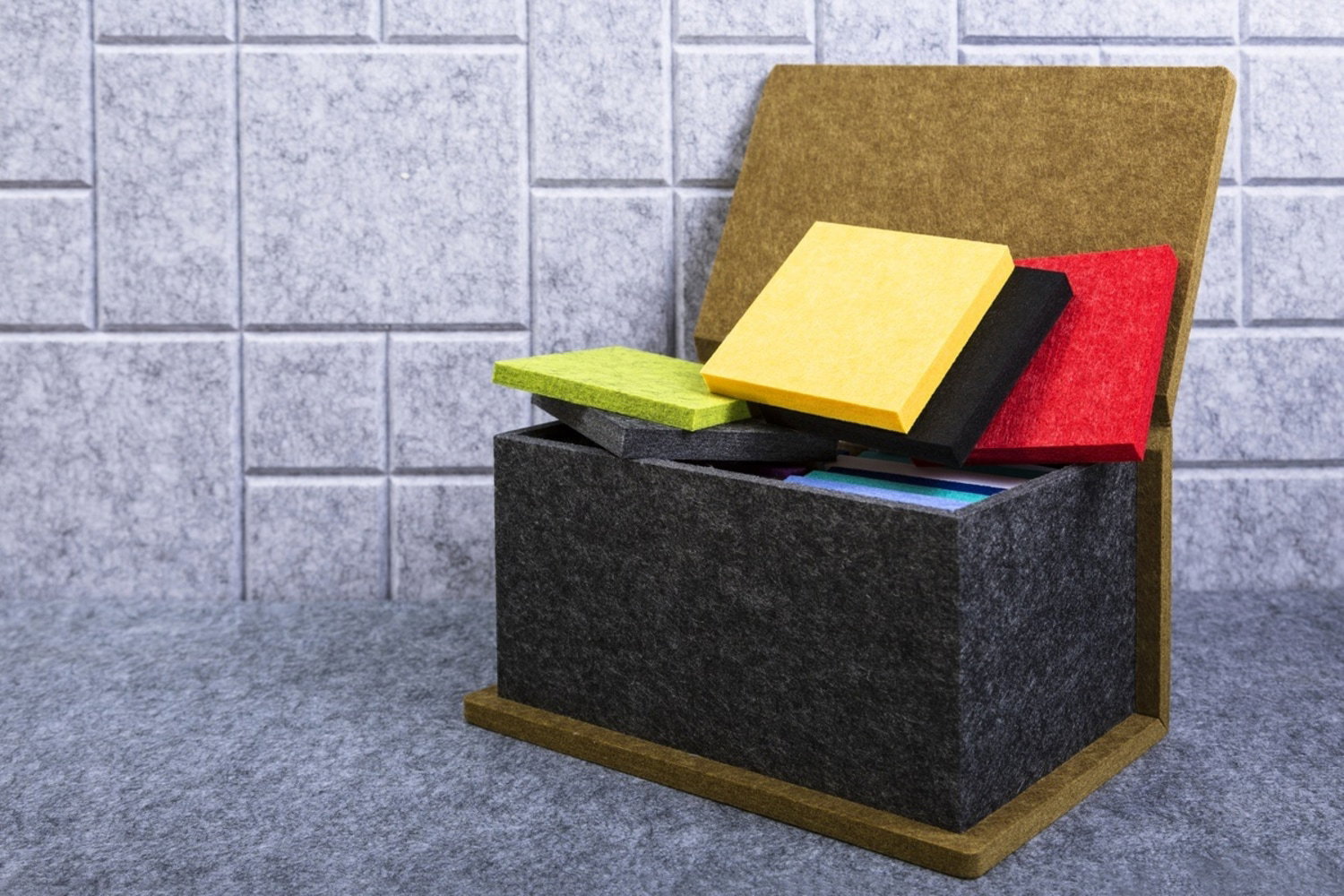
PES ceiling is a flexible ceiling absorber for homes, schools, and other spaces where the ceiling surface can be used to reduce reverberation.

PES Allergy ceiling is a fabric-free ceiling absorber for rooms where you want to combine ceiling-mounted reverberation control with a fabric-free surface.

PES circle ceiling provides sound absorption in the ceiling and a circular design that is well-suited for children’s rooms and creative play environments.

PES hexagon ceiling can be used when the ceiling absorbers are intended to form a more distinct pattern while also reducing reverberation.

PES wall is a wall absorber for open wall surfaces where speech and harsh reflections need to be reduced.

PES Hexagon Wall makes it possible to create clusters and playful patterns on the wall without compromising acoustic performance.

SilentDirect Bulletin combines sound absorption with a pinboard for drawings, notes, and other lightweight postings.

Silent Curtain Feltra is a sound-absorbing curtain that softens the appearance of windows and glass surfaces and complements the room’s fixed absorbers.

*Free shipping

Free shipping to a pickup location

5-Year Warranty

5-Year Product Warranty

Fast Delivery

Usually ships the same day

A Better Acoustic Environment for Play, Rest, and Concentration

Children’s rooms and playrooms often contain many sounds at once: voices, play, toys hitting the floor, and activities moving around the room. When floors, walls, windows, and ceilings are hard, sound bounces off these surfaces. The result can be echoes, long reverberation, and high noise levels that make it harder to talk, read, relax, or focus. To improve acoustics, you need to reduce sound reflections inside the room and design the surfaces based on how the room is actually used.

Start with the ceiling when you want to reduce reverberation

SilentDirect typically recommends sound-absorbing the ceiling first. The ceiling is often a large, open surface that can be treated without taking up space meant for play, storage, or furniture. Ceiling absorbers can capture some of the sound reflections that would otherwise bounce between the room’s hard surfaces. This often results in a calmer acoustic environment and better speech intelligibility, especially in playrooms where several children are talking or playing at the same time. In children’s environments, materials, mounting methods, and placement should always be chosen with the room’s use in mind and installed securely according to the product’s instructions.

Add Absorbers Where Sound Still Bounces

Once the ceiling has been addressed, wall absorbers can provide additional benefits on large, bare wall sections. Place them where they can counteract pronounced reflections but are not exposed to climbing, hard impacts, or constant contact. PES hexagon wall can be used to create clusters on the wall, while SilentDirect Bulletin combines a pin-friendly surface with sound absorption. Curtains, rugs, upholstered seating, and fabric storage solutions also contribute to a softer acoustic environment, but should be viewed as complementary measures when the room has significant echo problems.

Tailor the solutions to the room’s activity

A small bedroom with lots of textiles often requires a different solution than an open playroom with hardwood floors, large windows, and minimal furniture. Therefore, listen in different parts of the room and during different activities. A simple clap can reveal whether the sound has a distinct tail, while a conversation at a normal volume shows whether voices become sharp or difficult to understand. Feel free to divide the room into an active play area and a quiet zone for reading or resting. Soft materials near the active area can reduce local reflections, while properly sized absorbers provide more lasting acoustic improvement.

Acoustics is not the same as sound insulation

Sound absorption improves the sound environment inside a child’s room or playroom by reducing echoes, reverberation, and reflections. However, it does not automatically prevent sound from passing through walls, doors, floors, or ceilings into other rooms. If the main issue is that play noise can be heard by neighbors or in adjacent rooms, an assessment of sound insulation is needed. Therefore, start by determining whether the goal is a quieter room, less sound transmission, or both. With the right problem definition, the ceiling as the top priority, and well-thought-out additions, it’s possible to create a more pleasant environment for both play and rest.