







How do you soundproof health clinics?
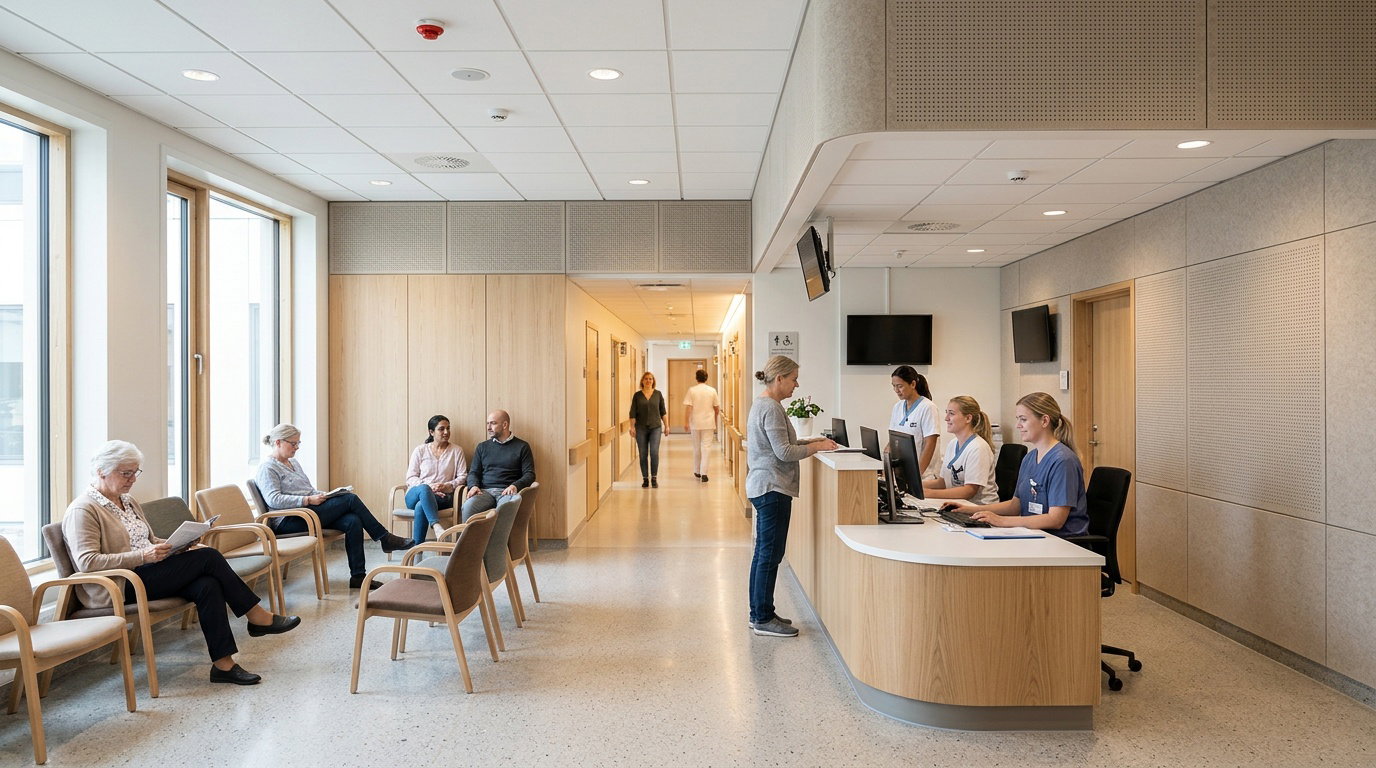
Sound absorption in healthcare facilities is about reducing echoes, reverberation, and harsh sound reflections within a given room. In waiting rooms, reception areas, hallways, treatment rooms, examination rooms, and consultation rooms, sound is generated by voices, telephones, doors, chairs, footsteps, and medical equipment. When sound bounces off hard walls, smooth ceilings, glass partitions, and floors, the environment often becomes harsh, tiring, and harder to navigate. Properly placed sound absorbers make the room feel calmer, more conducive to conversation, and more professional without needing to alter the health center’s function.
Sound absorption is not the same as sound insulation
Sound absorption improves the acoustic environment inside a room by capturing sound reflections. It reduces reverberation, dampens echoes, and makes speech clearer. Sound insulation, on the other hand, is about blocking sound between rooms, such as between a consultation room and a hallway. In a health clinic, both concepts are often needed in the design process, but when the problem is noisy waiting rooms, clattering hallways, or exhausting reception areas, sound absorption is the most important measure.
Start with the ceiling in waiting rooms and hallways
Ceiling absorbers are often the most effective first step in healthcare settings because the ceiling surface is large, unobstructed, and does not interfere with traffic flow, furniture placement, or hygiene routines. In waiting rooms, reception areas, and hallways, sound absorption in the ceiling can reduce the overall noise level and prevent voices, footsteps, and movements from spreading as widely throughout the space. This is especially important in environments where many people are waiting, passing through, or talking at the same time.
Complement with wall absorbers where conversation and movement intersect
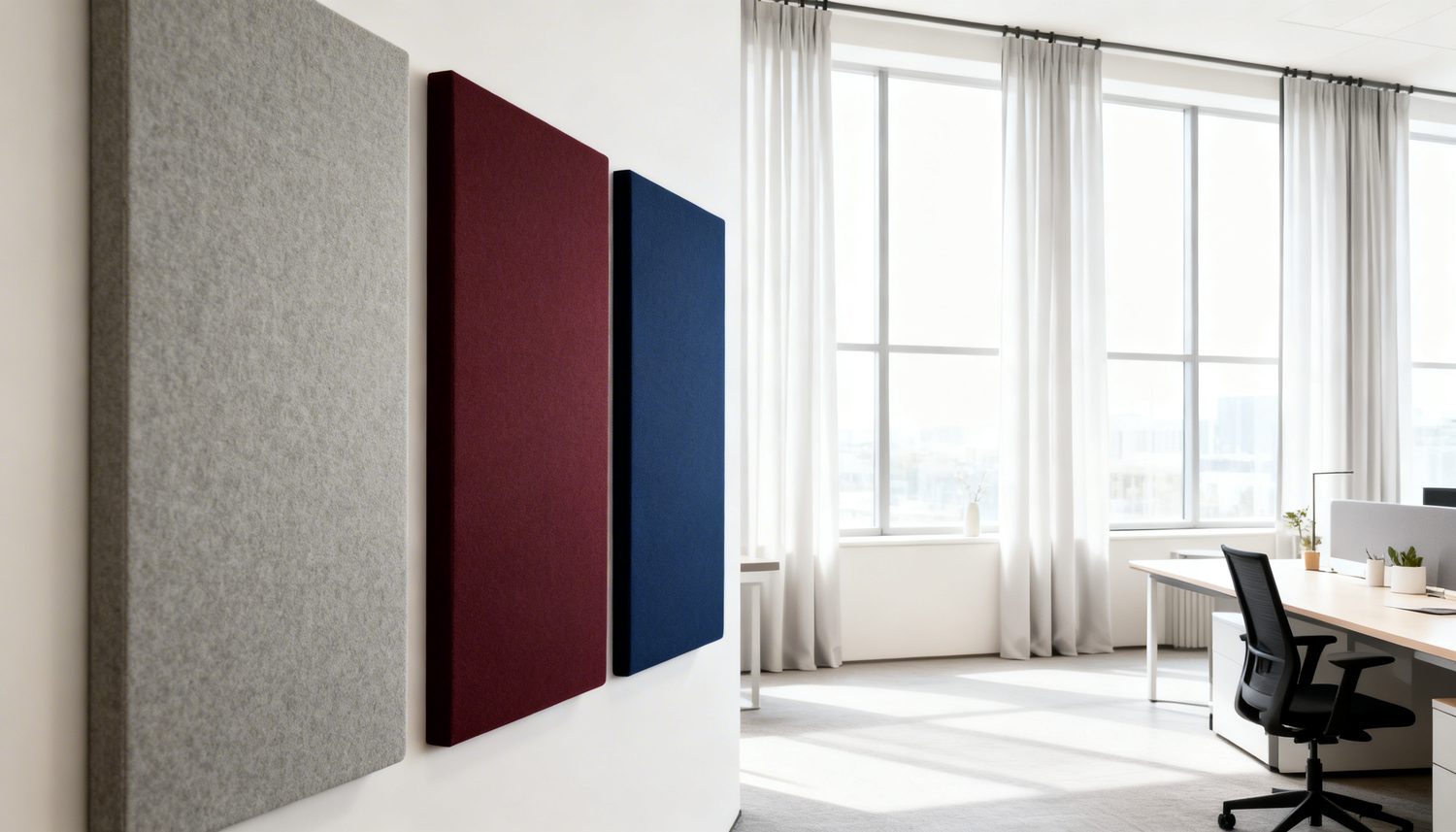
Wall absorbers work well on surfaces where sound reflections from voices and activity are noticeable, such as behind seating areas, along hallways, near reception areas, or in meeting rooms. In healthcare settings, placement should be carefully considered so that the absorbers do not obstruct workflows, doorways, signage, or cleaning. Wall absorbers can also help create a warmer, less clinical atmosphere while maintaining a professional look.
Curtains and room dividers can create quieter zones
Sound-absorbing curtains and room dividers can be valuable additions to waiting rooms, areas near reception desks, and larger reception spaces. They can soften sound from glass partitions, divide open spaces, and create more defined zones for waiting, conversations, or administrative tasks. In a health clinic, this is particularly useful when you want to reduce the perceived hustle and bustle without remodeling the space.
Tailor the solution to hygiene, patient flow, and safety
Acoustic measures in healthcare settings should always be chosen with the room’s use in mind. In waiting rooms, broad sound absorption is often needed to reduce general background noise. In reception areas, speech intelligibility and a quiet working environment are important. In hallways, the focus is on reducing sound transmission from footsteps, doors, and movement. In treatment rooms, examination rooms, and consultation rooms, the goal is a calmer and more focused environment where conversations feel clear and secure. By starting with ceiling absorbers and then supplementing them with wall absorbers, curtains, or room dividers, healthcare centers can create a more pleasant acoustic environment for both patients and staff.