








Avoid Mistakes That Deteriorate the Acoustic Environment
Many sound control measures yield weaker results than expected because they address the wrong type of problem. A sound absorber can reduce echoes in a room, but it usually won’t block your neighbor’s music coming through the wall. A heavy sound barrier can reduce airborne sound between spaces, but it does not automatically solve the problem of vibrations from a machine in direct contact with the floor. The first step is therefore to determine whether the disturbance consists of sound transmission, sound reflections, or vibrations.
When Sound Insulation Is Used for the Wrong Problem
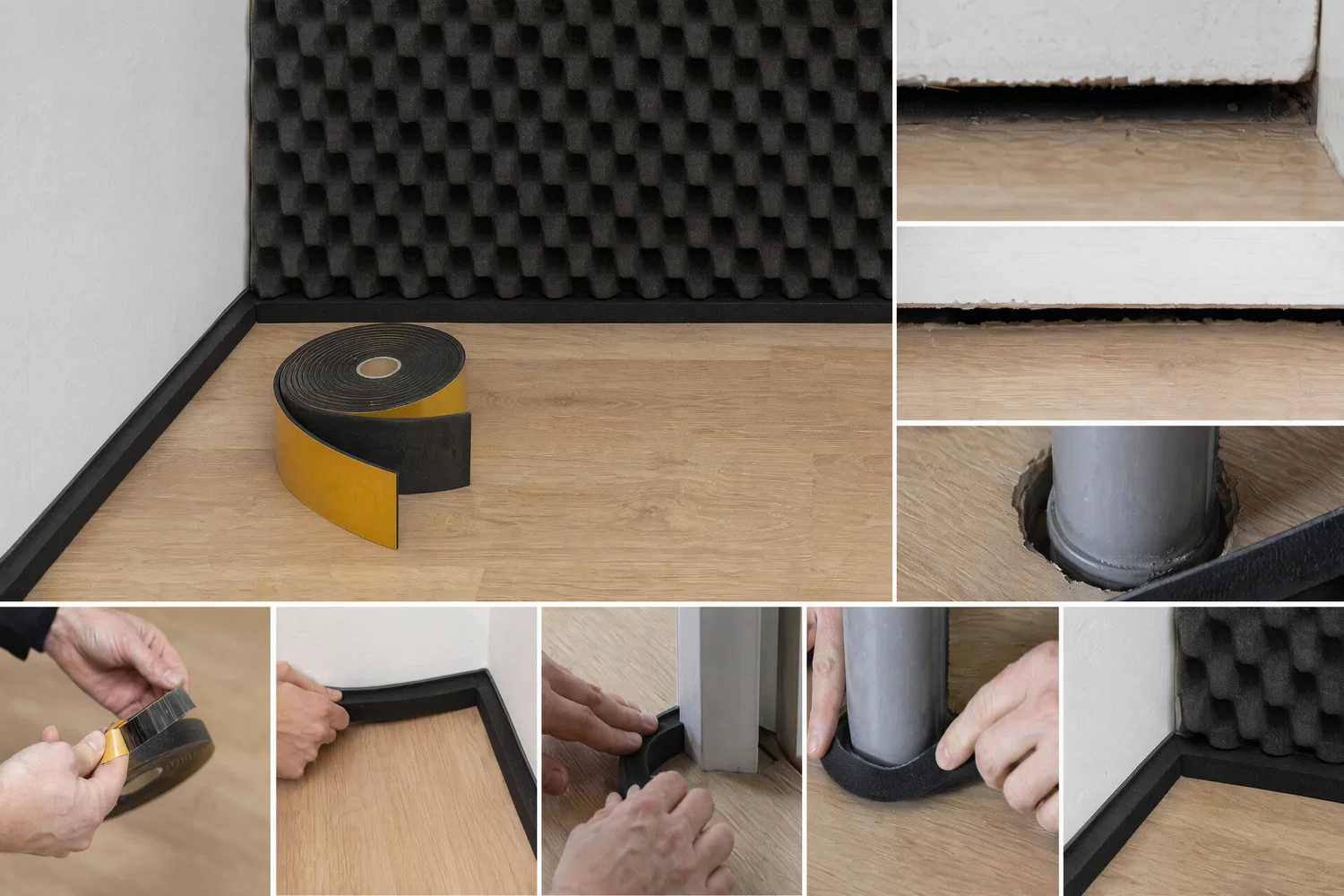
Sound insulation is intended to reduce the amount of sound that passes between rooms, through building components, or via gaps and joints. Common mistakes include treating only a small part of the structure, leaving gaps at joints, or allowing new studs and panels to make rigid contact with surrounding surfaces. Sound can then travel through the weakest point or be transmitted as structure-borne sound. Mass, density, decoupling, and a well-thought-out overall design must work together.
When Sound Absorbers Are Confused with Sound Insulation
Sound absorption works within a room by reducing reflections, echoes, and reverberation. Absorbers are therefore among the most effective measures for improving room acoustics, but they should not be described as a general solution for sound traveling through walls, floors, or ceilings. For general sound absorption, we typically recommend treating the ceiling first. The ceiling surface is often free of furniture and can provide even and effective damping before wall absorbers, curtains, or room dividers are used as complementary measures.
Vibrations require decoupling at the source
Machines, pumps, speakers, and building components can transmit motion to floors, walls, or ceilings. A common mistake is attempting to dampen the audible sound without breaking the mechanical contact. Vibration damping works best when the correct damping material is placed at the point of contact and sized according to the load. In structural systems, contact surfaces must be decoupled so that vibrations and structure-borne noise are not transmitted through rigid connections.
Check the entire path of the sound
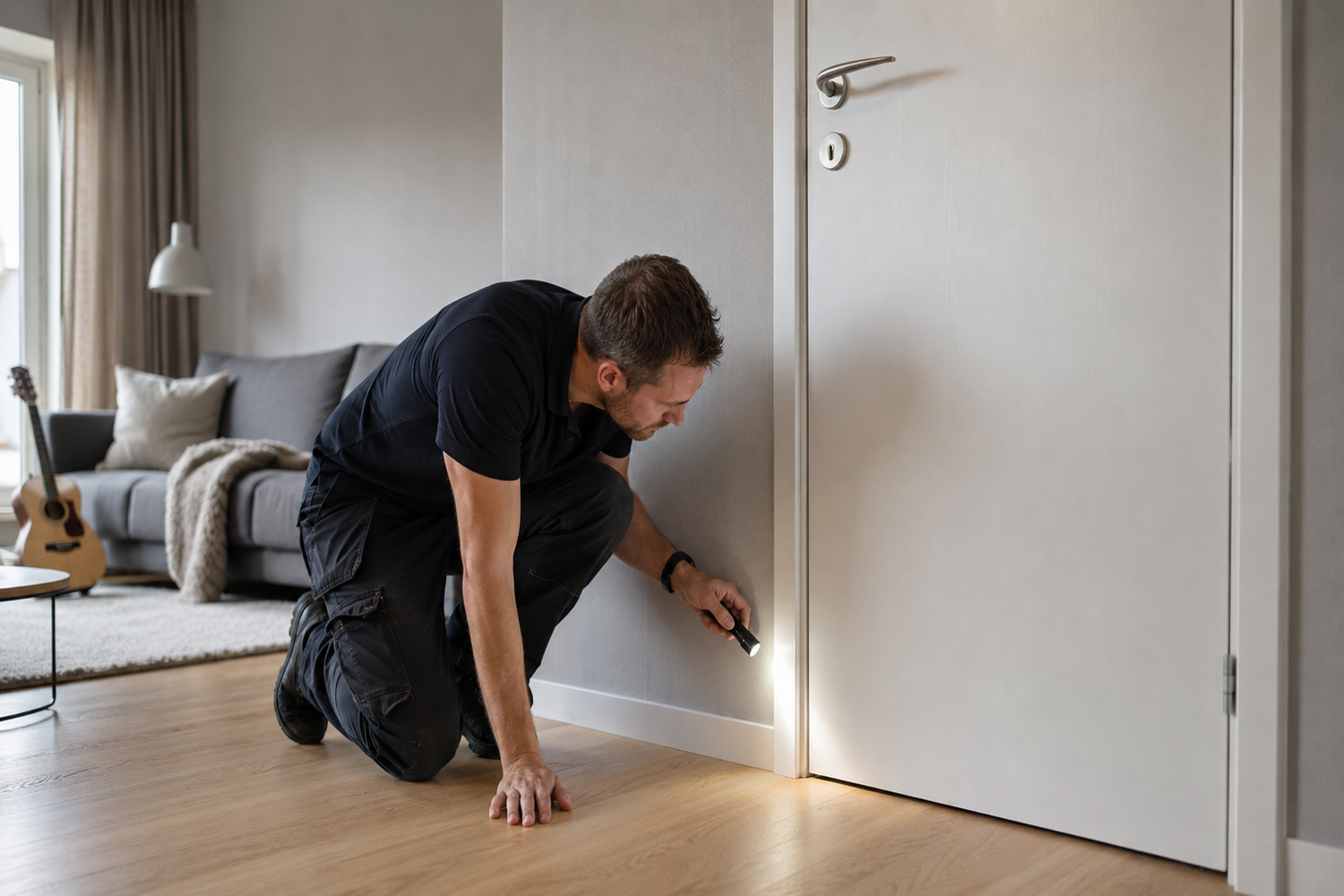
A good result starts with a simple assessment: Where does the sound originate, where is it heard, and how does it travel there? Check door gaps, penetrations, joints, ventilation ducts, and connections between building components. Listen both near the sound source and in the receiving room. Also note whether the disturbance changes when a machine is lifted off the surface or when an opening is temporarily sealed.
By distinguishing between airborne sound, reverberation, and structure-borne vibrations, it becomes easier to choose the right approach and avoid unnecessary material costs. Start with the problem, prioritize the weakest link, and check the results after each major intervention. Then, sound insulation, sound absorption, and vibration damping can be used individually or combined where the acoustic environment actually requires it.