








The Difference Between Sound Absorbers and Sound Diffusers – Creating the Perfect Acoustic Environment
Achieving an optimal acoustic environment requires a balance between absorbing and diffusing sound. Two important acoustic solutions are sound absorbers and sound diffusers, but their functions differ significantly. By understanding the differences and how they can be combined, you can create more pleasant and well-balanced acoustics, tailored to the room’s needs.
What Do Sound Absorbers Do? – Reduce Reverberation and Echoes
Sound absorbers are designed to capture and reduce sound reflections, thereby reducing reverberation and echoes in a room. By absorbing sound waves, sound energy is converted into heat, resulting in a more controlled sound environment. This is particularly important in environments where disruptive noise can affect concentration, the quality of conversations, or the enjoyment of music and movies.
Sound absorbers are often used in:
Offices and conference rooms
Reduces disruptive background noise and improves speech intelligibility.
Restaurants and cafes
Creates a calmer and more pleasant environment by reducing noise levels.
Home theater systems and music studios
Improves sound quality by reducing unwanted reverberation.
Residential
Creates a more harmonious acoustic environment in living rooms, bedrooms, and home offices.
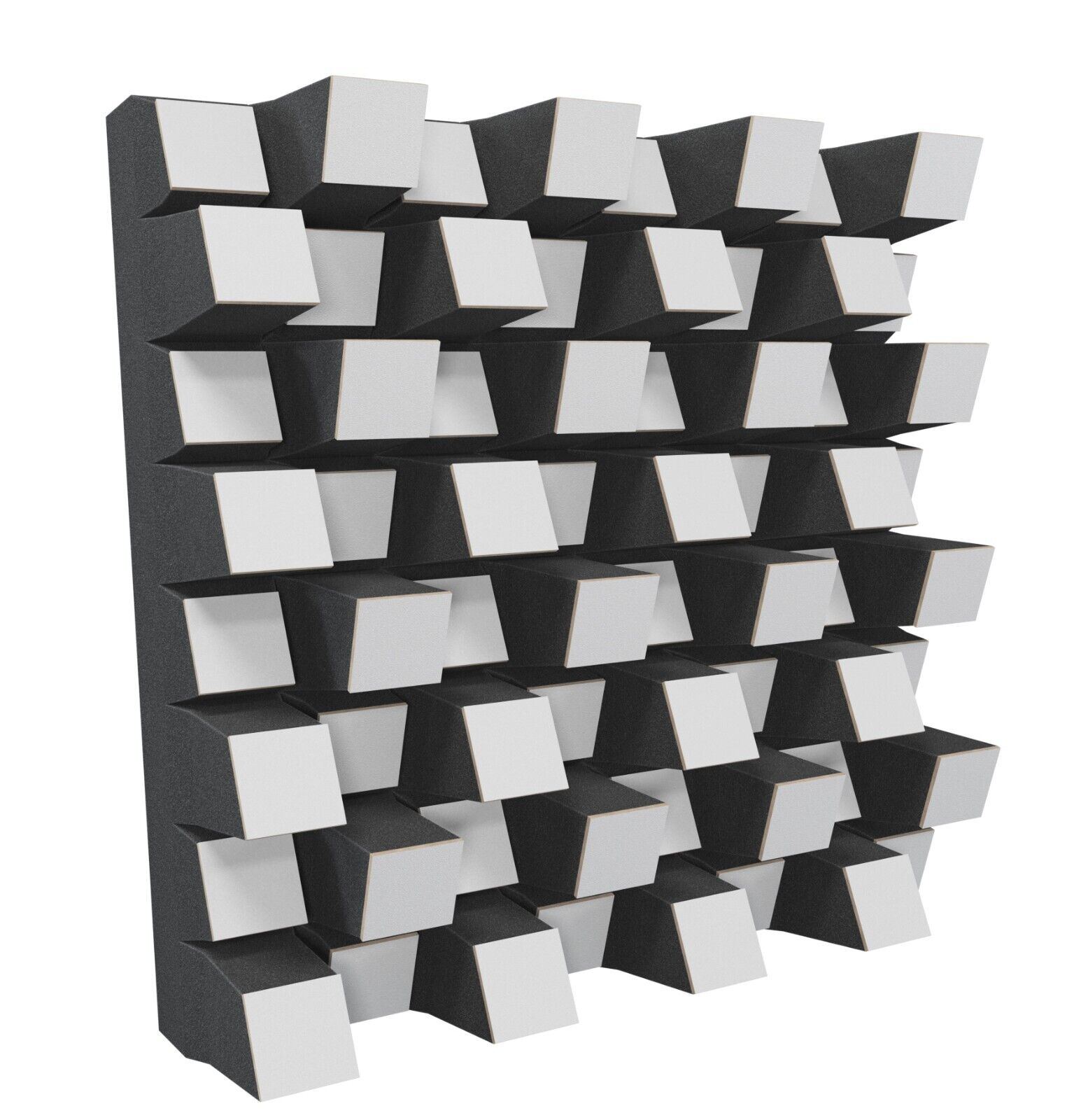
Sound absorbers are made from porous materials such as acoustic foam, mineral wool, or polyester, which effectively dampen sound levels. By placing them on walls, ceilings, or other hard surfaces, you can significantly improve a room’s acoustics.
What Do Sound Diffusers Do? – Improve Sound Distribution
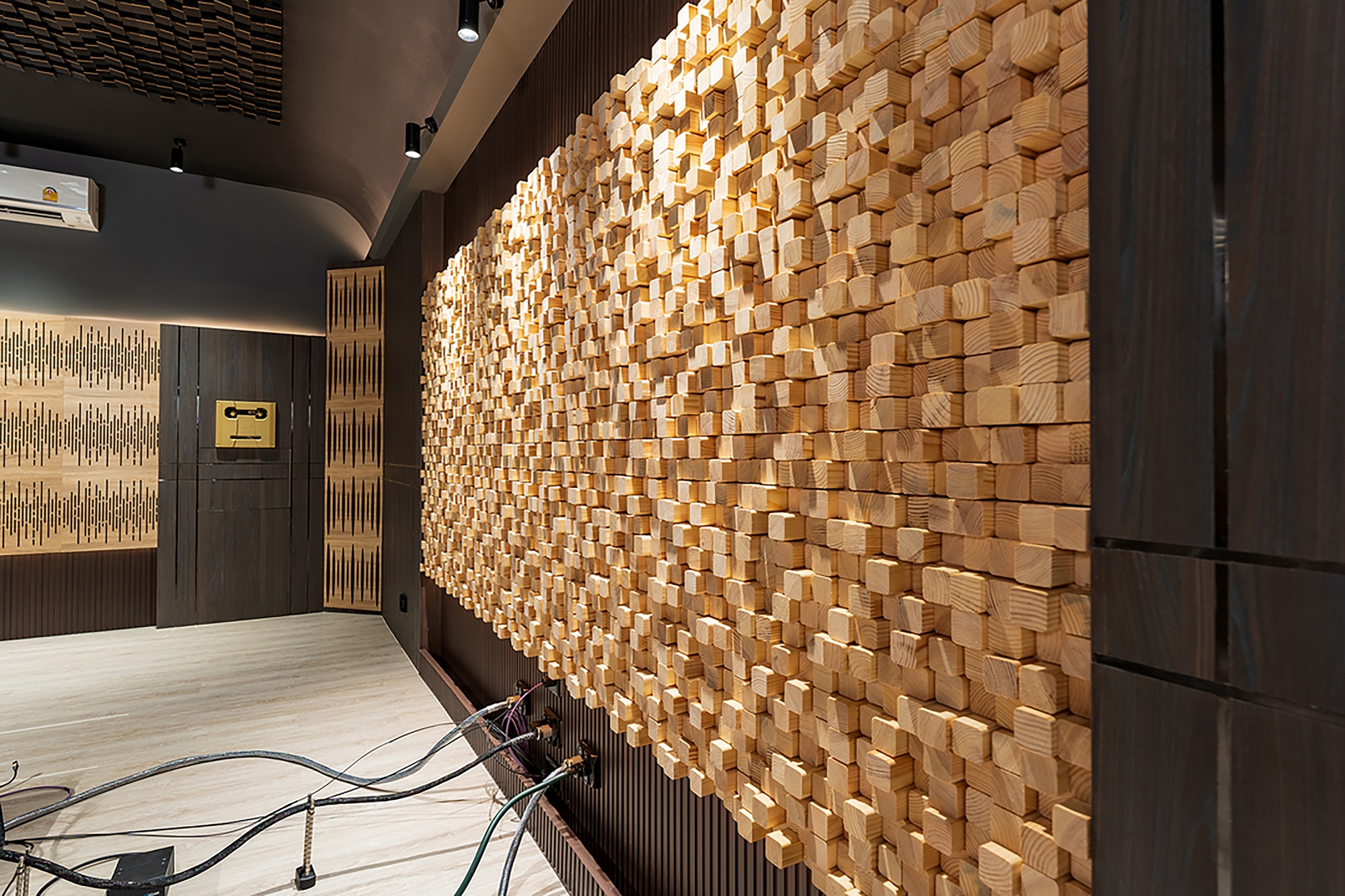
Unlike sound absorbers, which reduce sound, sound diffusers are designed to distribute sound evenly throughout a room. They prevent sound focusing and dead zones by reflecting and scattering sound waves in multiple directions. This creates more natural acoustics and makes the sound feel balanced and lively.
Sound diffusers are often used in:
Recording studios and concert halls
Distribute sound evenly for a more natural soundstage.
Home theater systems
Enhances the surround sound effect by creating a more realistic audio experience.
Music rooms and rehearsal spaces
Reduces uneven reflections and provides richer acoustics.
Sound diffusers are often made of wood or other hard materials with specific geometric shapes that break up sound waves and disperse them over a larger area. This allows the room to retain a natural resonance without feeling muffled or lifeless.
Which solution is best for your room?
The choice between sound absorbers and sound diffusers depends on the room’s acoustic needs. If you experience a lot of echo or noise, sound absorbers are the best choice for creating a more controlled sound environment. If, on the other hand, the sound feels flat or unbalanced, sound diffusers can help create more dynamic and lively acoustics.
In many cases, a combination of both is the most effective solution. By using sound absorbers to dampen unwanted reflections and sound diffusers to evenly distribute the remaining sound, you can create an optimized sound environment, whether it’s for a home, office, or professional studio.