




• Free shipping
  • 5-year warranty
  • Fast delivery

How noise affects health – why soundproofing is necessary

Noise affects people more than many realize. A sound that initially feels like a minor disturbance can, over time, affect sleep, concentration, recovery, the ability to work in peace, and overall well-being. At home, this can include traffic, neighbors, stairwells, elevators, ventilation, heat pumps, or washing machines. In schools, noise from hallways, classrooms, and mechanical systems can disrupt teaching and the quiet needed for studying. In offices, conversations, meeting rooms, printers, ventilation, and activity in adjacent rooms can make it difficult to focus on work.

When noise is frequent, the body has a harder time unwinding. This is especially true in environments where people need to rest, think, learn, or communicate. Sound that penetrates walls, floors, ceilings, doors, and windows is not just a practical problem, but also affects the perceived sense of security and quality within the building. Therefore, sound insulation is a crucial measure when the goal is to reduce sound transmission between rooms or from the surrounding environment.

Sound insulation is about preventing sound from passing from one place to another. It differs from sound absorption, which is primarily used inside a room to reduce echo and reverberation. If the problem is that sound from neighbors, traffic, machinery, utilities, or activities is penetrating the room, sound insulation should therefore be prioritized. Only once sound transmission has been addressed can sound absorption be used, if necessary, as a final complement to make the room less harsh and echoey.

For sound insulation to work, you need to understand how sound travels. Airborne sound, such as voices, music, and traffic, can pass through lightweight structures, gaps, and loose joints. Structure-borne sound and vibrations can spread through floors, walls, ceilings, studs, pipes, and installations. Therefore, it is rarely sufficient to simply apply a material to a surface without also considering sealing, mass, and decoupling. The weakest point often determines how much sound continues to pass through.

Sealing is crucial because even small gaps can let through a lot of sound relative to their size. Door gaps, window connections, penetrations, pipe shafts, and gaps between building components therefore need to be carefully checked. Mass is important because heavy and dense layers make it harder for airborne sound to pass through. Decoupling reduces sound bridges where vibrations would otherwise be transmitted between structures.

In homes, schools, offices, apartment buildings, and public spaces, sound insulation is often needed on multiple levels. A wall may need more mass, a door may need to be sealed, a floor may need to reduce contact transmission, and an installation may need to be separated from the building to prevent the spread of vibrations. When these elements work together, a quieter, safer, and healthier indoor environment is created, providing better conditions for daily life, work, sleep, and recovery.

Recommended products

Benefits of reducing noise

Reduces disruptive sound transmission
Sound insulation helps limit sound that would otherwise travel between rooms, floors, or from the outside into the building.

Contributes to better sleep and recovery
When noise from traffic, neighbors, stairwells, or building systems is reduced, it becomes easier to rest, sleep, and recover at home.

Enhances concentration
In schools, offices, and public spaces, reduced sound transmission can create aquieterworking environment and more stable conditions for focus.

Improves perceived safety
When conversations and sounds do not travel as easily between rooms, the sense of privacy, integrity, and control over one’s own sound environment increases.

Addresses multiple sound pathways simultaneously
A well-designed solution takes into account walls, floors, ceilings, doors, windows, penetrations, and connections where sound often finds weak points.

Based on airtightness, mass, and decoupling
By combining sealing, heavy layers, and reduced contact transmission, sound insulation can become more effective and durable over time.

Reduces both airborne and structure-borne noise
The right measures can limit voices, music, and traffic noise, as well as vibrations and mechanical noise transmitted through the structure.

Creates a healthier indoor environment
A quieter environment reduces the stress caused by recurring noise and makes it easier to feel comfortable, work, learn, and recover.

Step-by-step: How to effectively soundproof indoor spaces

A good soundproofing solution doesn’t start with a product, but with identifying the path of the sound. Noise can travel through walls, floors, ceilings, doors, windows, ventilation systems, pipes, gaps, and joints. Therefore, the work should be done in the correct order: first, mapping; then, sealing; followed by mass and decoupling; and finally, supplementary measures where sound is still leaking or vibrations are being transmitted.

Step 1: Identify the source of the noise
Listen to determine if the sound primarily comes from traffic, neighbors, installations, machinery, ventilation, stairwells, or activity in adjacent rooms. Check whether the sound is most clearly heard near walls, doors, windows, floors, ceilings, or penetrations. Airborne sound is often perceived as voices, music, or traffic noise, while structure-borne sound and vibrations can feel like low-frequency humming, impacts, resonances, or mechanical noise in the structure.

Step 1.1: Investigate weak points
Check door gaps, window joints, moldings, pipe penetrations, ventilation ducts, and joints between building components. In many buildings, it is not the large surfaces that leak the most sound, but small gaps and sound bridges around edges, frames, and joints.

Step 1.2: Prioritize the right building component
Start with the building component through which the sound passes most clearly. If noise from neighbors comes through a wall, the wall and its connections should be prioritized. If the sound comes from a stairwell or hallway, the door is often a key component. If the sound comes from equipment or machinery, both airborne sound and vibrations need to be assessed.

Results
You get a clear picture of where sound insulation is most effective and avoid spending time on areas that aren’t the main problem.

Step 2: Seal gaps, doors, windows, and connections
Sealing is one of the most important fundamentals of sound insulation. Use Sealing strip for windows & doors - SilentDirect Seal 20 meters where gaps around doors, windows, frames, hatches, or joints allow sound to pass through. The product is used on clean contact surfaces where the goal is to reduce sound leakage through small openings.

Step 2.1: Seal the door’s weak points
Doors are often a weak point because sound can pass around the door leaf and under the door. Use Door Bottom Seal - SilentDirect seal door at the bottom of the door when sound leaks through the gap toward the floor. If necessary, supplement with Sealing strip for windows & doors - SilentDirect Seal 20 meters around the frame and jamb.

Step 2.2: Seal penetrations and joints
Check electrical boxes, pipes, ventilation penetrations, trim joints, and connections between walls, floors, and ceilings. Small gaps can compromise the overall performance, especially when other surfaces already have higher mass. Sealing should therefore be done before new sound-insulating layers are installed.

Results
Sound leakage through gaps and unsealed connections is reduced, which allows subsequent sound-insulating layers to be more effective.

Step 3: Increase mass where airborne sound passes
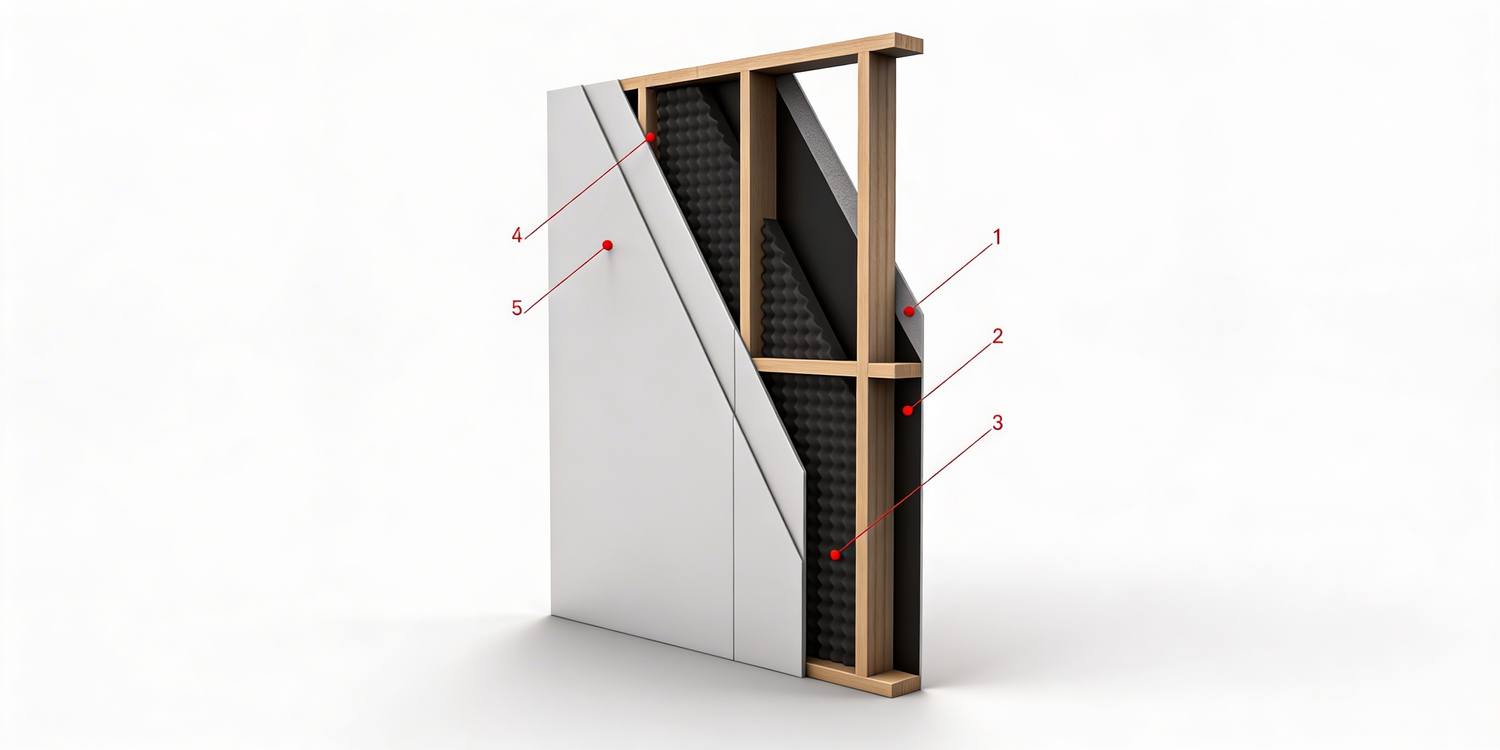
Airborne sound such as voices, music, TV sound, and traffic often requires more mass in the construction. Where appropriate, Sound Insulation - SilentDirect MLV be used as a heavy sound-insulating layer to help block airborne sound. The material should be placed where the sound passes, for example in wall, floor, or structural solutions where a flexible mass layer is needed.

Step 3.1: Build walls and surfaces with a holistic approach
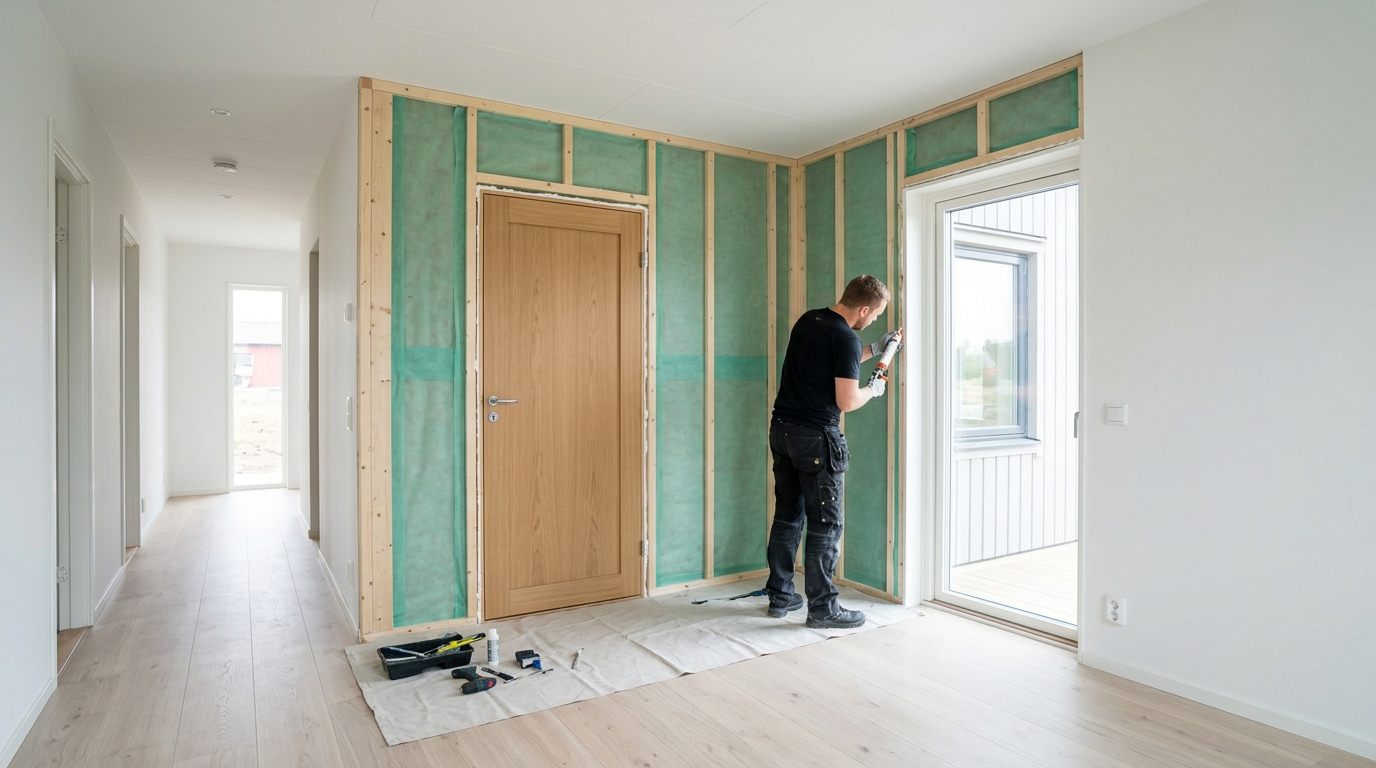
When soundproofing walls, the heavy layer should be combined with sealed edges and precise joints. If panel materials are used, connections to floors, ceilings, and adjacent walls must be treated so that sound is not transmitted around the structure. The mass primarily helps against airborne sound, but the overall effectiveness depends on both installation and sealing.

Step 3.2: Avoid leaving sound paths open
If a wall is reinforced but doors, windows, or ventilation remain unsealed, sound can continue to travel through these paths. Therefore, always check adjacent building components before completing the work.

Result
The structure gains a better ability to limit airborne sound, while sealed connections reduce the risk of sound taking a different path.

Step 4: Reduce vibrations, resonances, and sound bridges
When noise is caused by structure-borne sound, machinery, installations, or vibrations, mass alone is not always sufficient. In such cases, contact transmission must be reduced. Soundproofing damping mat - SilentDirect Polaric can be used where sound insulation, vibration control, and sheet metal damping need to be combined. Sound insulation - SilentDirect Neo is suitable when vibrations, resonances, and mechanical noise need to be dampened in structures, machine environments, or installations.

Step 4.1: Decouple contact points
Where new panels, studs, hatches, or building components are in direct contact with the existing structure, sound bridges can occur. At such contact points, Sealing strip for windows & doors - SilentDirect Seal 20 meters be used as a supplementary measure on contact surfaces when the goal is to reduce contact transmission, structure-borne noise, and sound bridges.

Step 4.2: Address machinery and installations separately
Machines, pumps, ventilation, and other equipment can generate vibrations that spread through floors, walls, or mountings. Where localized vibration damping is needed, Dampio PRO 100x100x23 mm vibration dampers – high load 750 kg be used under machines and equipment when the load and placement are suitable.

Results
The risk of structure-borne noise, resonances, and sound bridges is reduced, making the sound insulation more complete than if only airborne noise were treated.

Step 5: Treat ventilation, pipes, and technical sound pathways
Sound can also propagate through ventilation ducts, pipes, and shafts. If ventilation pipes or circular installations contribute to the disturbance, Sound absorber for ventilation ducts - SilentDirect Air 40 cm wide be used in the appropriate ventilation solution to reduce noise in the duct. This measure should be viewed as part of the overall solution and combined with sealing around penetrations.

Step 5.1: Check connections around installations
Pipes and ventilation often pass through walls, floors, and ceilings. If openings or shafts are not sealed, sound can pass alongside the installation itself. Therefore, seal around penetrations and check whether vibrations need to be isolated from the building structure.

Result
Sound that would otherwise propagate through technical systems and openings is limited, which improves the overall sound insulation in the building.

Step 6: Check the entire system and make adjustments only if necessary
Once sealing, massing, and decoupling are complete, you should listen again in the room and compare it to the initial condition. If sound is still getting through, first check for any remaining gaps, leaky doors, weak windows, open penetrations, or sound bridges. If the room still feels hard and echoey after that, sound absorption can be used as a final complement inside the room, but the main problem with sound transmission should always be solved with sound insulation first.

Results
You’ll achieve a more thoughtfully designed acoustic environment where disruptive sound transmission, sound leakage, and vibrations are addressed in the correct order.

Did you know that…

Did you know that even a very small gap around a door can significantly reduce sound insulation? Sound doesn’t behave politely and doesn’t choose the largest surface area; instead, it often takes the easiest path through the structure.

Did you know that a room can feel noisy even if the sound isn’t particularly loud? Recurring disturbances, especially during rest or concentrated work, can feel more stressful than a temporary loud noise.

Did you know that structure-borne sound can cause a building to act as a sound conductor? Vibrations from machinery, installations, or footsteps can spread through floors, walls, and studs even when the airborne sound itself seems limited.

Did you know that sound insulation often fails when only one surface is treated? Walls, doors, floors, ceilings, windows, ventilation, and connections need to be viewed as parts of the same sound path.

Selected articles on "How Noise Affects Health"

What is the difference between sound insulation and sound absorption?

How do you soundproof and insulate a wall?

How do you soundproof and insulate a ceiling?

How do you soundproof and insulate doors?

Products suitable for soundproofing and vibration damping

To reduce noise and sound transmission in indoor environments, products are needed that provide airtightness, mass, decoupling, and reduced contact transmission. The choice depends on whether the problem involves airborne sound, structure-borne sound, vibrations, door gaps, window joints, mechanical systems, or weak building components.

Sound Insulation - SilentDirect MLV
This product is ideal for blocking airborne sound with a heavy, flexible mass layer in walls, floors, or other sound-insulating structures.

Sealing strip for windows & doors - SilentDirect Seal 20 meters
This product is ideal for sealing gaps, joints, frames, and contact points where sound might otherwise leak through.

Door bottom seal - SilentDirect seal door
This product is ideal for reducing sound leakage under doors in homes, offices, schools, and other spaces where the door gap is a weak point.

Soundproofing mat - SilentDirect Polaric
This product is ideal for combining sound insulation with vibration damping and sheet metal damping in structures or surfaces where resonance affects the acoustic environment.

Sound insulation - SilentDirect Neo
This product is suitable when you want to reduce vibrations, resonances, and mechanical noise in building components, installations, or equipment that contribute to structure-borne noise.

Sound insulation - SilentDirect Egg
This product is ideal when you want to use a solution for sound insulation and damping in vehicles, machinery, and structures where both sound and vibrations need to be managed.

Sound Absorber and Sound Insulation - SilentDirect Egg Roll
This product is ideal when you need to work with larger surfaces where combined sound insulation, vibration damping, and some sound-absorbing functionality are required in roll form.

Sound Absorber and Sound Insulation - SilentDirect Neo Roll
This product is suitable when you want to treat larger surfaces where vibrations, resonances, and mechanical noise need to be reduced as part of the sound insulation work.

Sound absorber for ventilation ducts - SilentDirect Air 40 cm wide
This product is suitable when you want to reduce sound transmitted through ventilation ducts and circular installations, while also sealing penetrations and connections.

Vibration dampener Dampio PRO 100x100x23 mm – high load 750 kg
This product is suitable when you want to reduce localized vibration from machinery and equipment that might otherwise transmit structure-borne noise through the floor or structure.

*Free shipping

Free shipping to a pickup location

5-year warranty

5-year product warranty

Fast delivery

Usually ships the same day

How Noise Affects Health – Why Soundproofing Is Necessary

Noise is more than just a disruptive background sound. When noise from traffic, neighbors, installations, machinery, or activities penetrates through walls, floors, ceilings, doors, windows, and poorly sealed joints, it affects daily life, concentration, sleep, and recovery. That is why sound insulation is an important part of a safe and functional indoor environment in homes, schools, offices, apartment buildings, public spaces, and other buildings where people spend extended periods of time.

Why noise affects the body

The body reacts to disruptive sounds even when we try to ignore them. Recurring noise can contribute to stress, irritation, fatigue, and difficulty focusing. In homes, sounds from neighbors, stairwells, traffic, or mechanical systems can disrupt sleep and rest. In schools and offices, sound transmission between rooms can make it harder to work undisturbed, understand speech, and maintain concentration for extended periods.

Sound insulation reduces sound transmission

Sound insulation is about stopping or reducing sound that travels from one place to another. This can include airborne sound, such as voices, music, and traffic, as well as structure-borne sound and vibrations that travel through the building’s structure. An effective sound insulation solution therefore starts with the path of the sound: where the sound comes from, which building components it passes through, and which weak points allow sound to pass through.

Tightness, mass, and decoupling are the foundation

Three principles are particularly important in sound insulation. Tightness reduces sound leakage through gaps, door gaps, window joints, and penetrations. Mass makes it harder for airborne sound to pass through a structure. Decoupling reduces contact transmission, structure-borne sound, and sound bridges where vibrations can otherwise be transmitted through studs, panels, floors, or mechanical systems. When these principles are combined, sound insulation becomes more stable and predictable.

The difference between sound insulation and sound absorption

Sound insulation and sound absorption solve different problems. Sound insulation is used when sound needs to be prevented from entering or leaving a room. Sound absorption is primarily used inside a room to reduce echo and reverberation. If the problem is that sound from neighbors, traffic, activities, or installations is penetrating the structure, sound insulation is the primary measure. Sound absorption can be a final complement when sound transmission has already been addressed but the room still feels harsh or echoey.

Common sound paths in buildings

Sound often takes the path of least resistance. A heavy wall won’t fully help if the door leaks sound, if the window seal is leaky, or if sound is transmitted through floors, ceilings, pipes, ventilation, or studs. In apartment buildings, sound can spread between units through floor joists, shafts, and connections. In schools and offices, sound can travel between classrooms, meeting rooms, and hallways. Therefore, sound insulation must be viewed as a holistic solution, not as a single product applied to a single surface.

A quieter environment creates better conditions

When sound transmission is reduced, the indoor environment becomes quieter, more private, and more comfortable to be in. At home, this can contribute to better rest and recovery. In schools, it can create a better atmosphere for focused work. In offices, it can reduce disturbances between conference rooms, meeting rooms, and workspaces. In public spaces, it can provide safer and more functional environments. Proper sound insulation is therefore not just about comfort, but also about health, concentration, and quality of life.