







Soundproof your yoga studio for a quiet and peaceful environment
A yoga studio should feel calm the moment a participant steps into the room. At the same time, many yoga studios are built with hard floors, smooth walls, mirrors, large windows, and open spaces that cause sound to reflect more than you might initially think. Voices, soft footsteps, music, ventilation, and movements on mats can therefore linger in the room as echoes and long reverberations. With the right sound absorption, the acoustic environment becomes softer, more focused, and better suited for yoga, meditation, breathing, and recovery.
Why Acoustics Affect the Experience in a Yoga Studio
When sound bounces off ceilings, walls, glass, and floors, even soft-spoken instructions can sound harsher and less present. The instructor may need to raise their voice, music may sound sharper, and small sounds from participants can travel unnecessarily far. This not only interferes with speech intelligibility but also disrupts the sense of stillness. Sound absorption reduces these reflections within the same room and creates a more pleasant balance between voice, music, and silence.
Sound absorption is not the same as sound insulation
In a yoga studio, it’s important to distinguish between sound absorption and sound insulation. Sound absorption is about reducing echoes, reverberation, and harsh sound reflections inside the space. Sound insulation, on the other hand, is about preventing sound from traveling between different rooms—for example, to a neighbor, a hallway, or an adjacent treatment room. If the main problem is that the room feels harsh, echoey, or restless, sound absorption is the first and most important step.
Start with the ceiling
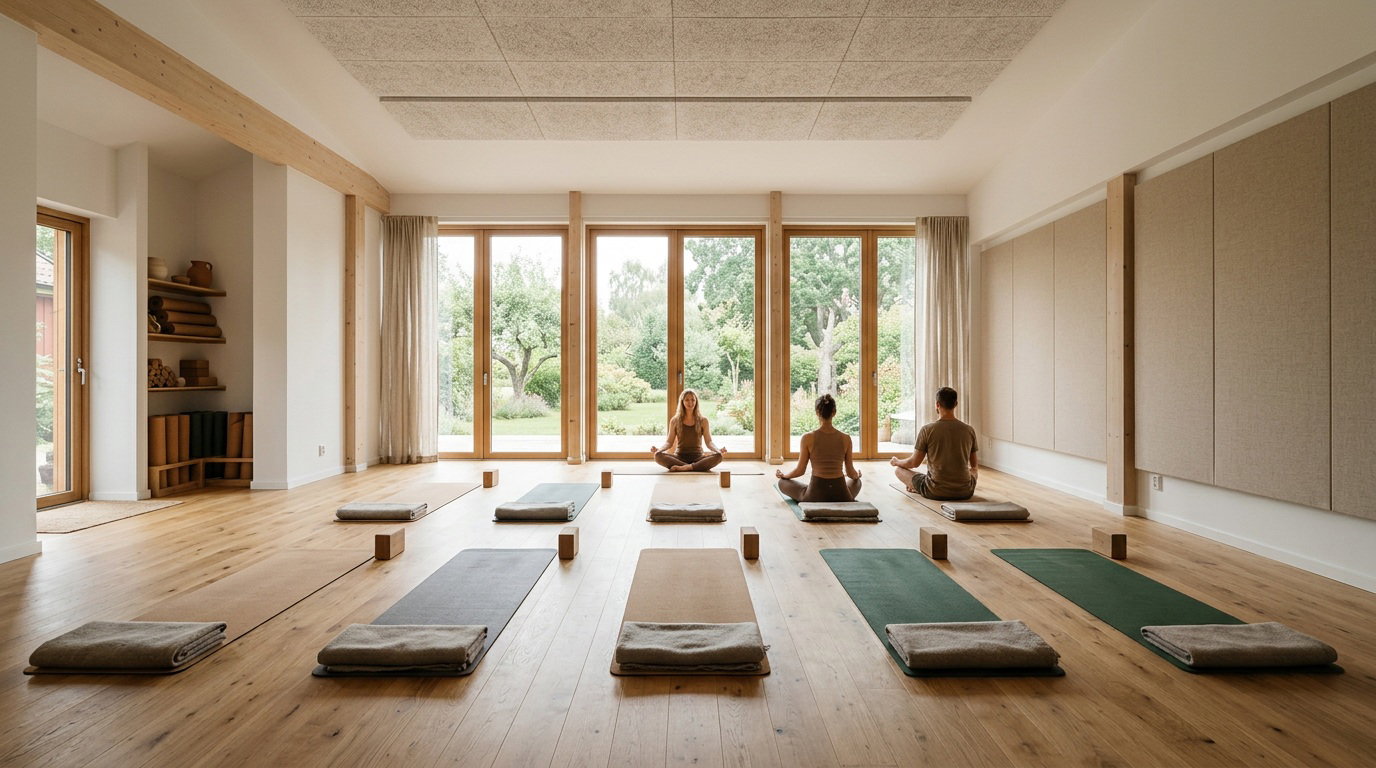
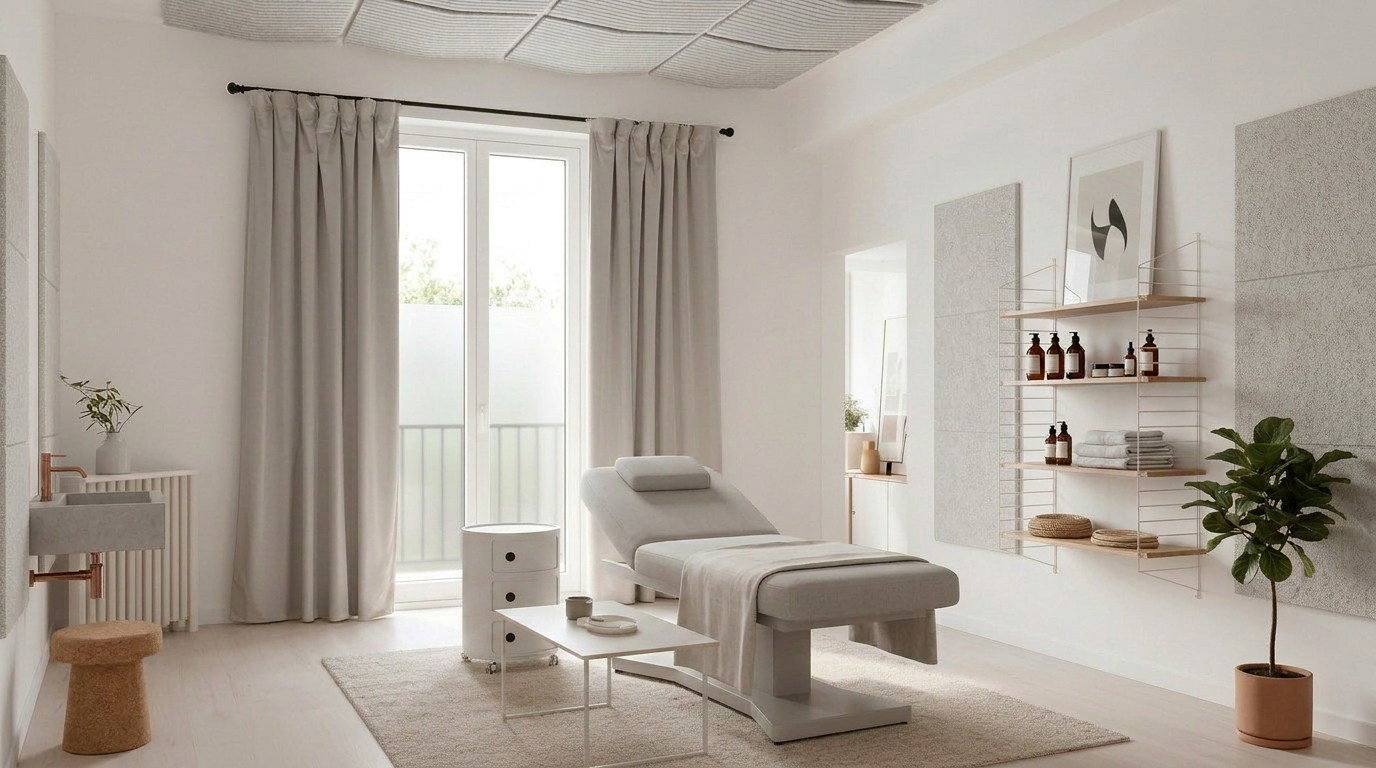
The ceiling is usually the largest unobstructed surface in a yoga studio. Since it’s rarely covered by furniture or textiles, it can reflect a lot of sound back down into the room. Ceiling absorbers therefore often provide a noticeable improvement without taking up floor space or interfering with movement, mat placement, or open areas. In spaces with high ceilings, concrete ceilings, or large open areas, the ceiling is often the most logical place to start.
Supplement with walls, curtains, and room dividers
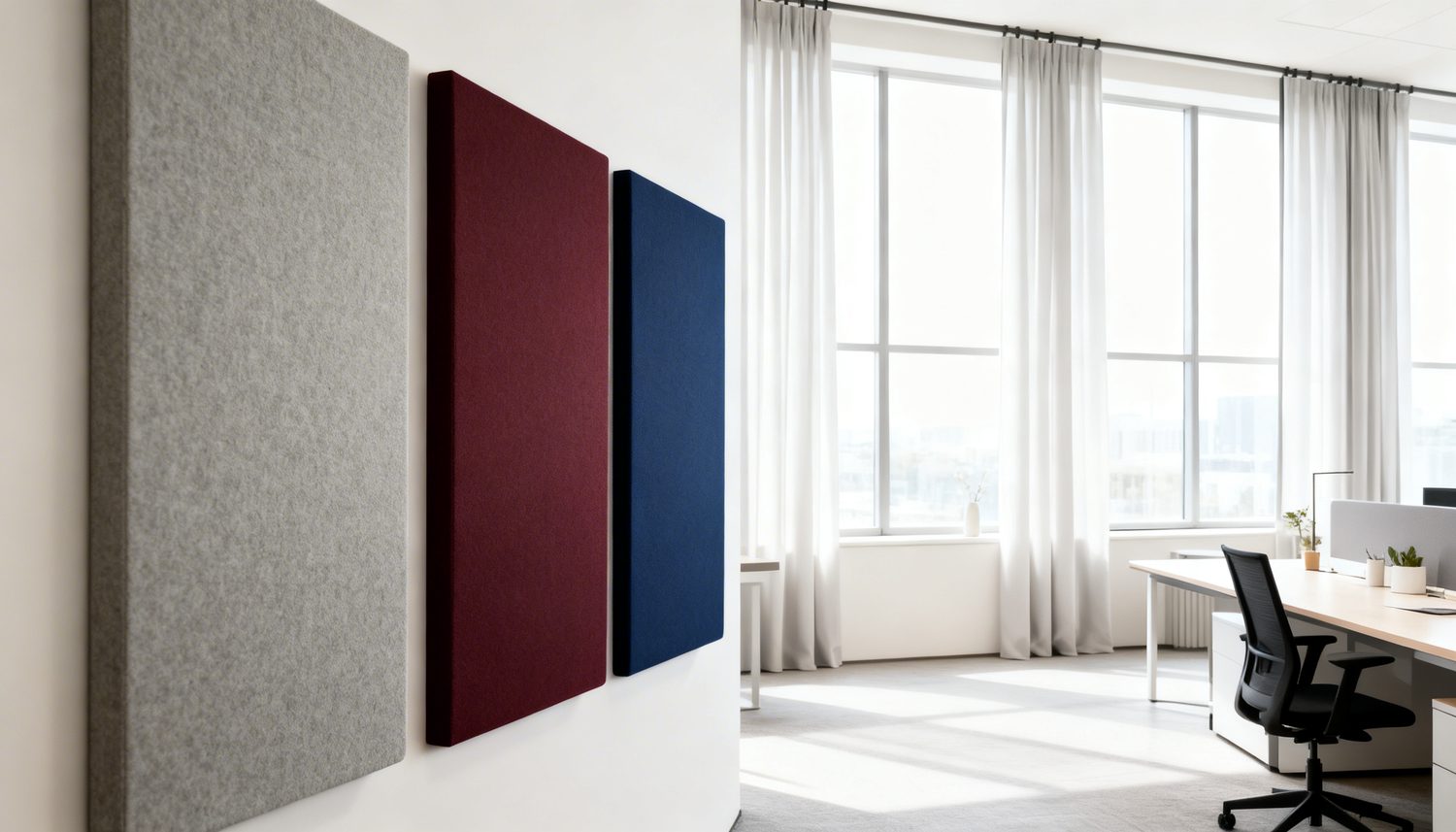
Wall absorbers are used to dampen reflections from large wall surfaces, especially behind the instructor, on side walls, and on surfaces where sound bounces between parallel walls. Sound-absorbing curtains can provide extra softness in front of windows and glass partitions, while room dividers can create quieter zones in larger studios, wellness facilities, and group exercise rooms. The solutions can be discreetly customized so that the space retains its minimalist, harmonious, and open feel.
Tailor the solution to the nature of the class
A space for calm yoga, meditation, and breathwork often requires a softer acoustic environment than a room for more physically demanding group workouts. Therefore, the placement should be based on how the room is used: where the instructor stands, where participants lie during relaxation, where the music is played, and which surfaces are most reflective. In this way, sound absorption becomes part of the room’s function, not just a technical measure. It also allows the measures to be kept discreet and adapted to the studio’s aesthetic and the room’s serene atmosphere.
A more harmonious space for both participants and the instructor
As reverberation is reduced, the room becomes easier to teach in and more pleasant to be in. The voice can be kept softer, music takes on a warmer character, and silence feels more focused. With well-thought-out sound absorption, the yoga studio can achieve an acoustic environment that supports concentration, presence, and recovery without compromising aesthetics, simplicity, or function.