





How to Assess a Reasonable Reduction in Noise
Sound insulation can make a big difference, but it’s rarely possible to promise a specific number of decibels without first knowing the sound source, the building, and the path the sound takes. A product doesn’t have the same effect in every room. The final result is determined by the entire structure: walls, ceilings, floors, doors, windows, ventilation, penetrations, and connections all work together. Therefore, the most important question before making a purchase is not just how well a material dampens sound, but whether the solution addresses the weakest link in your specific environment.
Decibels do not describe the entire experience
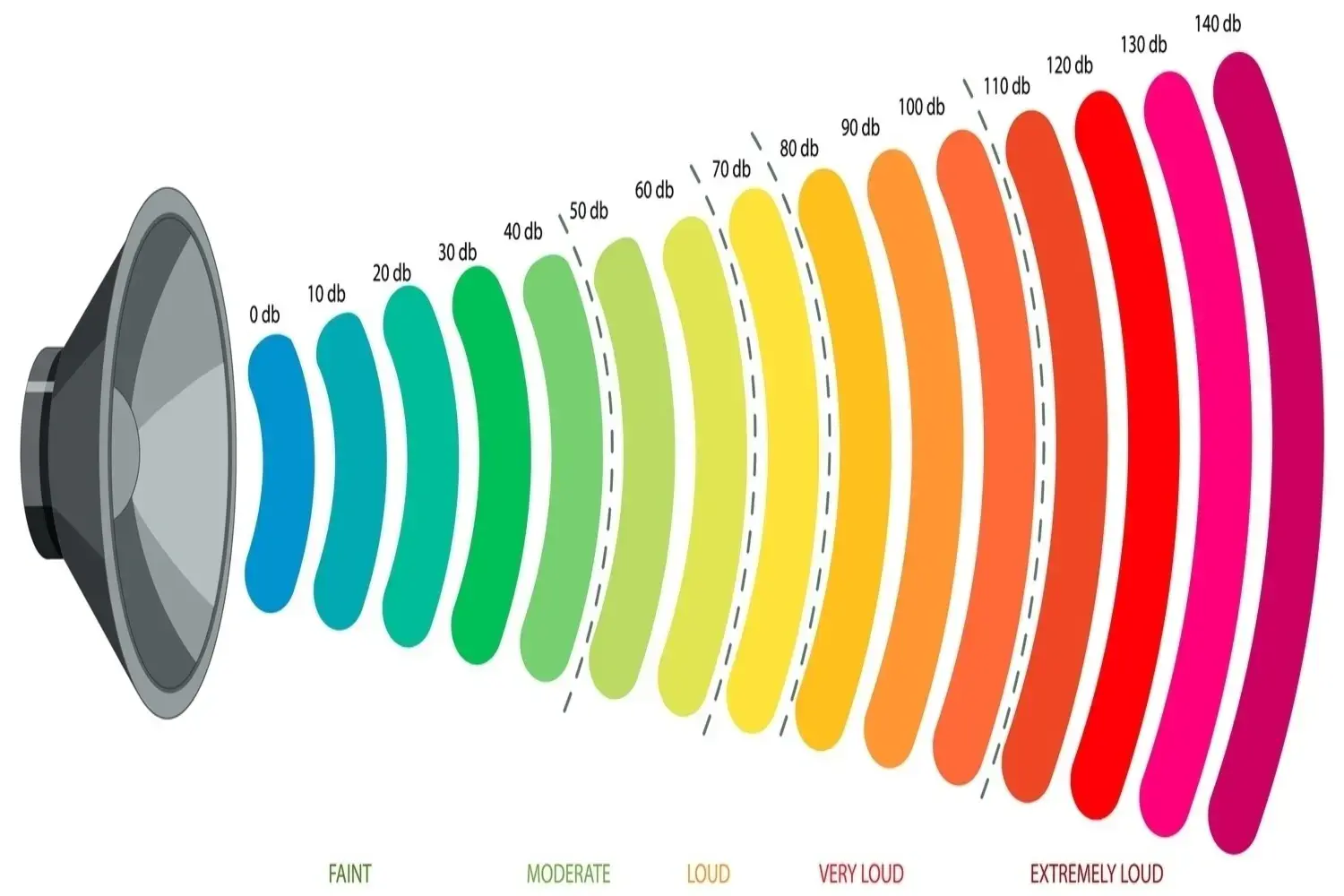
The decibel scale is logarithmic, and a technically measurable change may not be perceived equally clearly for all sounds. Speech, music, traffic, and low-frequency bass have different characteristics. A reduction of about 10 dB is often perceived as roughly halving the sound level, but the experience is influenced by frequency, background noise level, time of day, and how disruptive the sound is. A faint but recurring thud can therefore be more stressful than a more consistent sound with the same measured value.
Laboratory values and actual construction are different things
Product data and laboratory tests show how a material or a defined design performs under controlled conditions. In a real room, sound can travel around the treated surface via flanking transmission, gaps, or adjacent building components. A thick panel or barrier layer offers limited benefit if the door gap is open, a vent connects the rooms, or vibrations are transmitted through the building frame. Therefore, view the reported values as a basis for decision-making, not as a guarantee of the same improvement on-site.
The correct measure depends on the type of sound
Airborne sound, such as speech or TV audio, is managed through a tight and sufficiently heavy construction, often in combination with decoupling and absorbent materials in cavities. Structure-borne sound and vibrations from footsteps, machinery, or installations, on the other hand, require that transmission paths be broken or that vibrations be dampened. If the problem is echo within the same room, sound absorption is needed, not sound insulation. Choosing the wrong approach is a common reason why the results fall short of expectations.
Small leaks can compromise the entire result
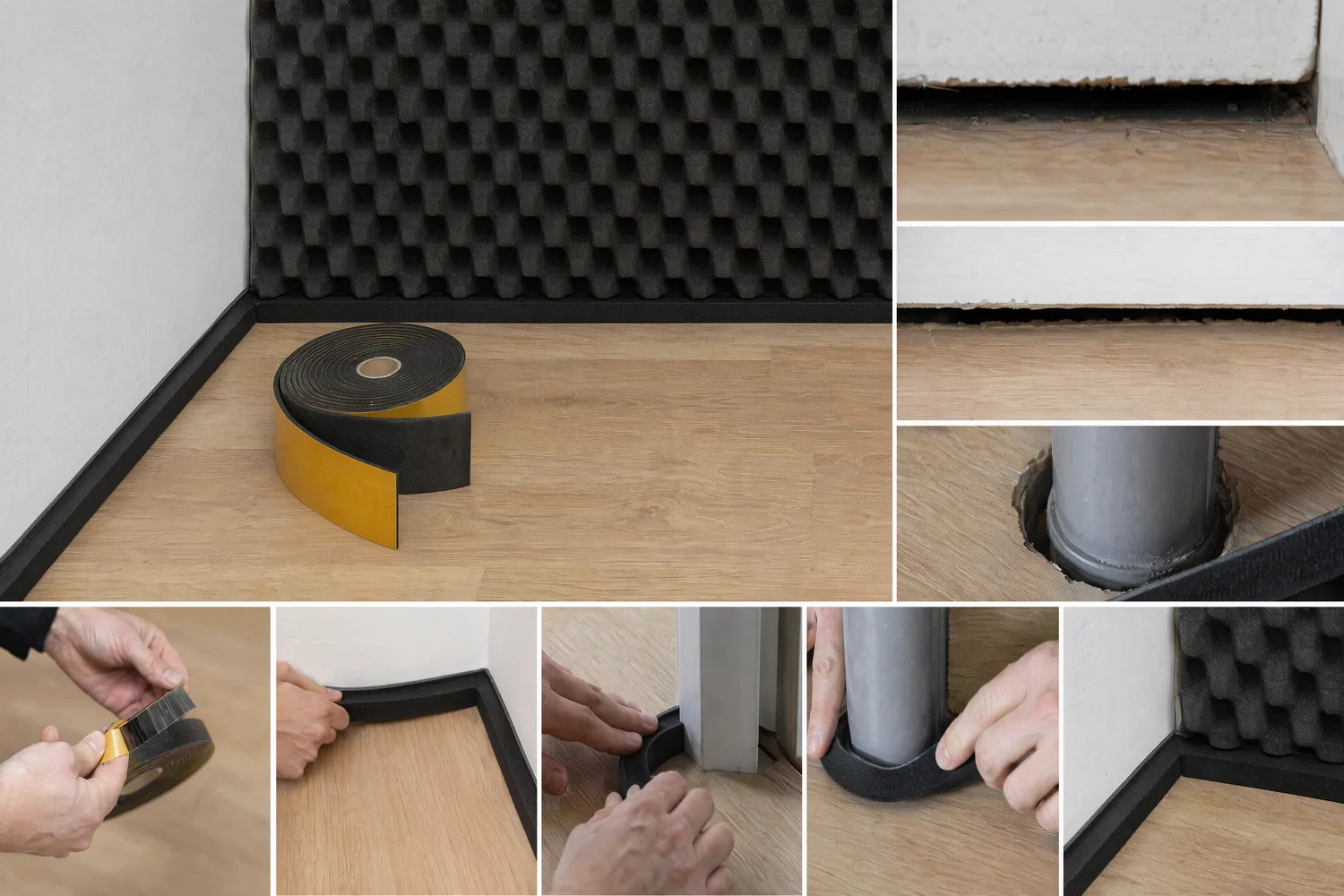
Sound finds its way through weak points. Leaky joints, electrical boxes, pipe penetrations, and openings around doors or windows can limit the effectiveness of an otherwise good solution. Therefore, inspect the entire partition and prioritize sealing before purchasing more material. For complex problems, we recommend assessing the sound source, the transmission path, and the receiving room together.
Set a performance goal before making a purchase
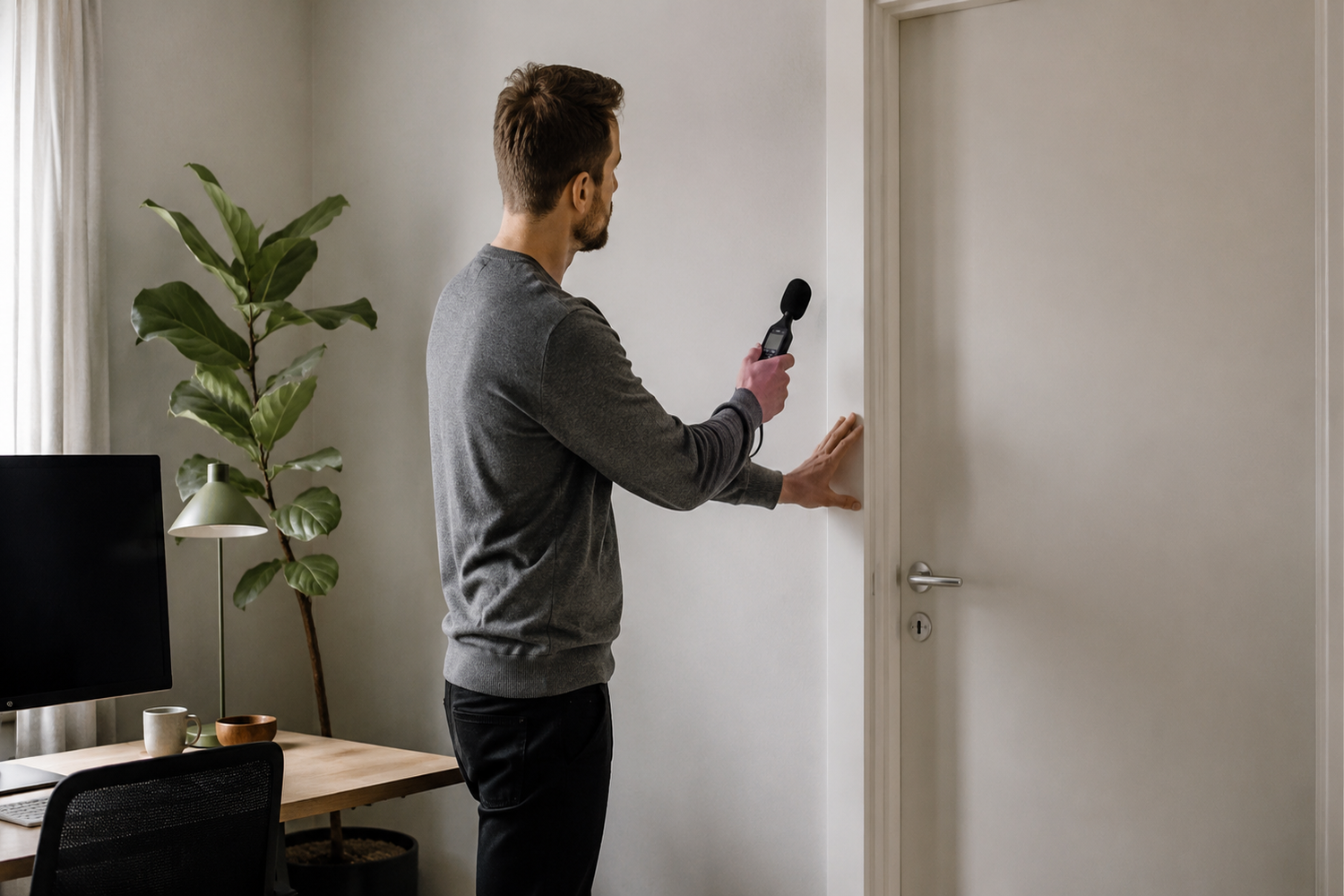
Describe what you want to achieve: should speech become harder to make out, should nighttime traffic be less disruptive, or should vibrations from a machine stop spreading to the next room? Document when and where the sound is heard, compare multiple locations, and feel free to use measurements as a supplement. This makes it easier to choose the right category of solution, prioritize the most important areas, and determine whether the measure should be implemented in one or more steps. Realistic expectations are based on an accurate diagnosis, a complete design, and careful installation.