


• Free shipping
  • 5-year warranty
  • Fast delivery

How do you soundproof a boiler, a pellet burner, and a boiler room?

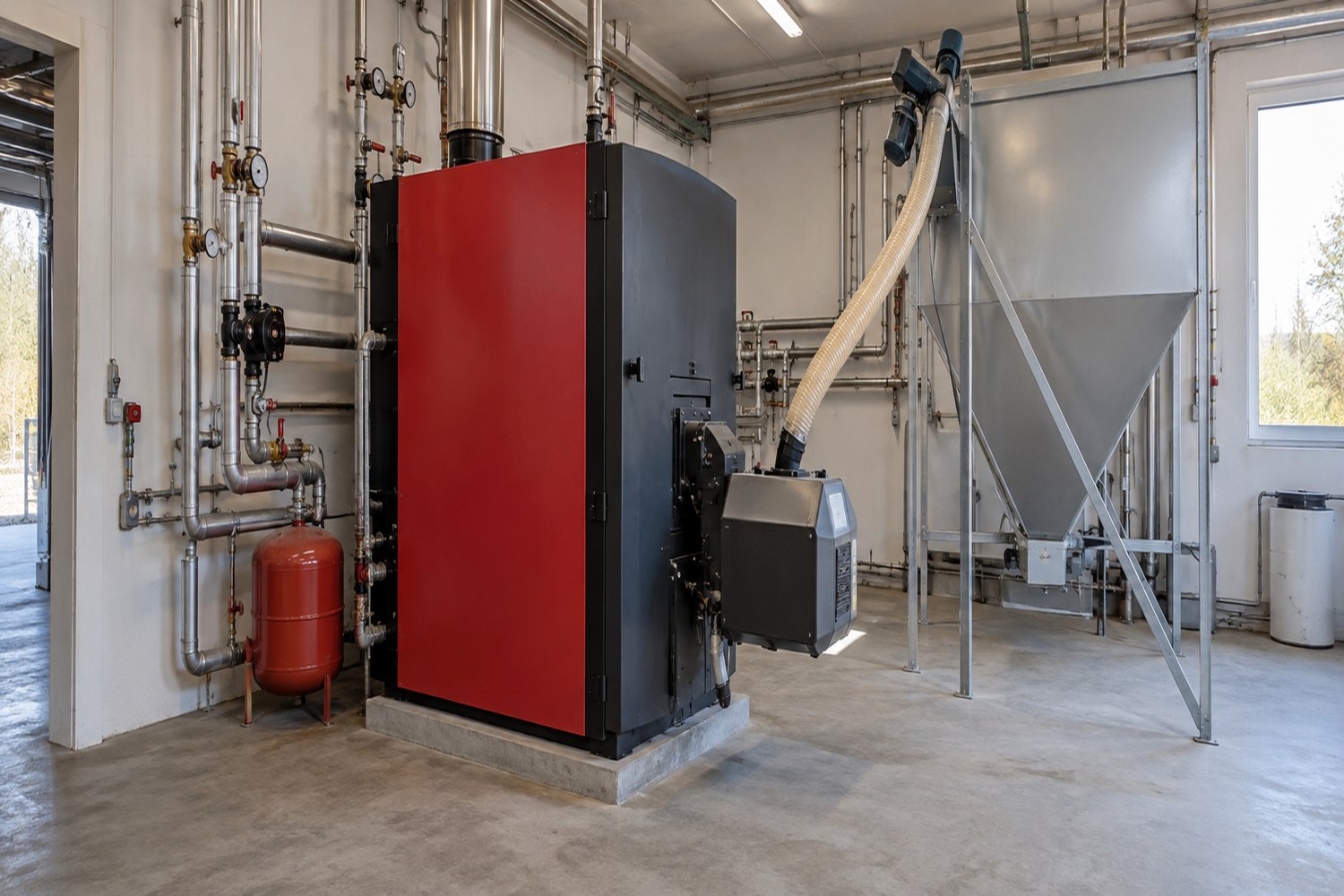
A boiler, pellet burner, or pellet auger can produce everything from a steady fan hum to rattling, pulsating burner noises, and vibrations that can be felt in other parts of the house. The sound can travel directly through the air, pass through the boiler room door and penetrations, or be transmitted as structure-borne sound through floors, walls, and pipes.

For this reason, simply installing a soft material near the boiler is rarely effective. First, you need to verify that the equipment is operating normally. Next, identify the primary sound path. Vibrations are addressed at the machine feet and connections; airborne sound is countered with dense, heavy barriers; and reverberation is reduced with absorbers on suitable, cool surfaces.

At the same time, work in boiler rooms requires greater safety margins than standard room acoustics. Materials must not block combustion air, ventilation, cooling, service hatches, soot removal paths, or escape routes. Nor should they be placed on hot surfaces or too close to the boiler, burners, or flue without verified support. We therefore recommend that a qualified boiler or HVAC installer review planned measures and that a fire safety expert be consulted when the design affects fire compartment boundaries or safety distances.

Recommended Products

How to Soundproof and Sound-Dampen Your Boiler and Boiler Room

An effective solution starts with the right diagnosis. Work methodically and do not make any changes to the boiler, burner, flue, ventilation, or fuel supply without guidance from the manufacturer and a qualified installer. Shut down and secure the equipment according to the instructions before performing any work.

Step 1 – Check that the system is operating normally

Listen for loose metal panels, rattling hatches, worn bearings, uneven fan operation, knocking pumps, and rattling from the pellet auger. Also check whether the noise level has changed over time. Operational faults and loose parts must be serviced, adjusted, or repaired before acoustic materials are installed.

Step 2 – Determine whether the problem is airborne sound, structure-borne sound, or echo

Listen inside the boiler room, directly outside the door, and in the room where the disturbance is noticeable. Carefully check for vibrations on cool floor, wall, and pipe surfaces. A distinct hum that can be felt in the structure indicates structure-borne noise. If the noise decreases significantly when the door is closed but is still audible through the gaps, air leakage is likely a major factor. A harsh, ringing sound inside the boiler room indicates multiple reflections.

Step 3 – Map the sound paths

Mark machine feet, pumps, pipe fastenings, door gaps, ventilation openings, and penetrations. Be sure to compare the sound level using the same measurement method before and after each corrective action. This makes it easier to see which measures are actually effective.

Option 1 – Dampen vibrations and structure-borne noise

First, check that the boiler is stable and installed according to the manufacturer’s specifications. If a professional assessment indicates that vibration dampers are appropriate, Dampio PRO can be used under suitable machine feet, pumps, or other equipment that transmits vibrations to a hard floor. The dampers must be sized according to the load and must not destabilize a heavy boiler.

Next, check the pipes and mountings. If the pipes are rigidly connected to the building, they can transmit vibrations past the floor damping. Modifications to pipe supports, flexible connections, or installations must be performed by a qualified installer.

Option 2 – Build a Sealed and Decoupled Barrier

If airborne sound travels through the boiler room’s walls or ceiling, a heavy, sealed, and decoupled structure typically provides better results than a thin, absorbent material. When working with sound insulation and vibration damping, one of the most important principles is to decouple materials from one another. If building components are in direct contact, vibrations, structure-borne sound, and sound energy can be transmitted through the structure.

The parts of a new framing system that come into contact with floors, ceilings, or adjacent walls can be fitted with SilentDirect Seal. The nitrile rubber sealing strip creates a vibration-damping layer between the framing member and the adjacent surface. This limits direct contact while also contributing to a tighter construction.

Fill the structure and install the heavy cladding according to the designed method. Avoid rigid bridges between the decoupled layers. Seal appropriate joints and transitions with SilentDirect Aluminum Sealing Tape when the substrate and structure are suitable for the product’s intended use.

Also check the door and all penetrations. A gap can allow a significant amount of sound to pass through, but sealing or replacing a fire-rated boiler room door must never compromise its fire resistance, self-closing mechanism, or ventilation.

Option 3 – Soundproof a Separate Enclosure

An enclosure can reduce noise near the burner, pellet auger, or another isolated component, but it must be designed as a technical installation. It must provide adequate combustion air, cooling, and access for inspection and service. Combustible or temperature-sensitive materials must not be placed near hot parts, the flue, or surfaces where the manufacturer requires a clear distance.

On verified cool interior enclosure surfaces, SilentDirect Egg or SilentDirect Neo can be used to absorb mechanical noise. The material must not cover openings or be mounted directly on the boiler unless the boiler manufacturer’s instructions explicitly support it.

Step 4 – Reduce reverberation in the boiler room

Once the primary sound paths have been treated, absorption on suitable, cool wall or ceiling surfaces can reduce reflections. We recommend selecting surfaces located at a significant distance from the boiler, burner, flue, and other heat sources. Absorbers create a quieter acoustic environment in the boiler room but do not replace a soundproof wall, a heavy floor structure, or vibration damping.

Step 5 – Check the Results and Safety

Start the system according to the manufacturer’s instructions and compare the noise levels at the same locations as before the work. Check that no new vibrations or resonances have arisen. Ensure that air intakes, ventilation, cooling systems, soot removal paths, hatches, fuel supply lines, emergency exits, and service areas are completely unobstructed.

If the results are limited, the next step should focus on the sound path that still dominates. If there is any uncertainty regarding temperature, fire rating, stability, or ventilation, the solution must not be put into service until it has been assessed by a qualified installer and, if necessary, a fire safety expert.

Featured Articles

How do you soundproof and insulate an air-source heat pump?

Use this text to describe your message to your customers. It could be customer reviews, frequently asked questions, or anything else you'd like.

How can you soundproof a space and reduce structure-borne noise?

Use this text to describe your message to your customers. It could be customer reviews, frequently asked questions, or anything else you'd like.

Which materials provide the best sound insulation and sound absorption?

Products for Soundproofing Boilers and Boiler Rooms

Here you’ll find products for the various sound pathways that may occur around a boiler, pellet burner, and boiler room. The choice should be based on whether the problem involves vibrations, air leaks, resonance, ventilation, or reflections. Always check the temperature, fire safety requirements, load capacity, and the boiler manufacturer’s recommended safety clearance before installation.

Dampio PRO is a powerful vibration damper for machine feet, pumps, and equipment that transmits vibrations to hard floors. Load capacity and stability must be assessed before using it under heavy equipment.

SilentDirect Seal is used between studs and adjacent surfaces to decouple materials, reduce vibrations, and contribute to a tighter, more sound-insulating construction.

SilentDirect Aluminum Sealing Tape is a self-adhesive accessory for sealing seams, joints, and aluminum-clad transitions where sound leakage could otherwise compromise performance.

SilentDirect Egg has a profiled surface that absorbs sound in machine enclosures and technical spaces. It should be installed on a verified, cool, and suitable surface.

SilentDirect Egg Roll provides the same type of profiled absorption in roll form and is suitable for larger or irregular, cool enclosure surfaces.

SilentDirect Neo is a smooth sound-absorbing mat designed to reduce mechanical noise, vibrations, and resonance in machinery and enclosures where a uniform surface is most suitable.

SilentDirect Neo roll is intended for larger contiguous surfaces where Neo needs to be cut and adapted to fit a technical enclosure.

SilentDirect Heat is a heat-resistant sound insulation mat for sheet metal surfaces exposed to heat. However, boiler temperatures, substrate conditions, fire safety requirements, and installation instructions must still be verified.

SilentDirect Air is a moldable absorber for ventilation ducts and installations where sound needs to be attenuated but airflow must still be maintained. It must not be used in the boiler’s combustion air or ventilation system without technical approval.

SilentDirect Sound Barrier 2.48 m can be used for temporary or flexible sound insulation in an accessible area where a barrier can be conveniently placed. It must be kept away from hot areas, walkways, and the boiler’s safety and service clearances.

*Free shipping

Free shipping to a pickup location

5-Year Warranty

5-Year Product Warranty

Fast Delivery

We usually ship the same day.

Reduce Noise from Boilers, Pellet Burners, and Boiler Rooms

A boiler or pellet burner can produce several types of noise simultaneously: fan noise, humming from motors and pumps, mechanical noise from the pellet auger, and vibrations transmitted through floors, pipes, and building components. Hard surfaces in the boiler room can also amplify the noise through reflections. Therefore, start by determining whether the disturbance is primarily airborne sound, structure-borne sound, or reverberation. Often, multiple measures are required, but they must never compromise fire safety, ventilation, combustion air, cooling, chimney sweeping, or service access.

Start at the source of the noise and inspect the installation

Abnormal rattling, knocking, or a sudden increase in noise level should not be ignored. First, check the burner, fan, bearings, screw conveyor, pumps, dampers, sheet metal enclosures, and pipe fastenings. A loose sheet metal panel or worn component can generate a lot of noise. Have an installer or service technician correct any operational faults before beginning soundproofing. Feel free to compare the noise at several locations to pinpoint the dominant sound path.

Dampen vibrations without compromising the installation’s stability

If vibrations are felt in the floor, walls, or pipes, the points of contact with the building are key. A properly sized vibration isolator can reduce transmission, but load, center of gravity, temperature, and the manufacturer’s requirements must be checked. Dampio PRO is designed for machine feet, pumps, and equipment that transmit vibrations to hard floors. Use it only after a professional stability assessment. Pipes must also be routed so that they do not transmit vibrations past the isolators.

Construct a sealed and decoupled barrier whenever possible

Airborne fan and burner noise is best reduced by a heavy, airtight, and decoupled barrier against noise-sensitive rooms. This may involve improving the boiler room’s walls, ceiling, and door, or installing a technically approved enclosure around a noisy component. SilentDirect Seal can be placed between the stud and the adjacent surface to reduce direct contact, sound leakage, and vibrations. Joints in a suitable structure can be sealed with SilentDirect Aluminum Sealing Tape. Also check for gaps around penetrations and door frames.

Absorb sound in the room, but keep it away from heat

Sound absorbers can reduce echoes in the boiler room, but they do not, on their own, block sound traveling through walls or doors. SilentDirect Egg and SilentDirect Neo are suitable for machines, enclosures, and technical spaces, but must never be placed on hot surfaces, over air intakes, near flue ducts, or within safety and service clearance zones. SilentDirect Heat is designed for sheet metal surfaces exposed to heat, but temperature, substrate, fire safety requirements, and the boiler manufacturer’s instructions must always be verified.

A safe, comprehensive solution for a quieter boiler room

The best comprehensive solution is usually to address the source of noise, dampen vibrations, seal sound leaks, and improve isolation from the building. Absorption is used as a supplement. Combustion equipment must never be enclosed in a way that restricts airflow, cooling, soot removal, evacuation, or access. Have a qualified installer—and, if necessary, a fire safety expert—assess the solution before installation.