How to Soundproof and Sound-Absorb a Shooting Range
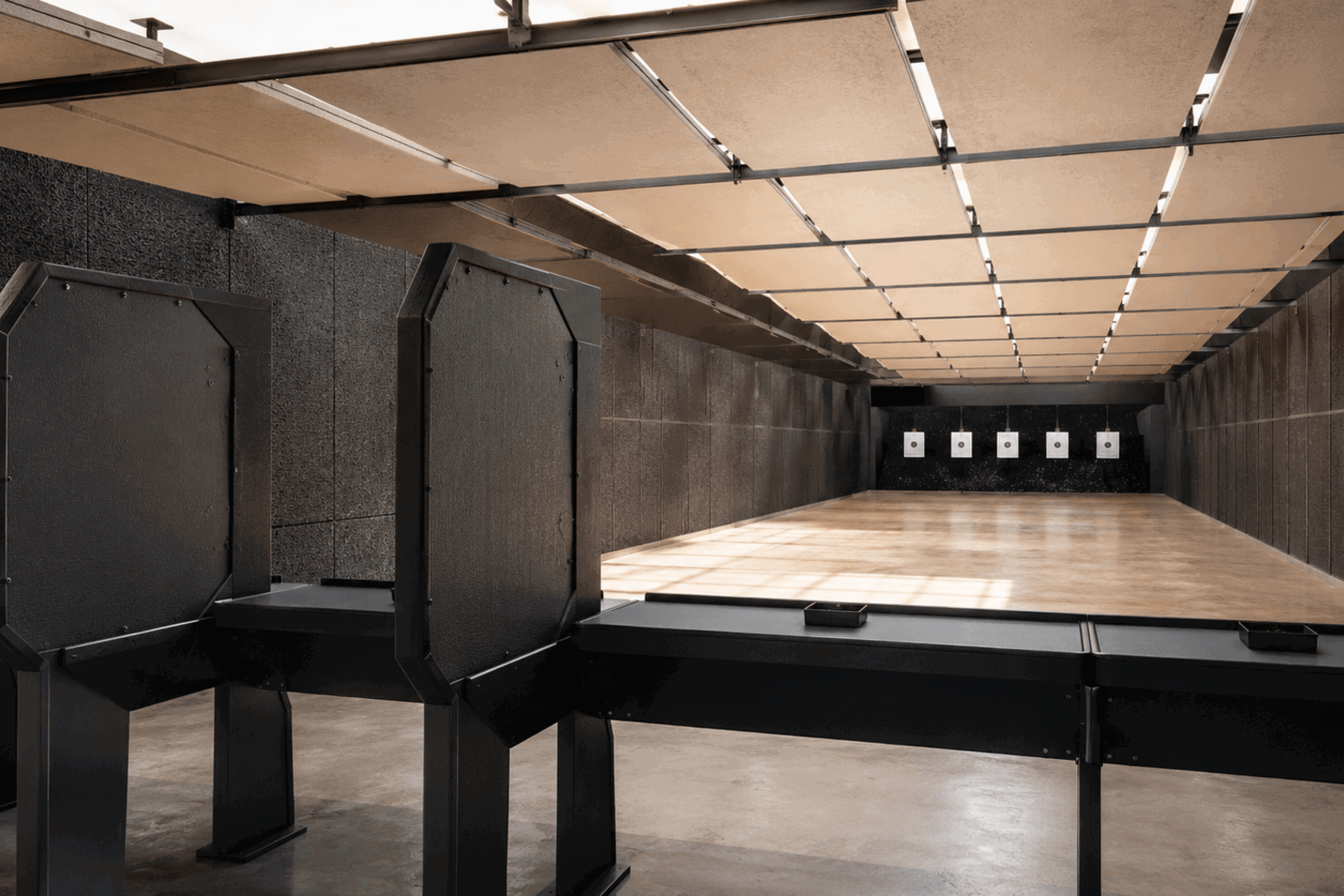
A shooting range must be treated as a complete acoustic environment. Don’t start by choosing a product; instead, begin by determining whether the problem is primarily sound leakage, harsh sound reflections inside the facility, structural vibrations, or a combination of all these factors. Below is a practical step-by-step guide to help you develop a solution more methodically.
1. Map out sound sources and sound paths
Start by identifying where the sound is loudest and where it spreads. Check the firing direction, side walls, ceiling, floor, doors, gates, ventilation, utility rooms, and adjacent rooms. At a shooting range, it’s common for multiple sound paths to interact. A wall may be relatively heavy, but the sound can still escape through a doorway, a vent, or a leaky connection.
2. Distinguish Between Sound Insulation, Sound Absorption, and Vibration Damping
Sound insulation is needed when sound must be prevented from leaving the shooting range or spreading to other areas. Sound absorption is needed when sound bounces around inside the facility and creates significant reverberation. Vibration damping is needed when energy is transmitted through hard materials. We recommend that you view these as three separate components of the same solution, since they serve different purposes.
3. Seal gaps, joints, and penetrations
Leaks are often one of the most underestimated causes of poor sound insulation. Check joints, corners, doors, gates, pipes, cable penetrations, and ventilation connections. Use the light test by turning off the lights in an adjacent space and looking for light leakage along gaps. Supplement this with the pressure test by checking for drafts or pressure differences around doors, gates, and penetrations.
In sound-insulating structures where aluminum-clad joints or transitions need to be kept sealed, SilentDirect Aluminum Sealing Tape may be appropriate. For gaps and contact surfaces where both minor air leaks and vibrations need to be reduced, SilentDirect Seal is a practical alternative.
4. Reinforce weak surfaces with mass and a dense sound barrier
To prevent sound from passing through walls, ceilings, or sound-insulating structures, mass and density are required. SilentDirect MLV functions as a heavy and dense sound barrier and is particularly suitable when airborne sound needs to be dampened within a structure. On hard surfaces where sealing, mass, and vibration damping are all important, SilentDirect Polaric can be used.
5. Decouple contact surfaces to reduce structure-borne noise
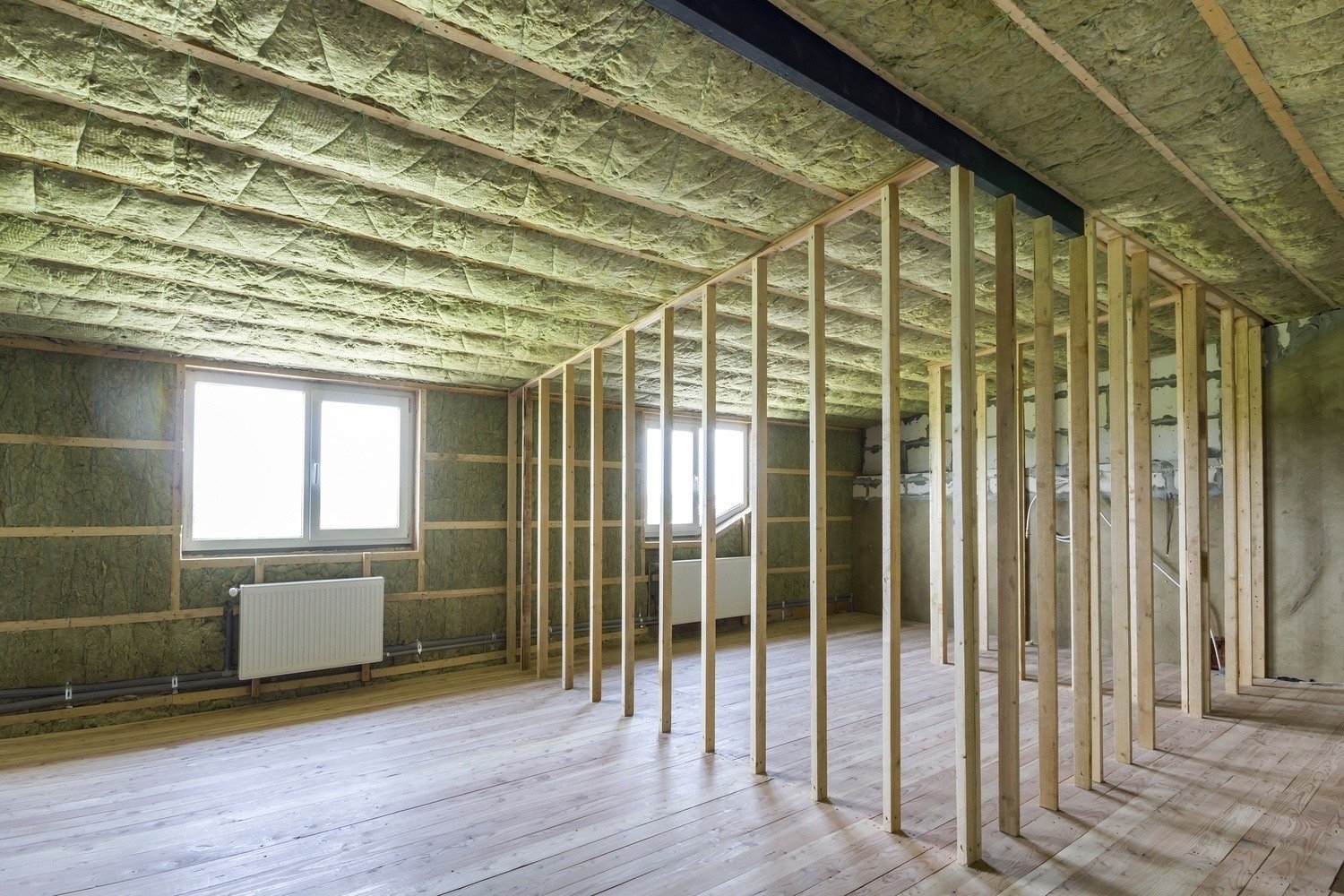
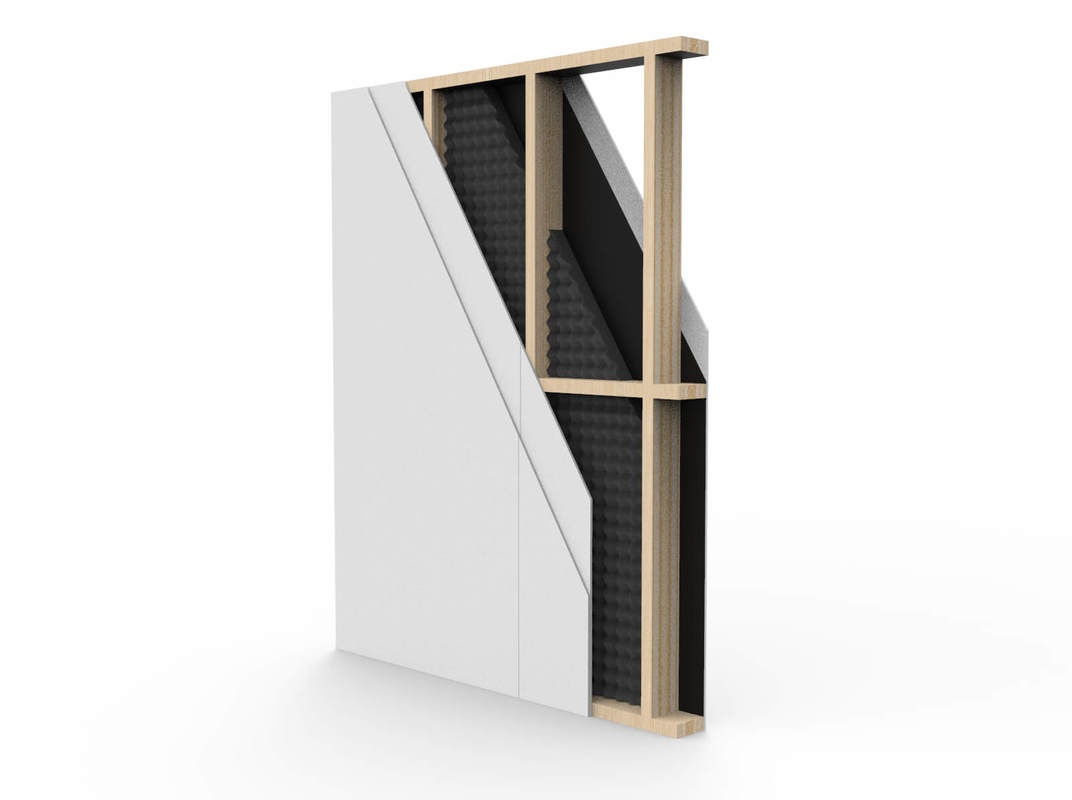
When working with sound insulation and vibration damping, one of the most important principles is to decouple materials from one another. If different building components are in direct contact with each other, vibrations, structure-borne noise, and sound energy can easily be transmitted through the structure. This applies, for example, when constructing a framing system for walls, ceilings, or floors.
To reduce this transmission, the parts of the stud frame that come into contact with other surfaces should first be fitted with a vibration-damping layer. Here, SilentDirect Seal is an effective option. The product is a sealing strip made of nitrile rubber (NBR) and is designed to reduce sound leakage, dampen vibrations, and contribute to a tighter, quieter, and more energy-efficient structure.
6. Dampen ceilings and walls to reduce reflections
Shooting ranges often have hard surfaces that make the sound sharp and jarring. To reduce echoes and reverberation, use sound-absorbing surfaces, especially on ceilings and walls where reflections are pronounced. In larger, hard-surfaced, and noisy environments, PES Ceiling Deep Industry and PES Wall Deep Industry may be suitable options, as they are designed for industrial environments with more severe noise issues.
7. Address Ventilation and Mechanical Systems
Ventilation must not be overlooked. Sound can travel through ducts, vents, and service shafts. SilentDirect Air is a moldable absorbent for ventilation ducts and systems where sound needs to be dampened but airflow must still be maintained. If mechanical systems, pumps, or equipment transmit vibrations into the floor, Dampio PRO can be used as a vibration dampener beneath the equipment.
8. Use flexible sound barriers where permanent construction measures are insufficient
In certain areas of a shooting range, there may be a need for temporary or flexible sound barriers. SilentDirect Sound Barrier 2.48 m can be used for temporary or flexible sound barriers in an accessible area where a barrier can be conveniently placed. When soundproofing pipes, this can be a suitable solution if you cannot access the sound source.
9. Check the results and address weak spots
Once the measures have been installed, the shooting range should be checked again. Listen in adjacent rooms, check doors and penetrations, review the ventilation, and determine whether the sound is still dominated by leaks, reflections, or vibrations. If sound is still escaping, there is often a weak point in the sealing or construction. If the acoustic environment inside the space is still harsh, more sound absorption is often needed on the appropriate surfaces.
A shooting range should always be acoustically treated with consideration for safety, the building’s construction, and the requirements applicable to the activity. The right solution is therefore almost always a combination of sealing, mass, decoupling, absorption, and careful inspection of the sound paths.