




Improving Acoustics in Libraries and Reading Environments
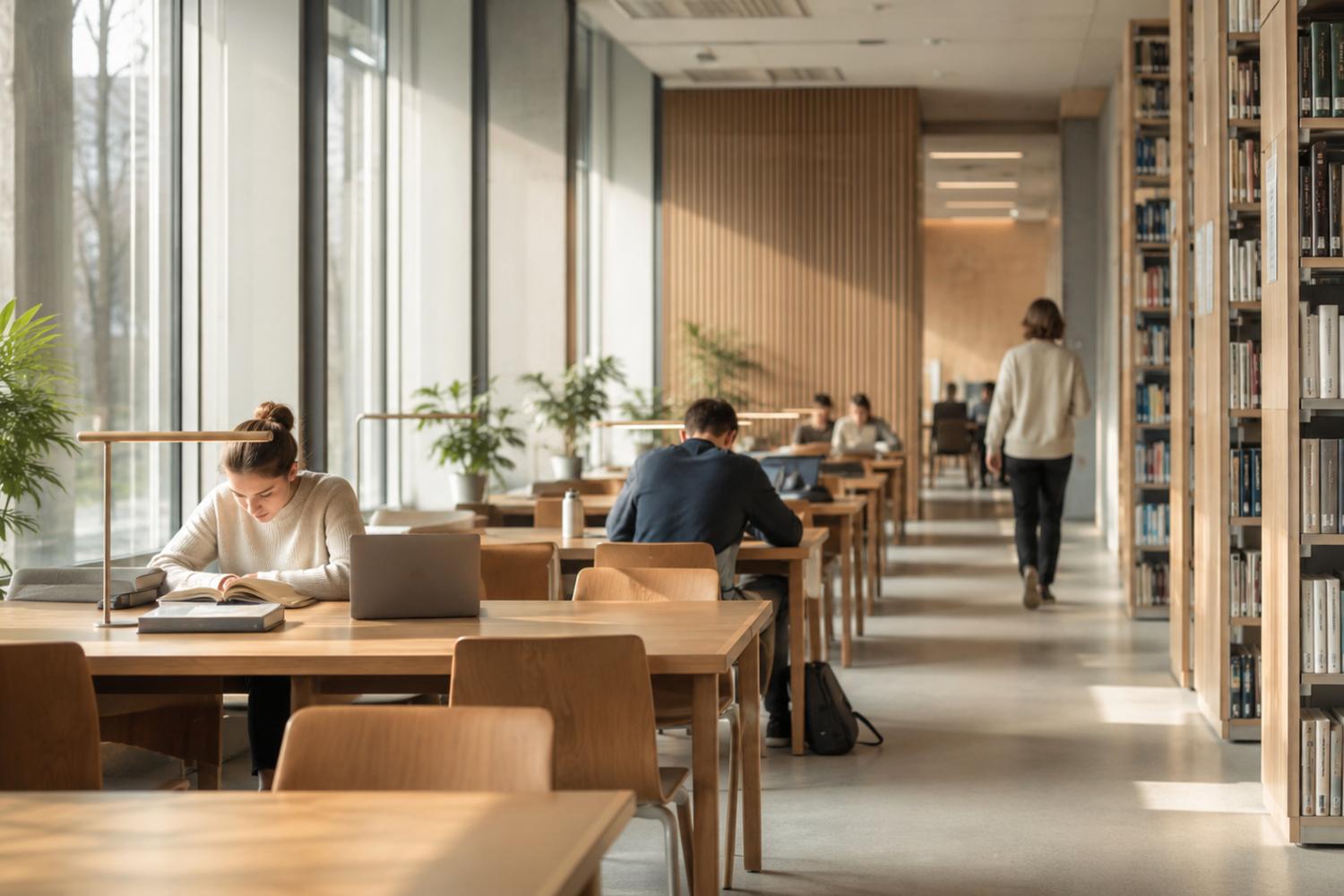
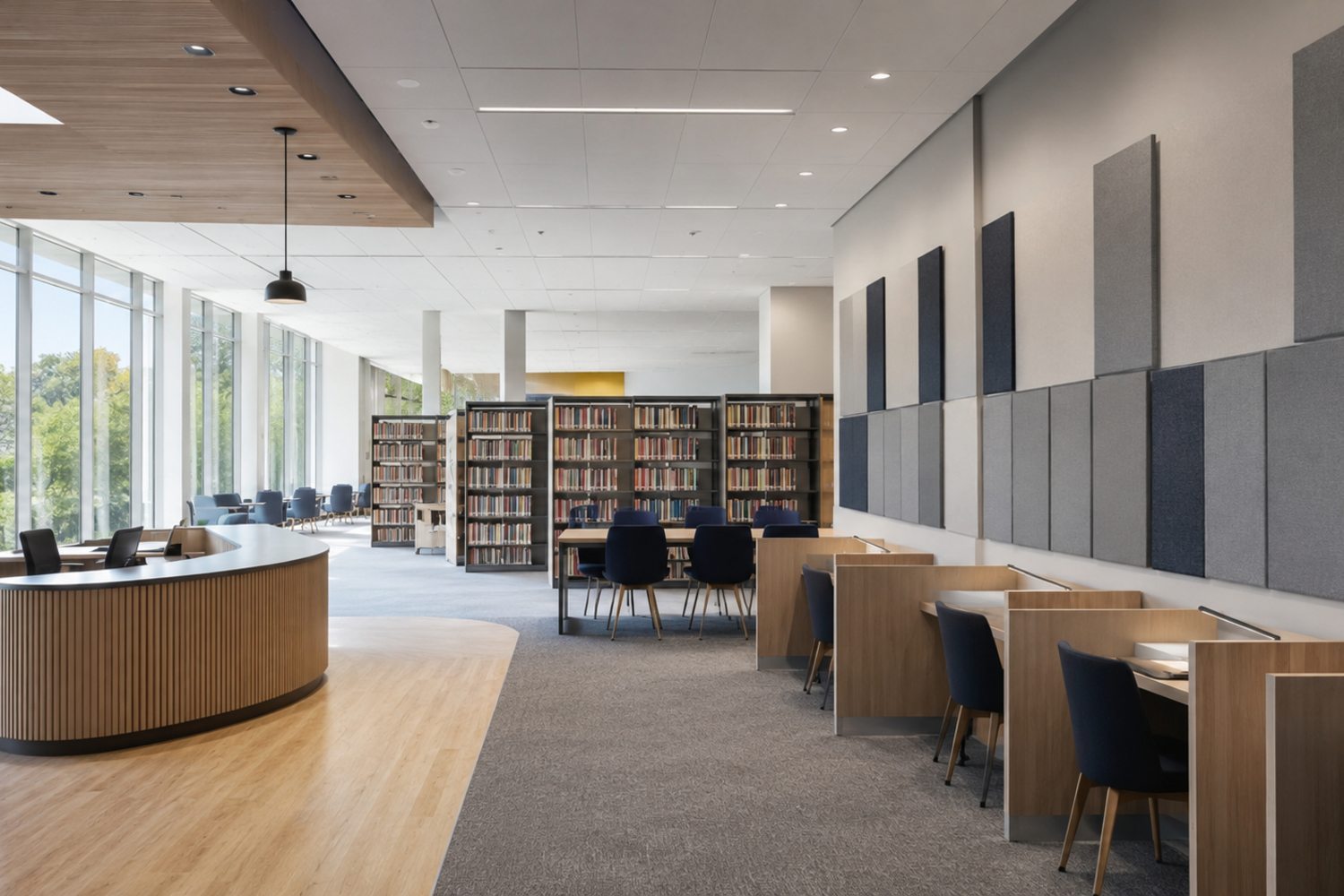
A library should be a quiet place for reading, studying, conversation, guidance, and concentration. At the same time, modern libraries are often open spaces with multiple functions under one roof: study areas, a children’s section, group rooms, an information desk, bookshelves, computer stations, and event spaces. When many activities are taking place at once, sounds from conversations, footsteps, chairs, keyboards, and movement can travel farther than you might think.
Sound absorption reduces echoes and disruptive reflections
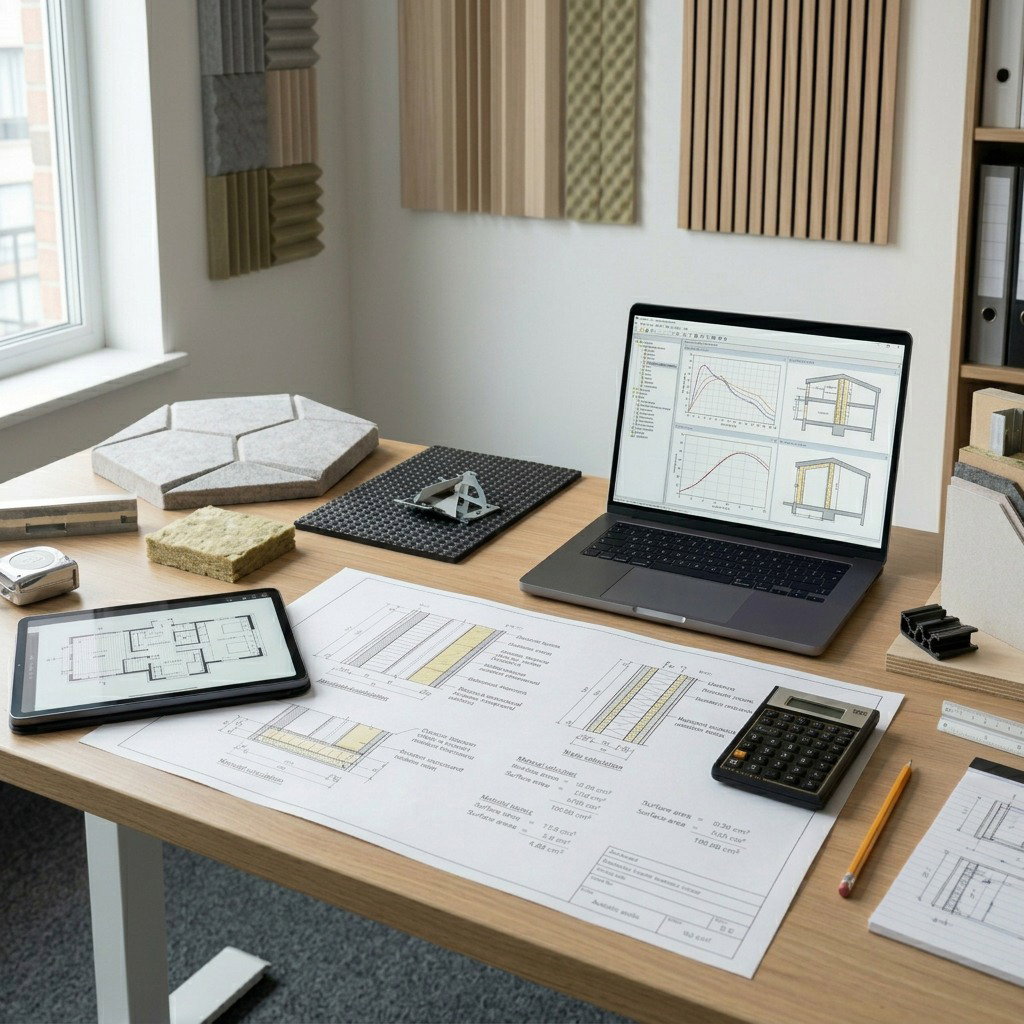
When the problem is that sound is bouncing around inside the library, the solution primarily involves sound absorption. Sound absorbers reduce reverberation and cause sound to fade more quickly. This can make the library quieter without making the environment unnaturally silent. It’s important to distinguish this from sound insulation, which is used to prevent sound from traveling between rooms, floors, or adjacent spaces.
Start with the ceiling when the space has open areas
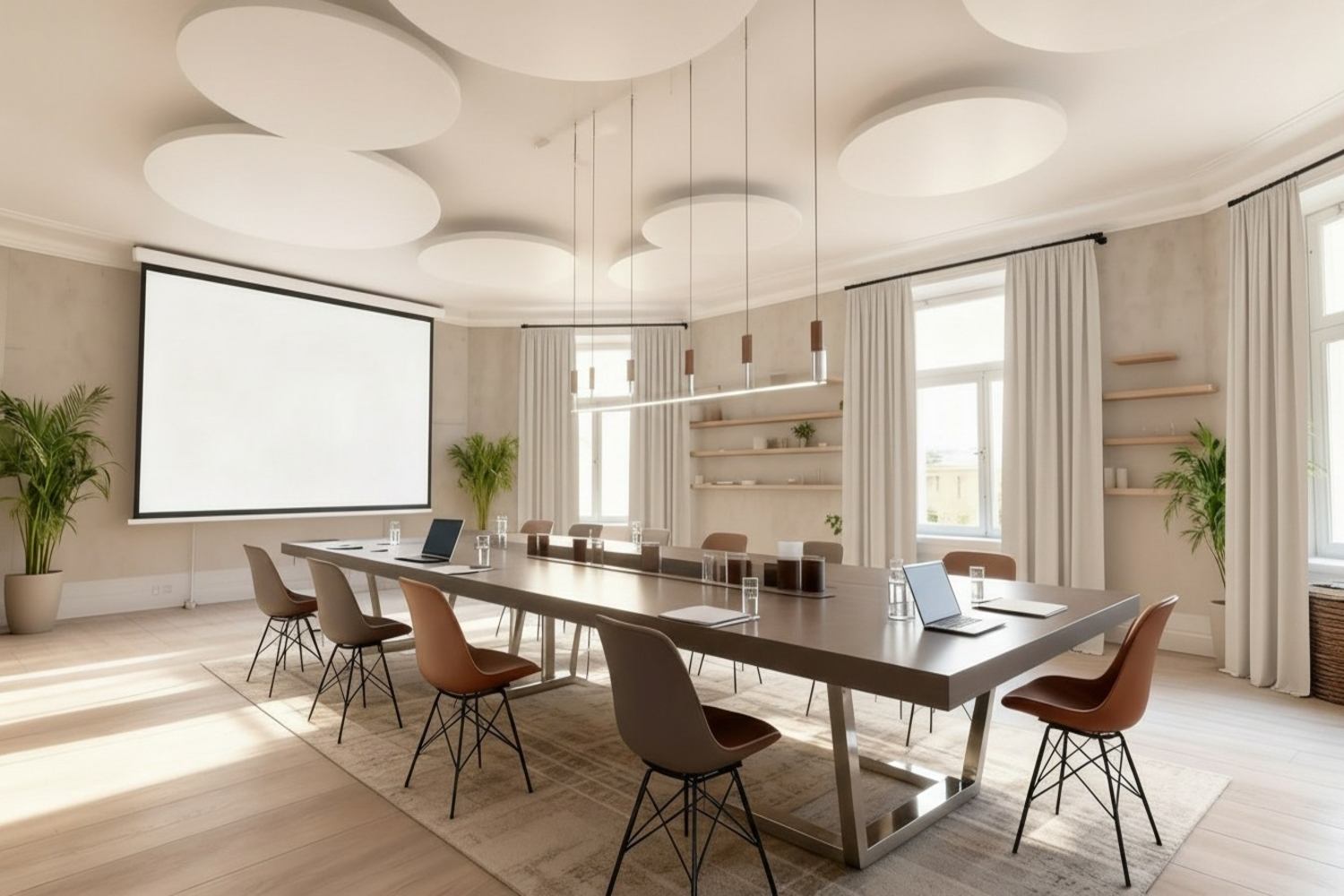
SilentDirect typically recommends starting with sound absorption on the ceiling when a room has problems with echo and reverberation. In libraries, the ceiling is often an effective surface because it affects the acoustic environment across large reading and study areas without taking up space from bookshelves, furniture, or walkways. Ceiling absorbers can be particularly relevant in open-concept libraries, school libraries, reading rooms, and spaces with hard floors or high ceilings.
Complement with walls, table screens, and fabric solutions
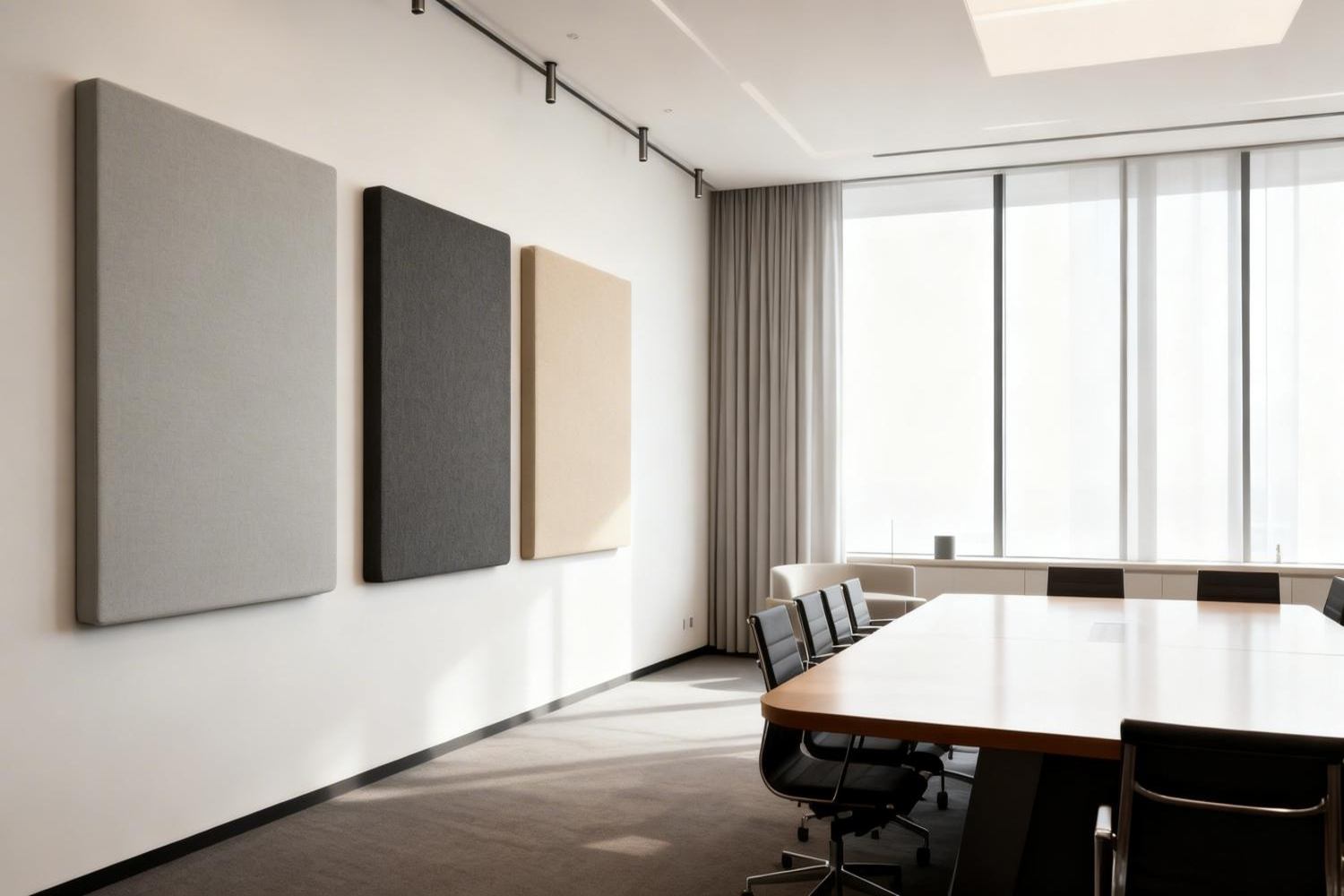
Once the ceiling has been planned, wall absorbers, sound-absorbing bulletin boards, table screens, curtains, and room dividers can help create more distinct zones. Wall absorbers are ideal for bare wall sections, reading areas, and spaces where conversations bounce off surfaces. Table screens can dampen sound near study areas and computer desks. Curtains can soften the impact of glass partitions, while room dividers can create quieter study or children’s zones without building permanent walls.
Adapt the acoustics to the library’s functions
A good solution for libraries must balance quiet, accessibility, and flexibility. Children’s sections, group rooms, and information desks often allow for more noise than quiet reading areas. Therefore, acoustic measures should be planned based on how the space is used: where people talk, where concentration is needed, and which areas amplify sound the most. The right combination of ceiling absorbers, wall absorbers, and zoning solutions can create a calmer library environment that provides better conditions for both visitors and staff.