How to Soundproof Restaurants and Cafés, Step by Step
A good acoustic solution for restaurants and cafés starts with identifying where the sound originates, how it spreads, and which surfaces amplify the problem. In many spaces, it’s not enough to simply install a few random sound absorbers. The best results are achieved when ceilings, walls, glass partitions, and open areas are treated in the correct order.
Step 1: Determine whether the problem is acoustics or sound leakage
Start by listening to what’s actually causing the disturbance. If the space feels tinny, harsh, and difficult to converse in, the problem is usually one of sound absorption. In that case, sound reflections, echoes, and reverberation need to be reduced inside the room. If, on the other hand, the problem is that sound is spreading to neighbors, residences, offices, stairwells, or other spaces, it’s a matter of sound insulation, which requires different measures involving mass, density, and decoupling.
Both problems occur in restaurants and cafés, but they should not be confused. Sound absorbers make the environment inside the space quieter, but they do not normally prevent sound from traveling through walls, ceilings, or floors. Therefore, acoustic measures should be planned for the guest area, while sound insulation and vibration damping should be planned separately for, for example, kitchens, ventilation systems, refrigeration units, or noise affecting neighbors.
Step 2: Start with the Ceiling
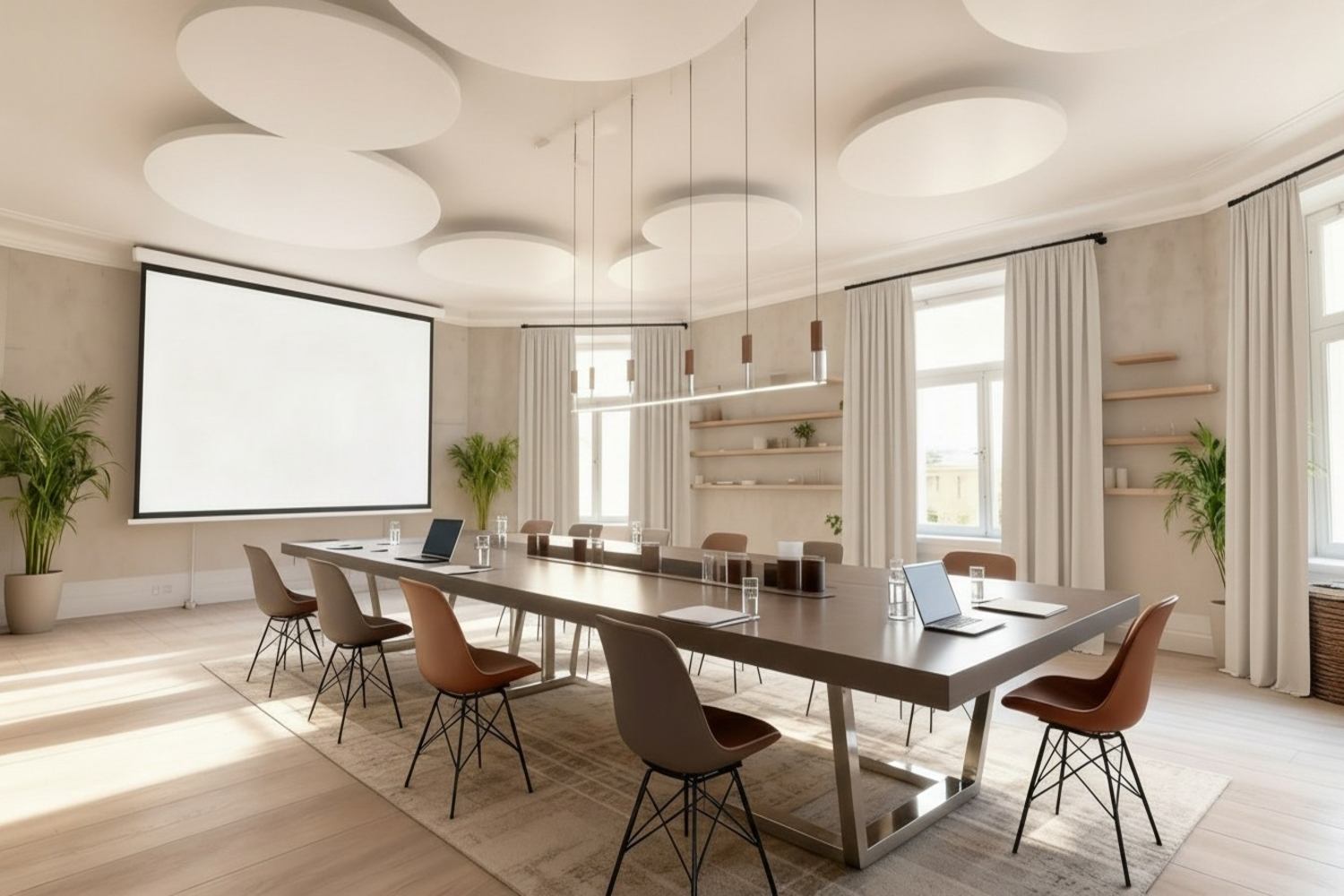
SilentDirect typically recommends starting with the ceiling when sound-absorbing a restaurant or café. The ceiling is often the surface that provides the greatest effect without interfering with furniture, service areas, or walkways. In many spaces, PES Ceiling can serve as a flexible, basic solution to reduce reverberation and create a more comfortable environment for conversation.
If the space has high ceilings, plenty of seating, hard floors, or long reverberation times, a thicker ceiling absorber may be more suitable. PES Ceiling Deep Absorb is ideal when you need greater absorption depth and more powerful sound dampening from the ceiling. In environments where aesthetics are important, round or hexagonal ceiling absorbers can be used to combine functionality with a more design-oriented look.
Image prompt for this step: Realistic image of a restaurant ceiling with discreetly integrated sound-absorbing ceiling panels above seating areas, natural light, clean restaurant environment, no brands, no text.
Step 3: Treat Hard Wall Surfaces
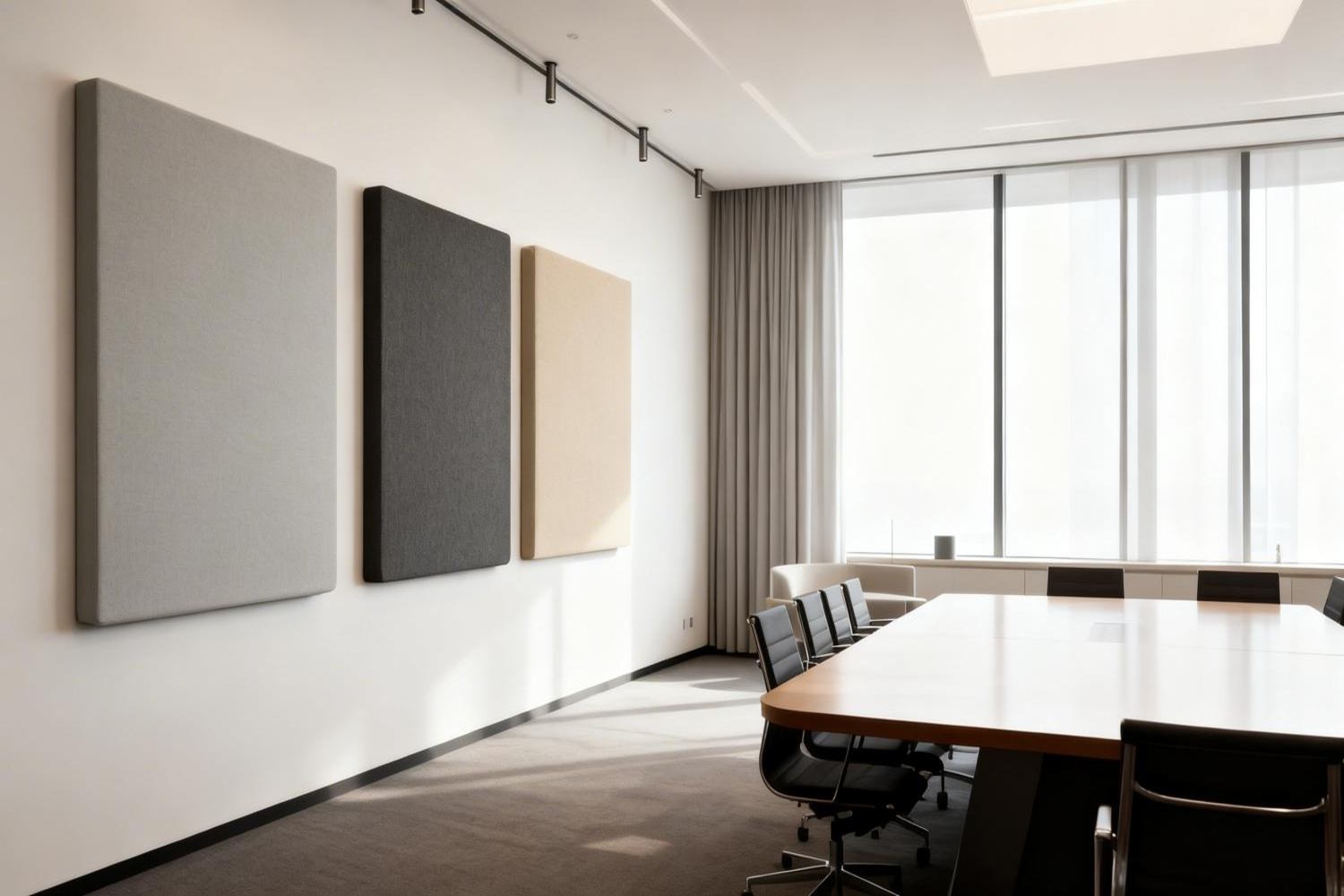
Once the ceiling has been treated, listen for any remaining reflections from the walls. Large empty wall sections behind tables, along long walls, or near serving areas can amplify conversation and clatter. In these cases, PES Wall is an ideal wall solution for restaurants and cafes where speech and reverberation need to be dampened.
In larger spaces, areas with high sound levels, or spaces where wall reflections are particularly pronounced, PES wall Deep Absorb may be a better choice. Wall absorbers should be placed where they capture sound from seating areas and conversation zones, not just where the wall happens to be empty. In a restaurant, placement is often just as important as the number of absorbers.
Image prompt for this step: Realistic restaurant wall with sound-absorbing wall panels integrated behind seating areas, calm decor, natural light, no logos, no text.
Step 4: Addressing Glass Partitions and Windows
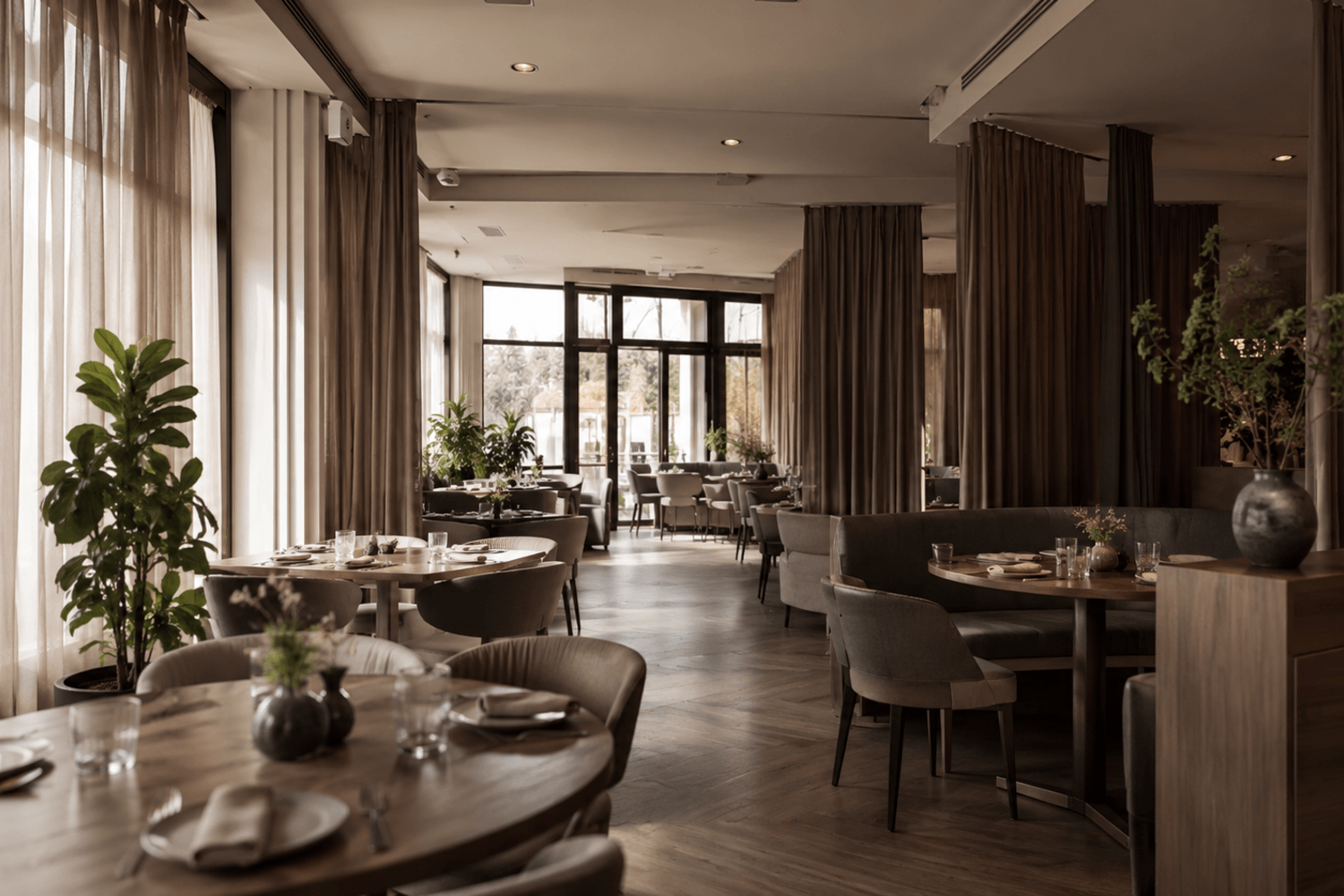
Glass is common in cafes and restaurants, but large glass surfaces strongly reflect sound. In such cases, Silent Curtain Feltra can help soften the acoustic environment near windows, glass partitions, and open spaces. At the same time, the curtains can contribute to a cozier atmosphere, which often works well in settings where you want guests to linger.
Sound-absorbing curtains are not a substitute for ceiling absorbers in a space with major acoustic problems, but they are a valuable complement when glass surfaces, open entrances, or hard wall sections create a harsh sound environment. They can also be used more flexibly in settings where permanent wall-mounted installations aren’t possible or where the interior design changes over time.
Image prompt for this step: A bright café with large windows and sound-absorbing fabric curtains that soften the space, natural light, no brand logos, no text.
Step 5: Create quieter zones in open spaces
In open restaurants and cafés, sound can travel far between tables, the bar, the line, serving areas, and the entrance. In such cases, the Silent Divider Feltra can be used to create softer boundaries. A room divider can reduce direct sound pathways, create more private seating areas, and make it easier to experience the space as several smaller zones.
This is particularly useful in cafes with long, narrow layouts, restaurants with open dining areas, or spaces where certain tables are located near the checkout line, kitchen, bar, or entrance. However, zones should be planned so that service flow, evacuation routes, sightlines, and accessibility remain unimpeded.
Image prompt for this step: A restaurant with open seating areas and fabric room dividers that create quieter spaces without solid walls; realistic setting; no logos; no text.
Step 6: Tailor the Solution to the Business
A breakfast spot, a lunch café, a wine bar, and a larger evening restaurant each have different acoustic profiles. Consider when the space is noisiest, where guests sit most densely, whether music is played, where the coffee machine or bar is located, and whether the kitchen or dishwashing area is close to the guest area. The more activity and the harder the materials, the greater the need for surfaces that actually absorb sound.
We usually recommend starting with a clear primary measure on the ceiling and then supplementing it with wall absorbers, curtains, or room dividers where sound still bounces off surfaces. This makes it easier to tailor the solution to acoustics, budget, and interior design.
Step 7: Follow up with listening tests and adjustments
Once the absorbers are installed, the space should be evaluated during actual operation. There’s a difference between an empty restaurant and a full house. Pay particular attention to whether conversations still bounce between certain walls, whether glass partitions cause harsh reflections, or whether certain tables seem noisier than others. This allows for more targeted adjustments rather than over-treating the entire space.
A well-planned acoustic solution should make the restaurant or café more pleasant without detracting from the atmosphere. The goal is shorter reverberation time, lower noise stress, and clearer conversation—not total silence.