




• Free shipping
  • 5-year warranty
  • Fast delivery

How do you soundproof a sports arena?

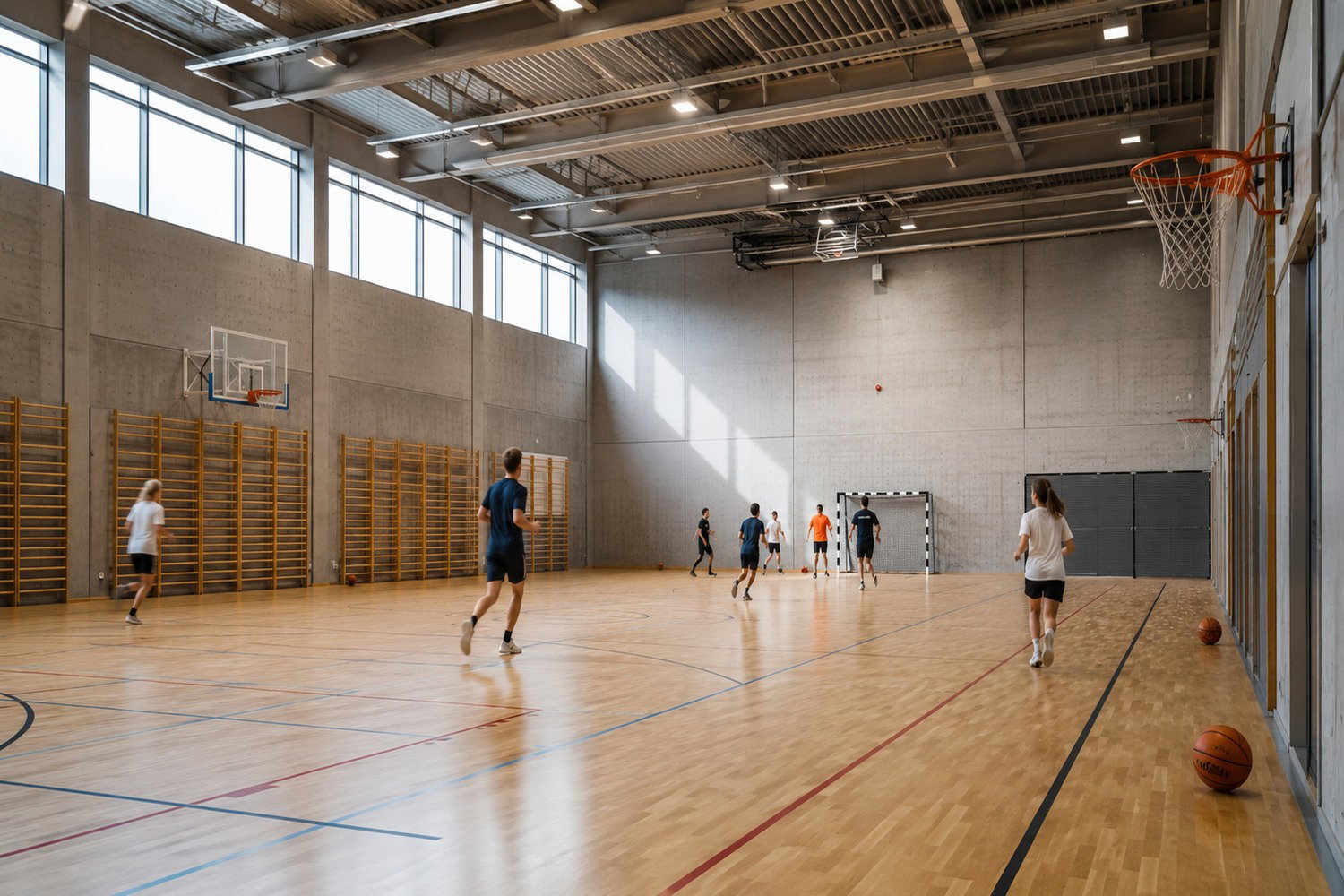
Sports arenas are built for movement, endurance, and activity, but that is precisely why the acoustic environment often becomes harsh. Sports flooring, high ceilings, large wall surfaces, pull-up bars, goals, balls, and many people in motion create a soundscape where noise and reverberation quickly build up. When sound bounces around the room for a long time, it becomes harder to hear instructions, conversations, and signals, and the environment can become stressful for students, coaches, teachers, and staff alike.

To soundproof a sports hall, the primary focus should be on sound absorption. Sound absorbers reduce sound reflections inside the gym and cause sound to fade more quickly. This is especially important in large spaces where sound can otherwise travel long distances between the floor, walls, and ceiling. A good acoustic solution won’t make the gym silent, but it can make the noise level more controlled and less harsh.

SilentDirect typically recommends starting with the ceiling when sound-absorbing a room. In a sports hall, the ceiling is often the most strategic surface because it is large, relatively unobstructed, and affects the entire volume of the hall. Ceiling absorbers can therefore be the most important basic measure against echo and reverberation. Wall absorbers can then be added to surfaces where sound bounces back across the court, along the long sides, or from the short walls.

It is also important not to confuse sound absorption with sound insulation. If the problem is that sound is too loud inside the hall—that voices and ball sounds echo, or that instructions are difficult to hear—sound absorption is the right approach. If, on the other hand, the problem is that sound is spreading to classrooms, offices, residences, or other rooms adjacent to the gym, sound insulation or vibration damping may be needed as a separate measure.

A sports hall should therefore be assessed based on both the activities taking place there and the building itself. Ceiling height, hall volume, wall materials, usage, type of sport, number of people, and adjacent spaces all influence which solution is most suitable. The goal is a clearer, quieter, and more functional acoustic environment where activities can continue without noise and reverberation taking over.

Recommended Products

Benefits of Sound Absorption in a Sports Arena

Less echo and reverberation
Sound fades away more quickly, making the hall less harsh and more pleasant to be in.

Lower perceived noise level
The sounds of balls, footsteps, voices, and whistles do not blend together as strongly in the room. Clearer instructions: Teachers, coaches, and leaders are easier to hear even when several people are active at the same time.

Better work environment
A quieter sound environment can make the gym less stressful for staff, teachers, and instructors.

A more effective school and club environment
Students, children, and athletes have better conditions for listening, focusing, and participating.

More even sound distribution throughout the gym
Ceiling and wall absorbers can reduce harsh reflections from large surfaces and create better balance in the room.

Improved speech intelligibility
When reverberation is reduced, it becomes easier to understand words, signals, and instructions.

Flexible solution tailored to the hall’s needs
Sound absorption can be customized based on ceiling height, wall surfaces, hall volume, and how the space is used.

Why Sports Arenas Get Noisy

Sports arenas often have a long reverberation time because they combine a large volume with many hard surfaces. Sounds from balls, shoes, voices, and whistles are reflected off the floor, walls, and ceiling. The longer the sound lingers, the more new sounds mix with residual sounds.

  • High ceilings provide a large volume for sound to travel through.
  • Hard sports floors reflect both footstep sounds and ball sounds.
  • Large wall panels can create distinct side reflections.
  • Empty or bare surfaces cause the reverberation to last longer.
  • Multiple activities happening at the same time increase the overall noise level.
  • Instructions and signals become harder to hear when sound bounces around for a long time.

Proper sound absorption helps sound fade away more quickly. This can result in better speech intelligibility, a calmer experience, and a more functional work environment in the gym.

How to Sound-Absorb and Soundproof a Sports Hall

A sports hall requires an acoustic solution that works well in large spaces with high activity levels, movement, and hard surfaces. We recommend that you start by assessing the hall’s actual acoustic problems and then work from the most effective surfaces toward supplementary measures.

1. Listen to the gym while it’s in use

Don’t start by assessing the hall when it’s empty. A sports hall may seem fairly normal when quiet but become very noisy when classes, teams, or groups are using it. Listen to how voices, balls, shoes, whistles, and instructions sound during activity. Note whether the problem is primarily echo and noise inside the gym, or if the sound also disturbs adjacent rooms.

Image prompt for this step: A realistic sports hall during an ongoing activity with a few people in the distance, a sports floor, a high ceiling, and hard surfaces; a distinct sense of noise and reverberation; no text; no logos.

2. Prioritize ceiling absorbers as a basic measure

SilentDirect typically recommends starting with the ceiling when addressing sound absorption in a room. In a sports hall, this is particularly logical since the ceiling area is large and affects the entire hall volume. PES Ceiling Deep Absorb is suitable when the hall has higher ceilings, greater volume, or longer reverberation time. PES Ceiling can be a more versatile option when broad ceiling-mounted sound absorption is needed.

In larger or more demanding facilities, PES Ceiling Deep Industry or PES Ceiling Industry may also be appropriate where the environment requires a more robust solution. The choice should be based on the hall’s size, installation options, and the severity of the noise problem.

Image prompt for this section: Realistic sports hall with a clear focus on high ceilings and large open ceiling areas above the sports floor, natural light, no brands, no text.

3. Supplement with wall absorbers on reflective surfaces

Once the ceiling is planned, you should turn your attention to the walls. Long wall sections, hard end walls, and surfaces behind goals or along activity areas can contribute significantly to a harsh sound environment. PES Wall Deep Absorb may be suitable where wall surfaces require more sound absorption, while PES Wall serves as a wide wall absorber to reduce harsh reflections.

In more exposed or larger environments, PES Wall Deep Industry or PES Wall Industry may be worth considering. Wall placement should always be planned to accommodate the facility’s use, equipment, safety, cleaning, and open spaces.

Image prompt for this section: Realistic sports hall with long, hard wall surfaces, wall bars, and sports flooring; focus on walls where sound reflections occur; bright and clean; no text; no logos.

4. Assess whether the issue also involves sound insulation

If the noise is primarily disruptive inside the gym, sound absorption is the primary solution. If, however, the noise spreads to classrooms, offices, hallways, residential areas, or other parts of the building, sound insulation may be required. Sound insulation involves reducing sound transmission through building structures, while sound absorption improves the acoustics inside the room.

This is especially important in schools, where a gym is often located near other teaching areas. A gym may need ceiling and wall absorbers for acoustics, while doors, walls, ceilings, or floors may need to be assessed to determine if sound is leaking out.

5. Consider the Hall’s Activities and Installation

Sports halls are used in many ways: for school sports, ball sports, club practices, gatherings, and sometimes events. Therefore, placement and installation must be planned practically. Check the ceiling height, lighting, ventilation, wall fixtures, goals, pull-up bars, cleaning procedures, and other installations before selecting a solution. The absorbers should be placed where they provide acoustic benefits without interfering with the hall’s functionality.

Image prompt for this step: A realistic overview of a sports hall where the ceiling, walls, lighting, goals, and sports floor are clearly visible for planning acoustic measures; no text, no logos.

6. Evaluate After Installation

Once the sound absorbers are installed, the gym should be tested under actual use. Listen for speech intelligibility, reverberation, whistling sounds, ball sounds, and the general noise level when multiple people are active. If the hall still sounds too harsh, wall surfaces or particularly vulnerable zones may need additional treatment. In large halls, a combination of ceiling and wall absorption is often more effective than treating only a small area.

Sound Calculation Software

If you're planning sound insulation, vibration damping, or sound absorption, the right calculations can make a big difference. On the page with sound calculation tools, you'll find free tools to help you estimate material usage, calculate surface areas, and plan measures to improve the acoustic environment.

Did you know that…

Did you know that a sports hall can feel noisy even if each individual sound isn’t extremely loud? The problem is often that the sound lingers for too long. As the reverberation decreases, the hall often becomes easier to use because voices, instructions, and activity become more clearly distinguishable.

Featured Articles

How do you reduce noise using sound absorbers?

How do you soundproof a ceiling with sound absorbers?

How do you soundproof a wall with sound absorbers?

Calculate the reverberation time

Sound-Absorbing Products for Sports Halls

For sports arenas, ceiling absorbers are typically the most important element, since the ceiling surface accounts for a large portion of the arena’s volume. Wall absorbers can then be used to reduce harsh side reflections and provide additional absorption where wall surfaces contribute to noise and reverberation.

PES ceiling Deep Absorb is a 100 mm ceiling absorber suitable for situations where a larger space, higher ceiling height, or long reverberation time requires more in-depth sound absorption.

PES Ceiling is a flexible ceiling absorber for spaces where the ceiling surface can be used to reduce reverberation and overall noise levels.

PES Ceiling Deep Industry is an extra-thick ceiling absorber for large, noisy spaces where more absorbent material is needed.

PES Ceiling Industry is a robust ceiling absorber for harsher environments where clatter, echoes, and general noise levels need to be reduced.

PES Wall Deep Absorb is ideal for larger wall surfaces where a 100 mm depth provides more effective sound absorption than thinner wall panels.

PES Wall serves as a wide wall absorber when speech, impact noise, and harsh reflections need to be dampened from wall surfaces.

PES Wall Deep Industry is a more robust wall solution for large, hard surfaces where noise and long reverberation times require greater absorption.

PES Wall Industry is a more durable, fabric-free wall absorber for practical sound absorption in environments where functionality and a robust surface are prioritized.

*Free shipping

Free shipping to a pickup location

5-Year Warranty

5-Year Product Warranty

Fast delivery

Usually ships the same day

Better Acoustics in Sports Halls with the Right Sound Absorption

A sports hall is often one of the most challenging environments to soundproof. The hall is large, has high ceilings, and almost always consists of hard surfaces such as sports flooring, walls, wall bars, glass partitions, goals, bleachers, and the ceiling. When balls bounce, whistles are blown, groups train simultaneously, and voices fill the room, sound reverberates for a long time off these surfaces. The result is high noise levels, long reverberation, and an environment where students, coaches, teachers, and club members alike may find the noise tiring.

Sound absorption reduces echoes and reverberation

When aiming to improve acoustics in a sports hall, the primary measure involves sound absorption. Sound absorbers manage sound reflections inside the hall and cause the sound to fade more quickly. This differs from sound insulation, which is used to prevent sound from spreading to other rooms or parts of the building. In a sports hall, the main problem is typically echo, background noise, ball bounce, and activity noise within the room itself. In such cases, sound absorption is usually the most effective solution.

Start with the ceiling in large gyms

SilentDirect generally recommends starting with sound absorption on the ceiling when improving the acoustics in a room. In a sports hall, the ceiling is particularly important because it’s a large, unobstructed surface above the activity zone. By installing sound absorbers on the ceiling, you can reduce reverberation and create a more controlled sound environment throughout the entire hall. In halls with high ceilings or significant reverberation, thicker ceiling absorbers can be more effective than thinner solutions.

Walls and upper side surfaces complement the ceiling

Once the ceiling has been treated, wall surfaces can be addressed, especially large, hard surfaces where sound from balls, voices, and activities bounces back into the hall. In sports halls, placement must be planned with extra care. Absorbers should not be placed where they risk being hit by balls, where they interfere with equipment, or where they compromise safety, visibility, or functionality. Often, upper wall sections, side surfaces, and areas outside the most exposed playing zones are more suitable than low-hanging panels.

Acoustics affect both activity and the work environment

A better acoustic environment makes it easier to hear instructions, reduces noise fatigue, and creates a more pleasant environment for physical education classes, training sessions, games, and events. The goal is not to make the sports hall quiet, but to reduce harsh reverberation and the perceived noise level. With the right combination of ceiling absorbers, wall absorbers, and thoughtful placement, it’s possible to create a sports hall that still feels lively, but where sound doesn’t overwhelm the space.