









• Free shipping
  • 5-year warranty
  • Fast delivery

How do you soundproof a car or other vehicle?

Soundproofing and dampening a car or other vehicle isn’t just about making the cabin quieter. It’s also about reducing vibrations, resonance, rattling, road noise, engine noise, and harsh sound reflections that make the vehicle tiring to drive or be in. In a car, the noise can come from the tires and wheel wells, from thin sheet metal in the doors and floor, from the engine compartment, from the roof, or from an empty cargo area that amplifies the sound. In a van, RV, truck, tractor, forklift, or boat, the noise level can be even higher because large sheet metal or fiberglass surfaces often act as resonant surfaces.

It is important to distinguish between sound insulation, sound absorption, and vibration damping. Sound insulation is used when you want to stop or reduce sound transmission, such as road noise penetrating through the floor and wheel wells or engine noise spreading into the passenger compartment. This often requires mass, density, and a barrier effect. Sound absorption is used when the goal is to make the sound inside the vehicle less harsh, less rattling, and less reflective. Vibration damping is used when sheet metal, plastic, hatches, or panels begin to move and create resonance. In vehicles, it is often necessary to combine all three, but not in the same way on every surface.

We therefore recommend starting with the sound source and the surface, not with the product. If the noise is engine noise under the hood or from the engine compartment, materials that can withstand that environment are needed. If it’s tire noise and road noise, the floor, wheel wells, and sometimes doors are more relevant. If the noise is rattling from sheet metal or large, thin surfaces, you need to dampen vibrations directly at the substrate. If you’re converting a van or RV, the walls, ceiling, floor, and cargo area may need to be treated as a single structure where insulation, damping, and sealing work together.

A common misconception is that a soft, sound-absorbing material automatically soundproofs the vehicle. An absorbent material can make the sound environment less harsh and reduce certain reflections, but it does not normally stop road noise or engine noise on its own. To dampen sound passing through the body, the right construction is needed—with sufficient mass, tight seams, and materials that fit securely against the surface. Therefore, products such as damping mats, barrier mats, sealing strips, and specialized vehicle-specific materials are often more effective than standard room absorbers when the goal is a quieter car or work vehicle.

Recommended Products

What noise problems are there in vehicles?

In vehicles, noise problems often arise from a combination of airborne sound and vibrations. Airborne sound can include engine noise, tire noise, wind noise, or noise from the cargo area and mechanical components. Vibrations, on the other hand, are transmitted through sheet metal, the floor, the body, doors, hatches, and other hard materials. When vibrations reach a thin surface, the surface can begin to resonate and amplify the sound.

  • Road noise: often comes through the floor, wheel wells, doors, and body.
  • Engine noise: is transmitted through the hood, firewall, engine compartment, and nearby sheet metal surfaces.
  • Sheet metal resonance: occurs when thin surfaces vibrate and amplify the sound.
  • Rattling: Often comes from loose panels, seams, hatches, or interior trim.
  • Echo in the cargo area: occurs particularly in vans, service vehicles, and motorhome conversions with large, hard surfaces.


It is therefore wise to work in layers: first dampen vibrations in the surface itself, then increase the barrier effect where sound needs to be stopped, and finally supplement with absorption or sealing where sound is still leaking or being reflected.

Practical example: passenger car, van, and engine compartment

In a passenger car, many people start with the floor, wheel wells, and doors, since road noise and body resonance are often most noticeable there. In a van or RV, the cargo area, floor, walls, and ceiling are often more important, especially if the vehicle has large empty spaces that amplify sound. For engine compartments, hoods, and technical compartments, the choice of materials should be guided by heat, vibrations, and accessibility.

A good rule of thumb is to use vibration-damping materials on resonant sheet metal surfaces, barrier materials where sound needs to be blocked, and absorbent materials where sound needs to be softened near the source. Sealing strips and careful installation then prevent sound from escaping through the structure.

Identify the type of noise you want to reduce

To successfully soundproof and dampen a vehicle, you need to start by understanding what the actual noise problem is. In a car, boat, motorhome, trailer, van, or truck, noise can come from several sources at once. It could be road noise from tires and wheel wells, engine noise from the engine compartment or firewall, wind noise from doors and seals, resonance in thin sheet metal, rattling from panels, or a loud echo in the cargo area and larger empty spaces.

This is important because different noise problems require different types of products. If the problem is vibration in sheet metal, you first need to dampen the surface itself. If the problem is airborne noise entering the passenger compartment, you’ll often need more mass and a denser structure. If the sound is bouncing around inside the vehicle, you’ll need to supplement with absorbent material. By conducting this analysis first, it becomes much easier to choose the right products from the store and avoid applying material where it won’t be very effective.

How to Identify the Noise Problem Step by Step
Test the vehicle in the situation where the noise is most bothersome, and break down the problem by sound source, surface, and type of noise.

1. Take the vehicle for a test drive or use it under normal conditions. Listen to see if the noise becomes more noticeable at higher speeds, on rough pavement, during acceleration, while idling, when loading, or when the vehicle drives over uneven surfaces.

2. Try to determine where the noise is coming from. Road noise is often noticeable from the floor, wheel wells, and trunk. Engine noise often comes from the hood, dashboard, or engine compartment. Rattling and resonance often come from doors, panels, hatches, sheet metal, or larger hollow surfaces.

3. Determine what type of remedy is needed. Vibrations require vibration damping applied directly to sheet metal or hard surfaces. Airborne sound requires adding mass and sealing. Hard sounds, echoes, and reflections require absorbent materials that soften the acoustic environment.

4. Prioritize the most disruptive surfaces first. In many cars, doors, floors, wheel wells, and the trunk are the most important. In vans and RVs, walls, ceilings, and the cargo area are also often important. In boats, tractors, and trucks, engine noise and vibrations are often more dominant.

Clean and prepare the surface before installation

Once you know which surfaces need to be treated, you need to prepare them carefully. This step is crucial for ensuring that the material adheres properly and performs well over time. Many sound-insulating and sound-absorbing products for vehicles are installed using a self-adhesive backing, adhesive, or mechanical fasteners. If the surface is dusty, greasy, damp, rusty, or uneven, the material may come loose, fit poorly, or create new noise problems.

Always work on one section at a time. If you’re starting with the doors, tackle one door at a time. If you’re sound-dampening the floor, expose the floor surface before you start measuring and cutting the material. This way, you’ll keep track of clips, screws, panels, and cables. Be extra careful in doors, engine compartments, and cargo areas, as there are often drainage systems, ventilation, locks, wiring, moving parts, and panel fasteners that must not be blocked.

How to Prepare the Vehicle Before Installation
A clean and exposed surface provides better adhesion, better sound dampening, and a lower risk of future rattling.

1. Carefully remove any panels, carpets, side trim, or plastic components covering the surface you’re going to treat. Organize screws and clips so that reassembly is easy.

2. Clean the surface thoroughly. First, vacuum up loose dirt, then wipe away grease, dust, and moisture. Self-adhesive materials should always be installed on clean, dry, and stable surfaces.

3. Check that the surface is suitable for installation. Remove loose material, check for rust or unevenness, and ensure that the material makes good contact with the surface. On porous or difficult surfaces, additional fastening may be necessary.

4. Mark areas that should not be covered. These may include drainage holes in doors, cables, mounting holes, locking mechanisms, ventilation openings, service hatches, or moving parts. The sound insulation is intended to improve the vehicle, not hinder its function.

Hur ljudisolerar man en bil eller annat fordon?

Dampen vibrations in sheet metal and hard surfaces

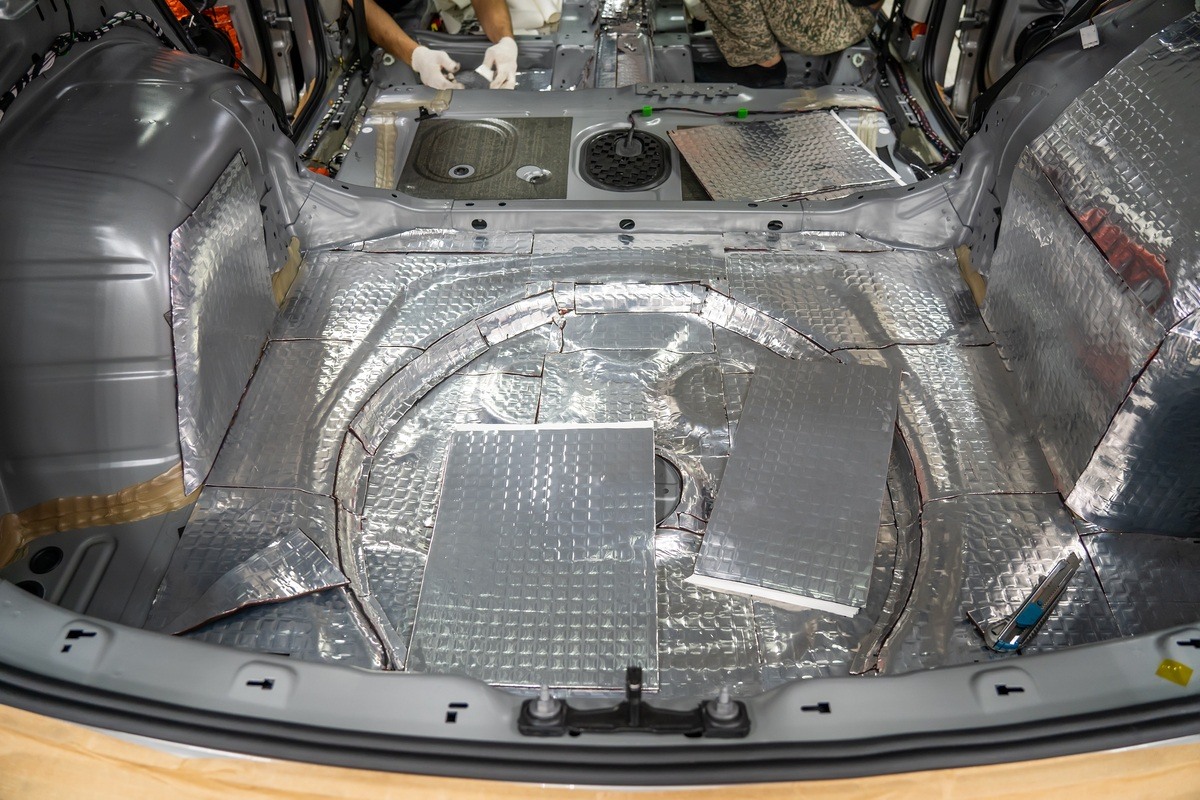
Vibrations in sheet metal and hard surfaces are one of the most common causes of annoying noises in vehicles. When thin sheet metal in doors, floors, wheel wells, roofs, hoods, or cargo areas begins to vibrate, it can amplify sound and make the vehicle sound tinny, rattly, or tiring to be in. Therefore, vibration damping should often be one of the first steps in the installation process.

Vibration-damping material should be installed directly against the hard surface. The goal is to make the surface less resonant so that it doesn’t start to vibrate as easily. On sheet metal, metal, and hard vehicle surfaces, SilentDirect Polaric is a good choice when you want to combine a thin profile, mass, sealing, and vibration damping. The product works particularly well on hard surfaces where sheet metal noise and resonance need to be controlled without adding too much thickness.

How to dampen vibrations in automotive sheet metal
Start with surfaces that sound hollow, vibrate noticeably, or are close to the sound source.

1. Gently tap the door panels, floor, wheel wells, cargo area, and other hard surfaces. If the surface sounds thin, ringing, or hollow, it’s often a good candidate for vibration damping.

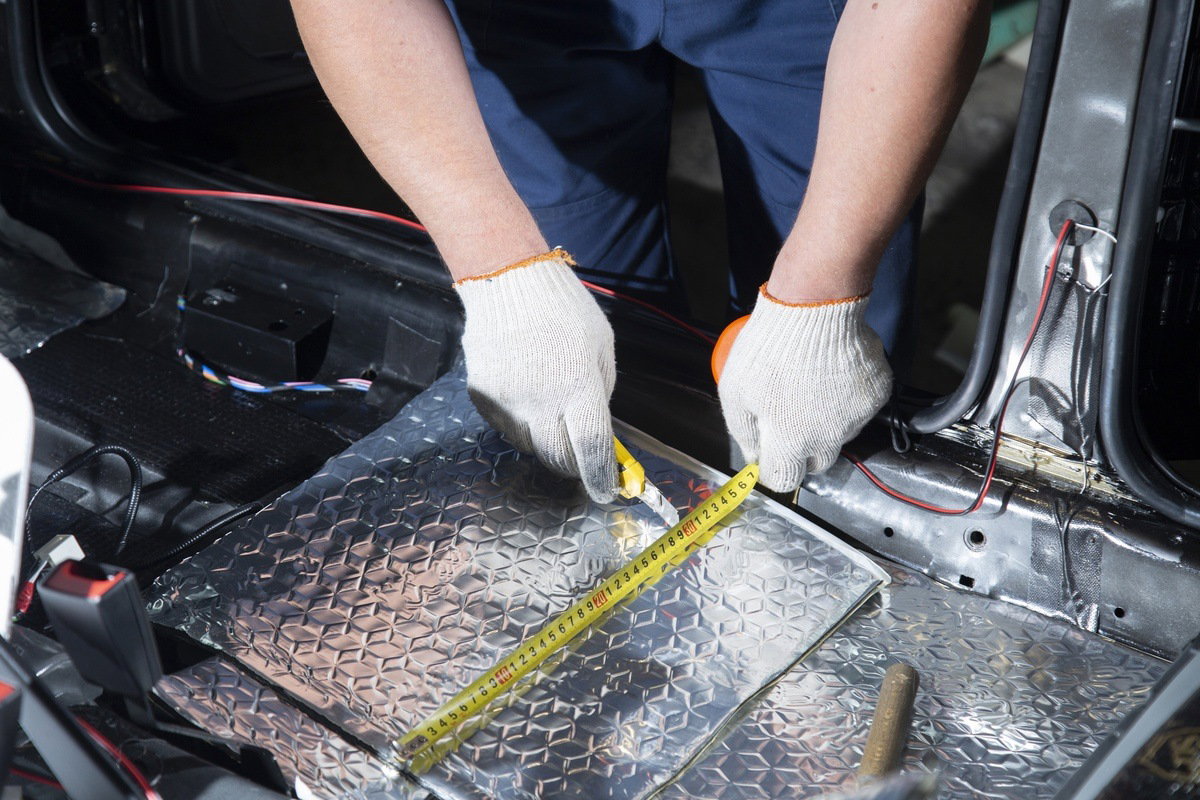
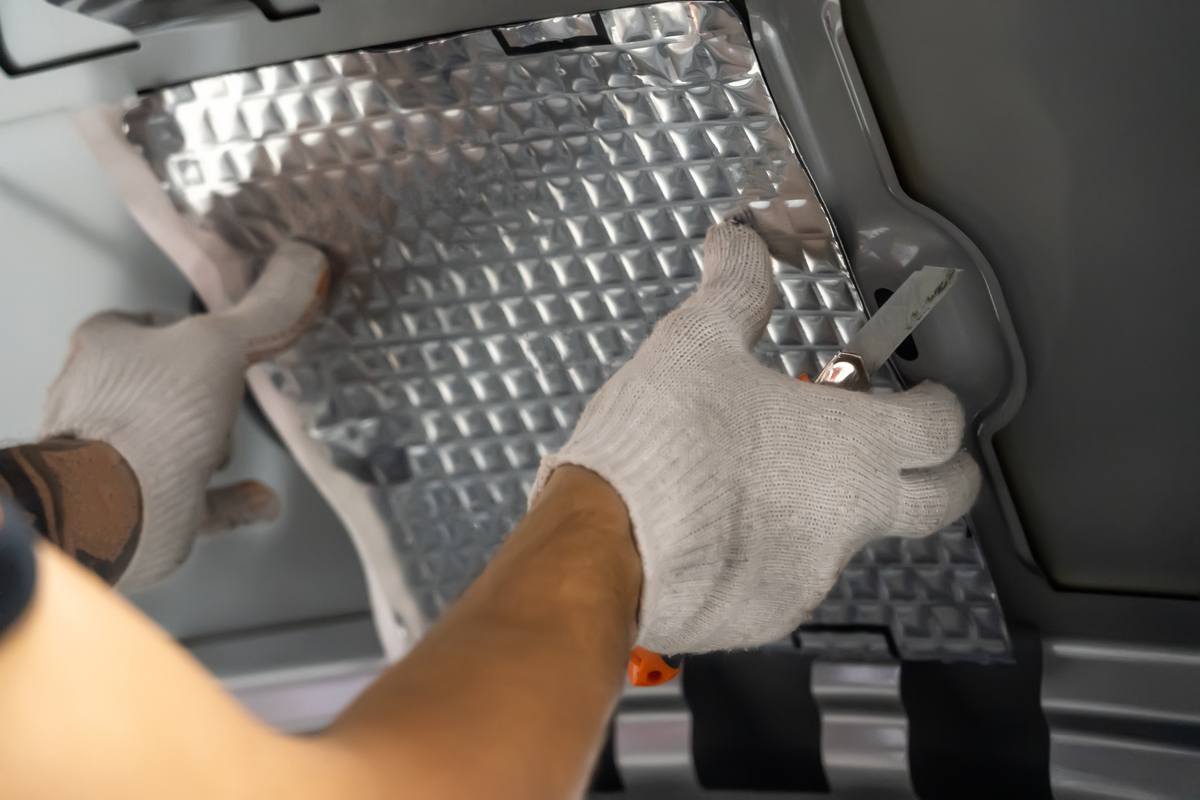
2. Measure the surface and cut the material to fit without covering important fasteners, cables, drainage, or moving parts. It’s better to install the material carefully on the right surfaces than to cover everything haphazardly.

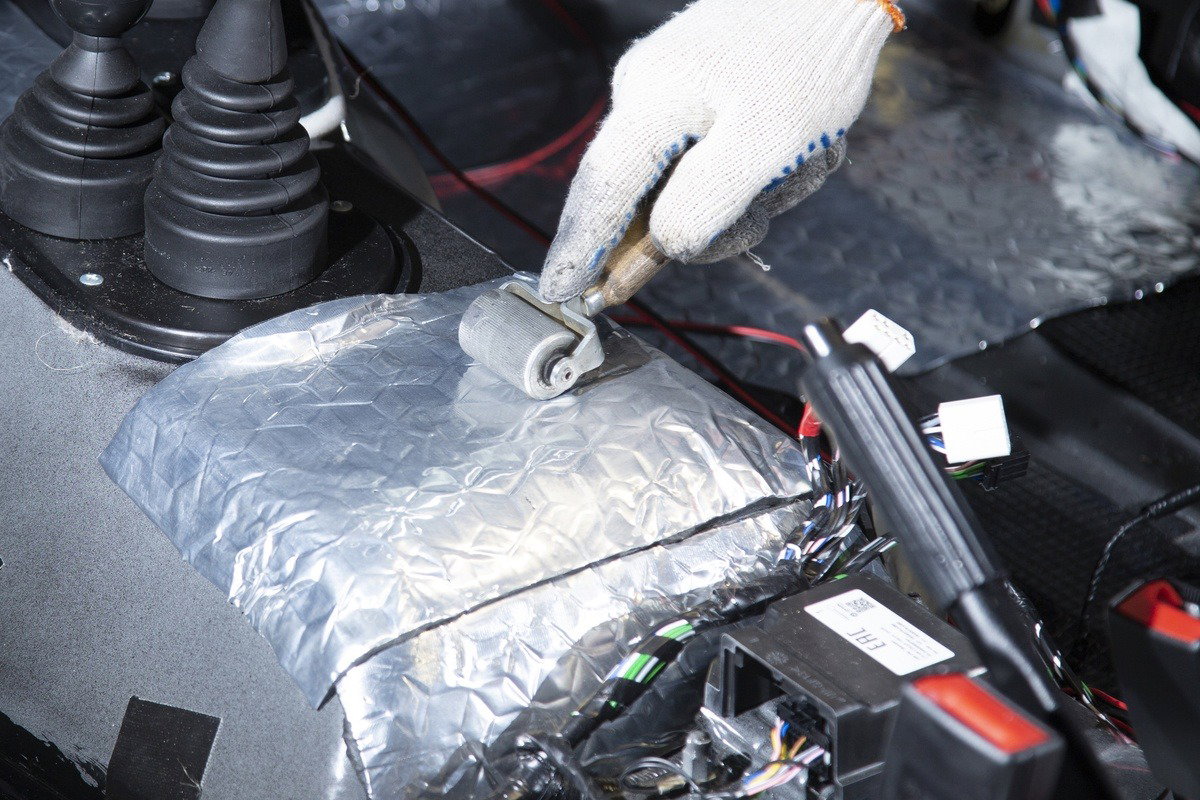
3. Press the material firmly against the cleaned surface. Full contact with the substrate is important, as the material needs to work directly against the vibrations in the sheet metal.

4. Check the result by tapping the surface again. It should feel and sound more solid. If the panel still sounds hollow, you can add more material to strategic areas of the surface.

Treat the hood and heat-exposed surfaces properly

The hood, engine compartment, and other surfaces exposed to heat require more careful treatment than standard interior surfaces. These areas often involve heat, vibrations, service points, ventilation, and moving or sensitive components. Therefore, you should not choose materials based solely on sound absorption, but also on where the material will be installed and the specific requirements of the surface.

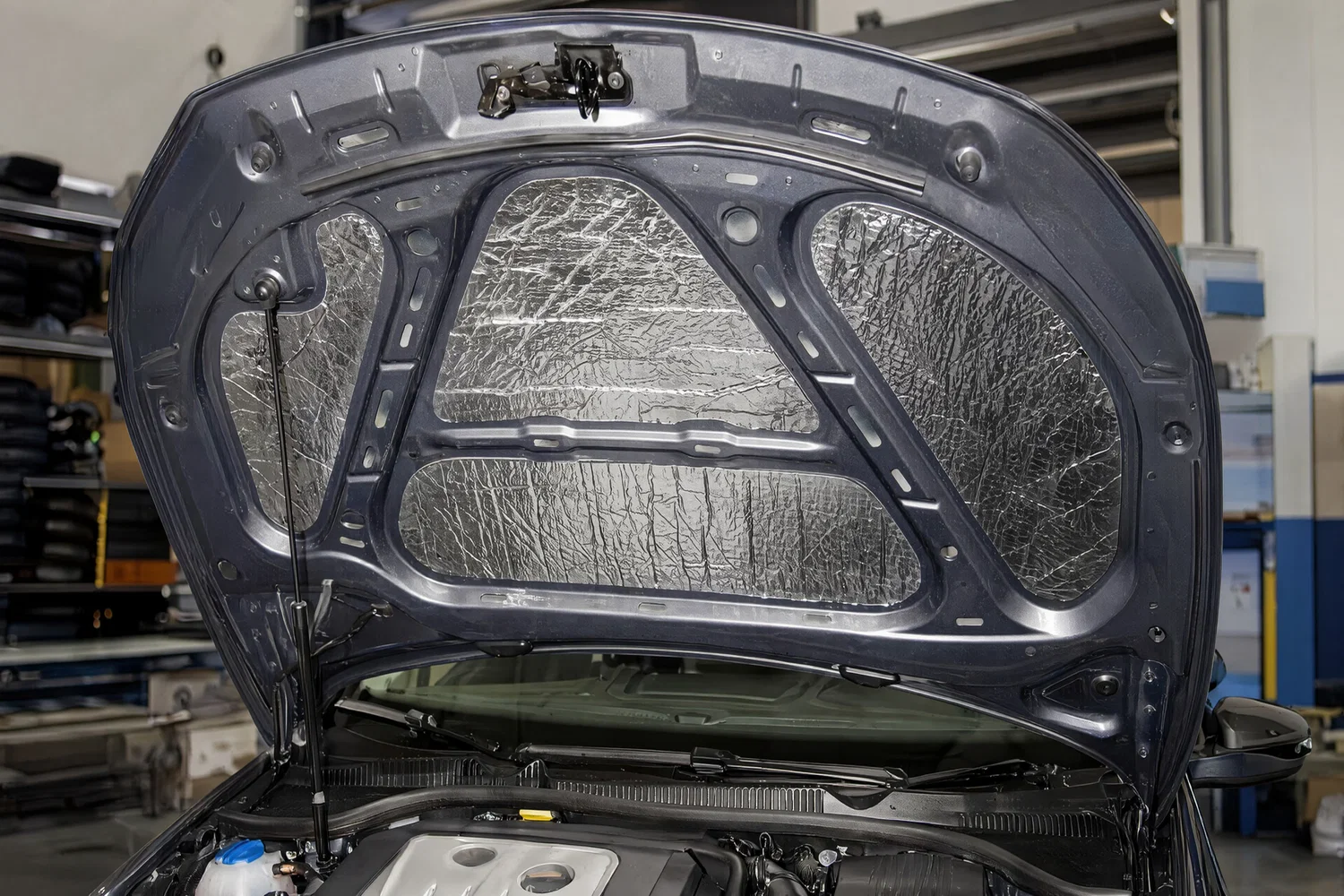
For hoods, vehicle sheet metal, and thin sheet metal surfaces with engine noise or resonance, SilentDirect Hood is a suitable choice. The product is designed for surfaces where engine noise, sheet metal noise, and vibrations need to be dampened without adding significant thickness. For hotter vehicle and sheet metal surfaces where noise, heat, and resonance need to be managed simultaneously, SilentDirect Heat may be a better option.

How to Treat Engine Hoods and Hot Surfaces
Choose materials based on heat, noise source, and installation environment—not just thickness.

1. Determine whether the noise is coming from the hood, firewall, engine compartment, or nearby sheet metal surfaces. Engine noise can both propagate as airborne sound and cause vibrations in the sheet metal.

2. Clean the surface thoroughly to remove grease, oil, dust, and moisture. On surfaces exposed to heat, good adhesion is especially important because the material may be subjected to greater stress.

3. Select the product based on the surface. Use SilentDirect Hood for engine hoods and vehicle sheet metal where you want to dampen engine noise and resonance. Use SilentDirect Heat where heat is a significant factor.

4. Install the material so that it does not block ventilation, service points, locks, cables, moving parts, or safety features. Always check that hoods, hatches, and panels can be closed and opened normally after installation.

Add mass where airborne sound needs to be dampened

Once you’ve dampened vibrations in sheet metal and hard surfaces, the next step may be to reduce airborne noise. This applies especially to road noise, engine noise, and tire noise that enter through the floor, wheel wells, doors, walls, or cargo area. In these cases, a soft, absorbent material is usually not enough. To reduce sound transmission, the structure requires more mass and better density.

SilentDirect MLV is a heavy barrier used when the goal is to dampen airborne sound through mass. It is particularly relevant in applications where the material can be laid securely, such as under trim, in cargo areas, in floor structures, or in larger vehicle areas where a more distinct sound barrier is desired. The product should be viewed as a barrier layer, not as a standard absorbent.

How to Use Mass to Reduce Airborne Sound
Place the barrier material where sound enters and ensure that the structure is as tight and stable as possible.

1. Select areas where airborne noise is clearly audible. These may include floors, wheel wells, cargo areas, walls in vans, RVs, or trailers, or other areas where road noise and engine noise enter the vehicle.

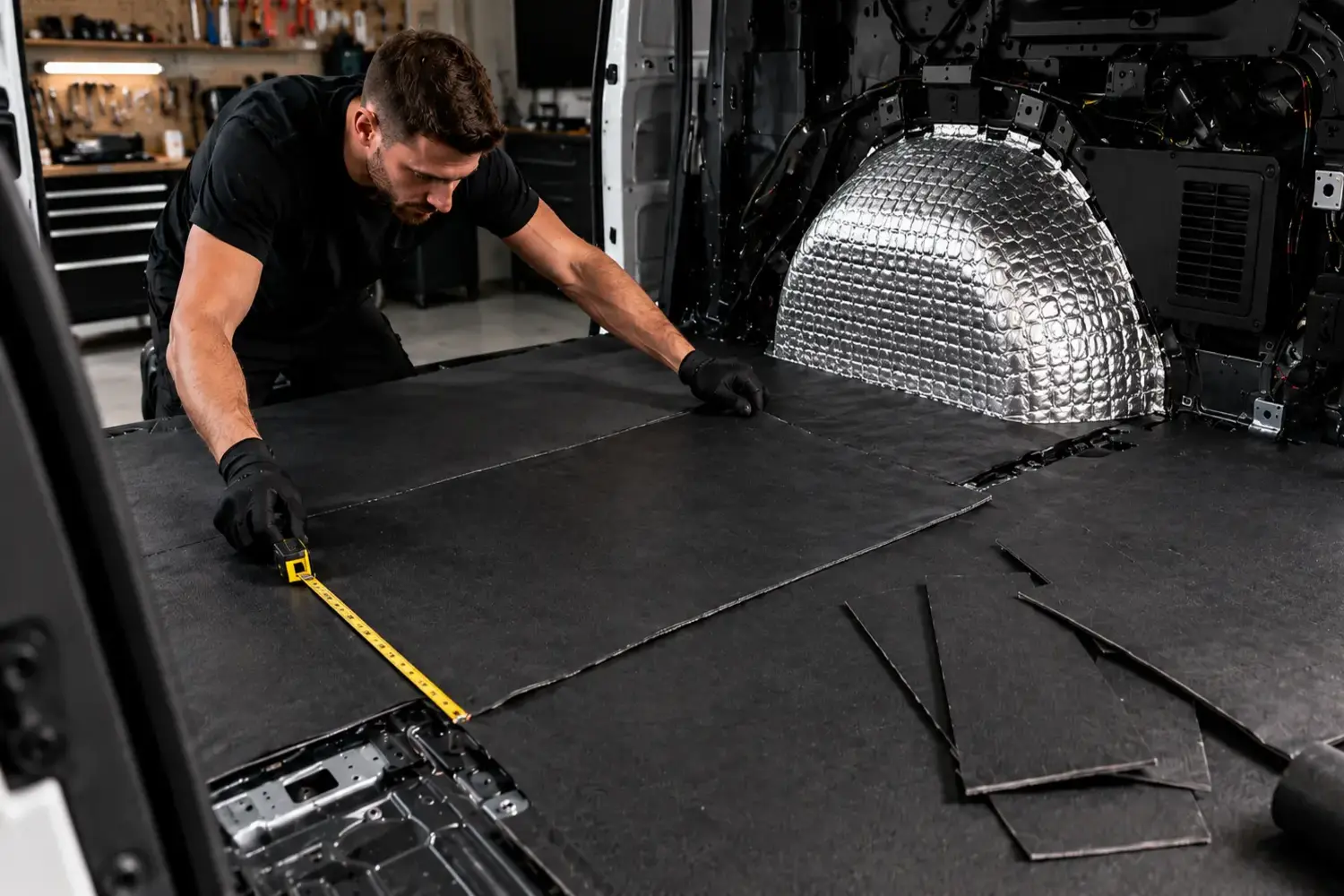
2. Measure carefully and cut the SilentDirect MLV so that the material lies as continuously as possible. The fewer open seams and gaps, the more effective the sound barrier will be.

3. Feel free to combine the barrier layer with existing vibration damping on the sheet metal. The vibration damping makes the surface more sound-dead, while the MLV layer helps to dampen airborne sound.

4. Ensure that the material is securely in place and cannot move, bend, or rattle. Reinstall the trim, panels, or protective layers so that the assembly is practical and durable for the vehicle’s everyday use.

Hur ljudisolerar och ljuddämpar man en bil eller annat fordon?
hur man ljudabsorberar en dörr

Pay special attention to the floor, wheel wells, and doors

The floor, wheel wells, and doors are often among the most important surfaces when the goal is to reduce road noise, tire noise, vibrations, and resonance in a vehicle. The wheel wells are very close to the tires and absorb a lot of noise from the road surface. The floor often transmits low-frequency noise into the passenger compartment. Doors are often made of thin sheet metal, cavities, and panels that can vibrate, allow sound to pass through, and amplify noise inside the car.

Therefore, these surfaces should not be treated with just one material. You’ll typically achieve the best results by combining products based on their function. On hard sheet metal surfaces, vibration damping is applied first. In cavities and panels, an absorptive layer can soften the acoustic environment. Where road and tire noise needs to be reduced, an additional damping or decoupling layer can provide a more noticeable improvement.

How to Prioritize Floors, Wheel Wells, and Doors
Work on one section at a time and choose materials based on what the surface actually needs: vibration damping, absorption, sealing, or an extra sound-dampening layer.

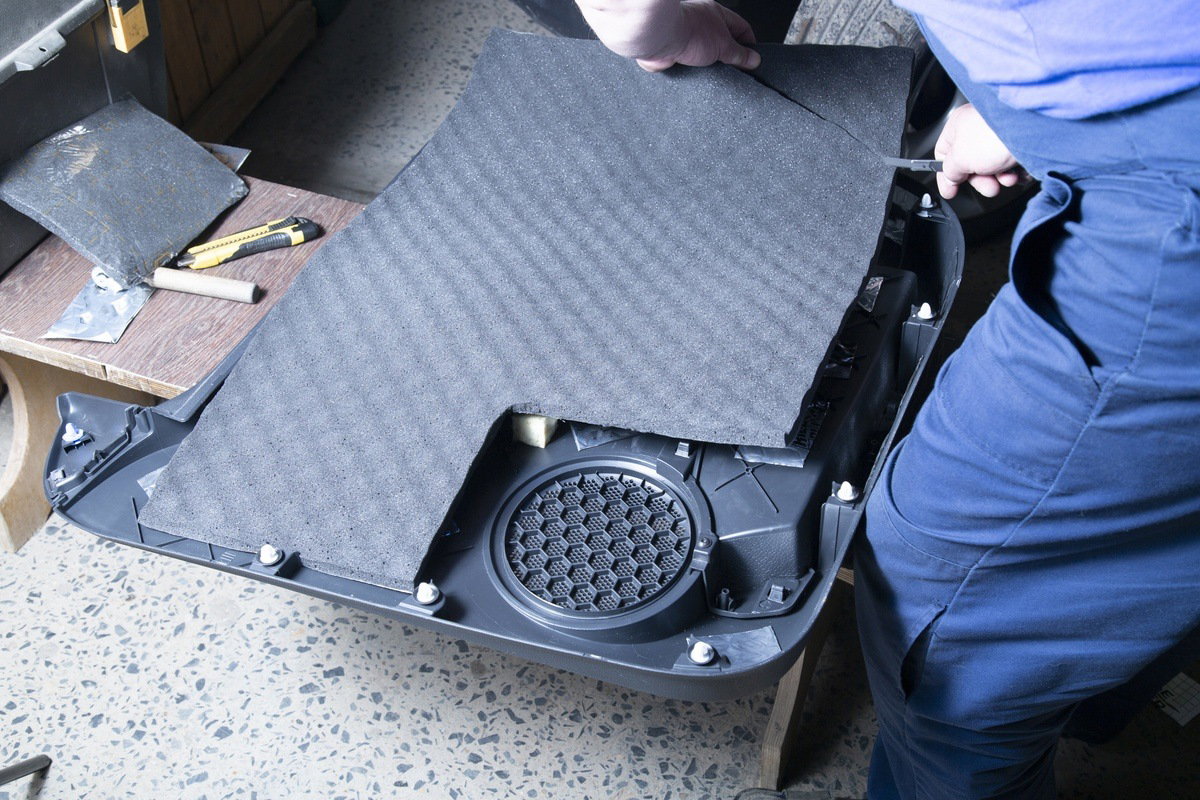
1. Start with the doors if they sound hollow, rattle, or let in a lot of wind and road noise. On the door’s metal surface, SilentDirect Polaric can be used to reduce vibrations and metal resonance. As a supplementary absorptive layer behind the door panel, SilentDirect Egg or SilentDirect Neo are good options, depending on how much space is available in the door.

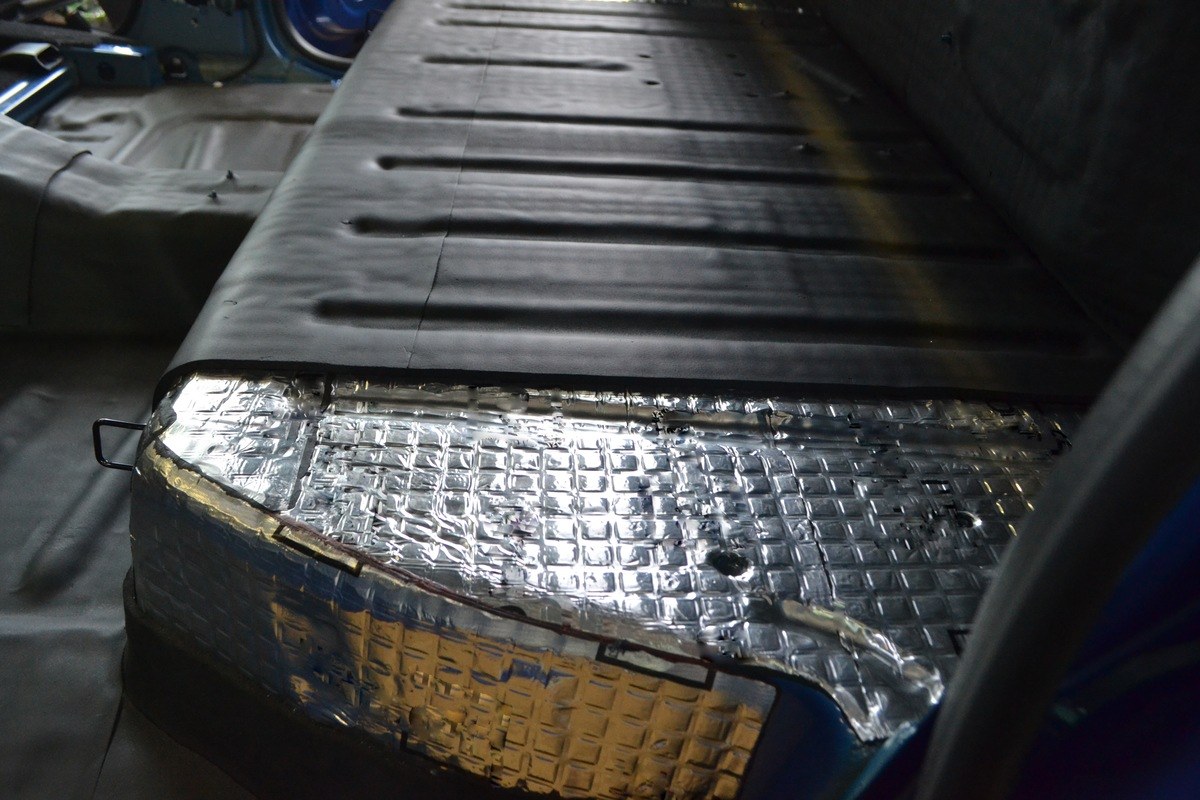
2. Move on to the wheel wells, as they are often one of the main sources of tire and road noise. A very effective combination is to first install SilentDirect Polaric directly against the sheet metal or hard surface to reduce resonance, and then add a layer of SilentDirect Neo approximately 4–7 mm thick as an extra sound- and vibration-damping layer. This combination works particularly well when you want to reduce tire noise, structure-borne noise, and harsh vibrations from the road.

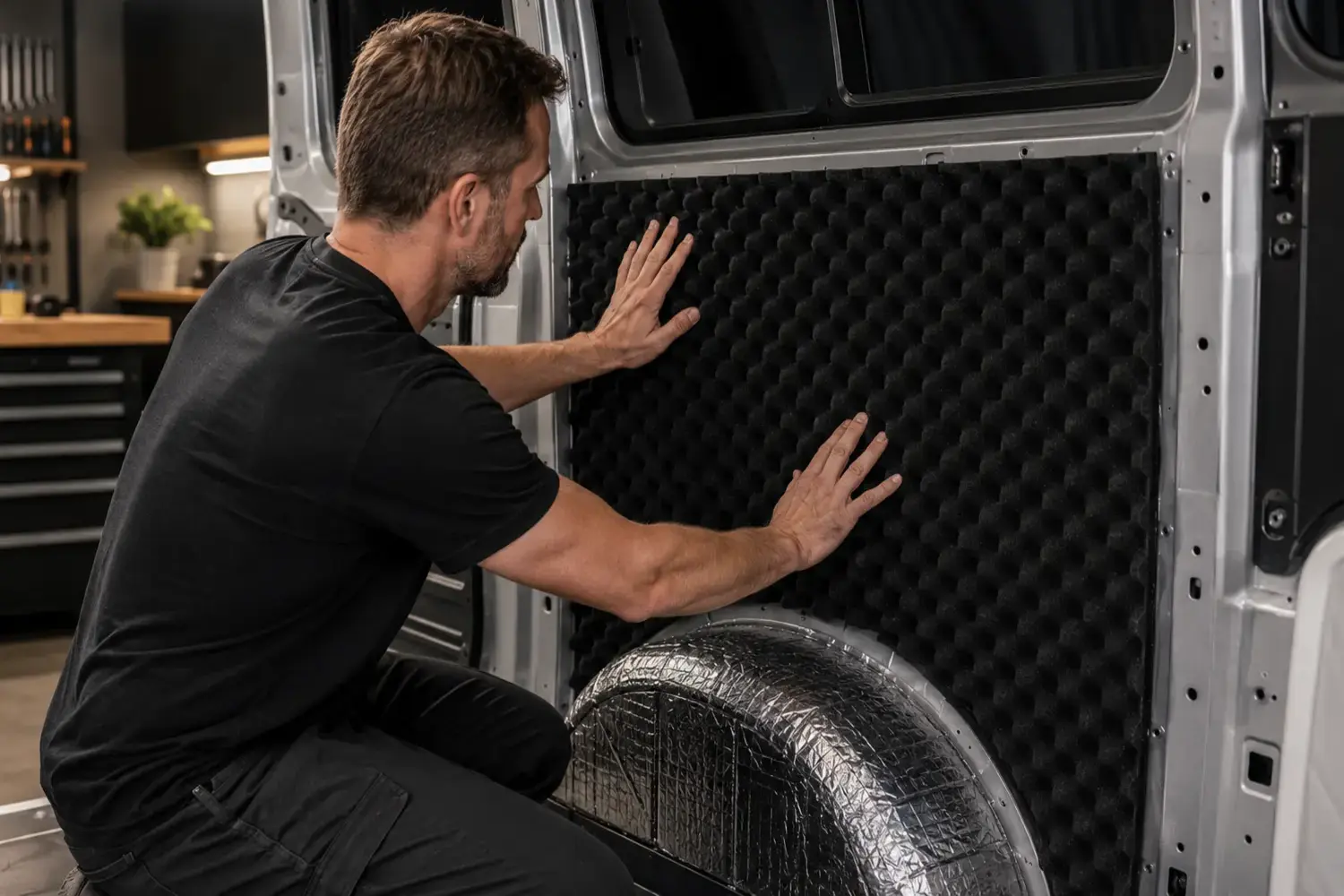
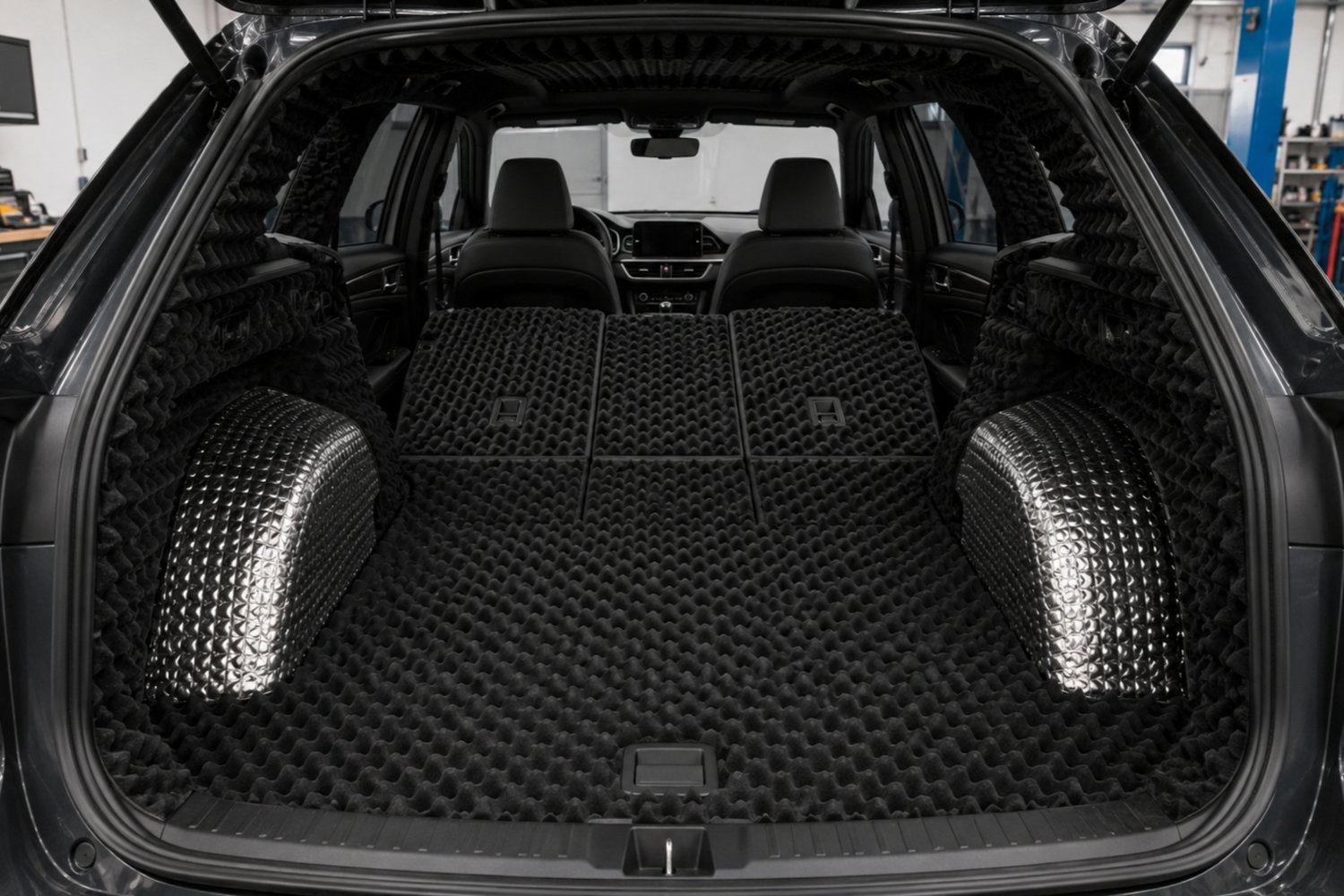
3. Next, treat the trunk and cargo area if the noise is coming from the rear. Here, wheel wells, side panels, the floor, and larger hard surfaces can contribute to both resonance and road noise. On sheet metal and hard surfaces, SilentDirect Polaric is the recommended first layer. If the space feels hard, echoey, or tinny, SilentDirect Neo or SilentDirect Egg can be used as supplemental absorption where space allows.

4. Treat the cabin floor if you want to reduce low-frequency noise from the road surface. The floor is often a major sound path, especially when driving on highways, rough asphalt, or in older vehicles with thinner body construction. On floor surfaces, SilentDirect Polaric can be used to dampen vibrations in the sheet metal. If you want to create a more sound-insulating solution, this can be supplemented with SilentDirect MLV where space allows and where the material can lie securely under carpet or flooring.

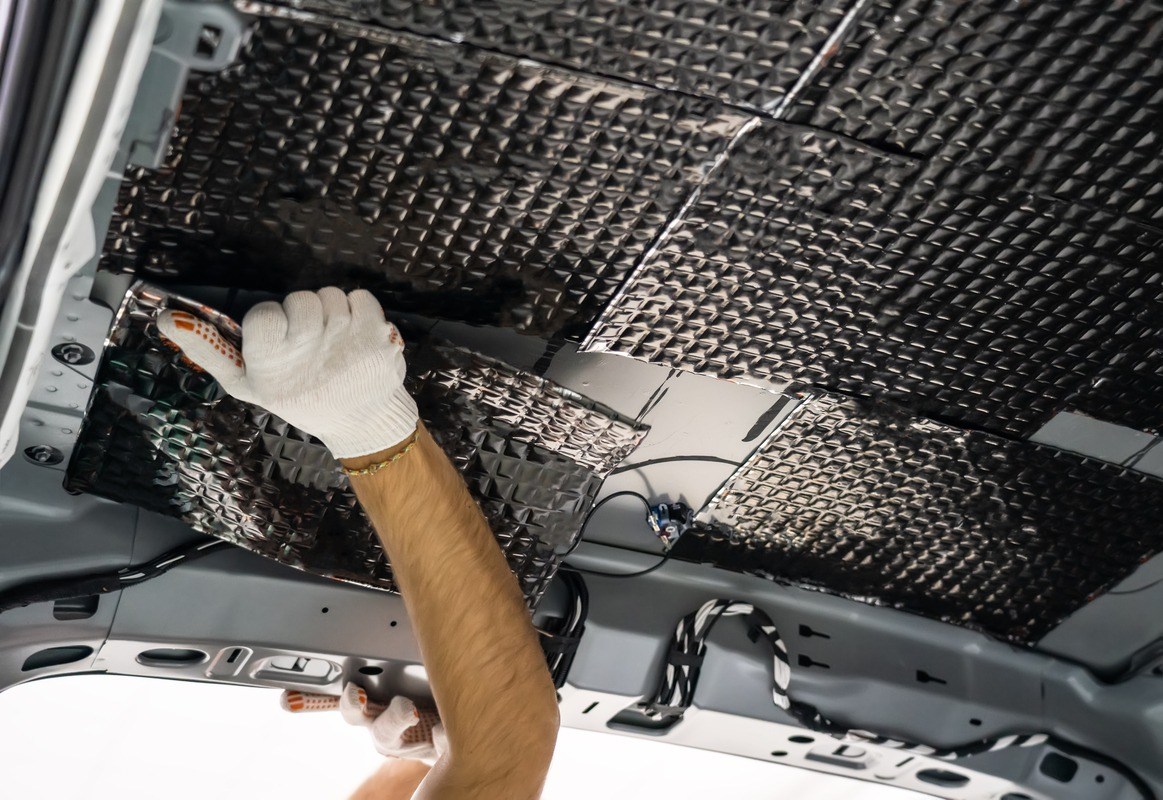
5. Save the roof for last if it requires removing the headliner. The roof can contribute to resonance, harsh reflections, and a more tinny sound environment, but the work is often more time-consuming than addressing the doors, floor, and wheel wells. By tackling the roof last, you can first determine how much noise has already been reduced after the most critical surfaces have been treated.

Tight joints, gaps, and contact surfaces

Sealing is a very important part of sound insulation. Sound often travels through the same pathways as air. Therefore, small cracks, leaky seams, loose panels, poor contact surfaces, or gaps that don’t close tightly can compromise the results even if you’ve installed high-quality sound-insulating material. This is particularly important in doors, trunk areas, cargo areas, hatches, RVs, vans, and converted vehicles.

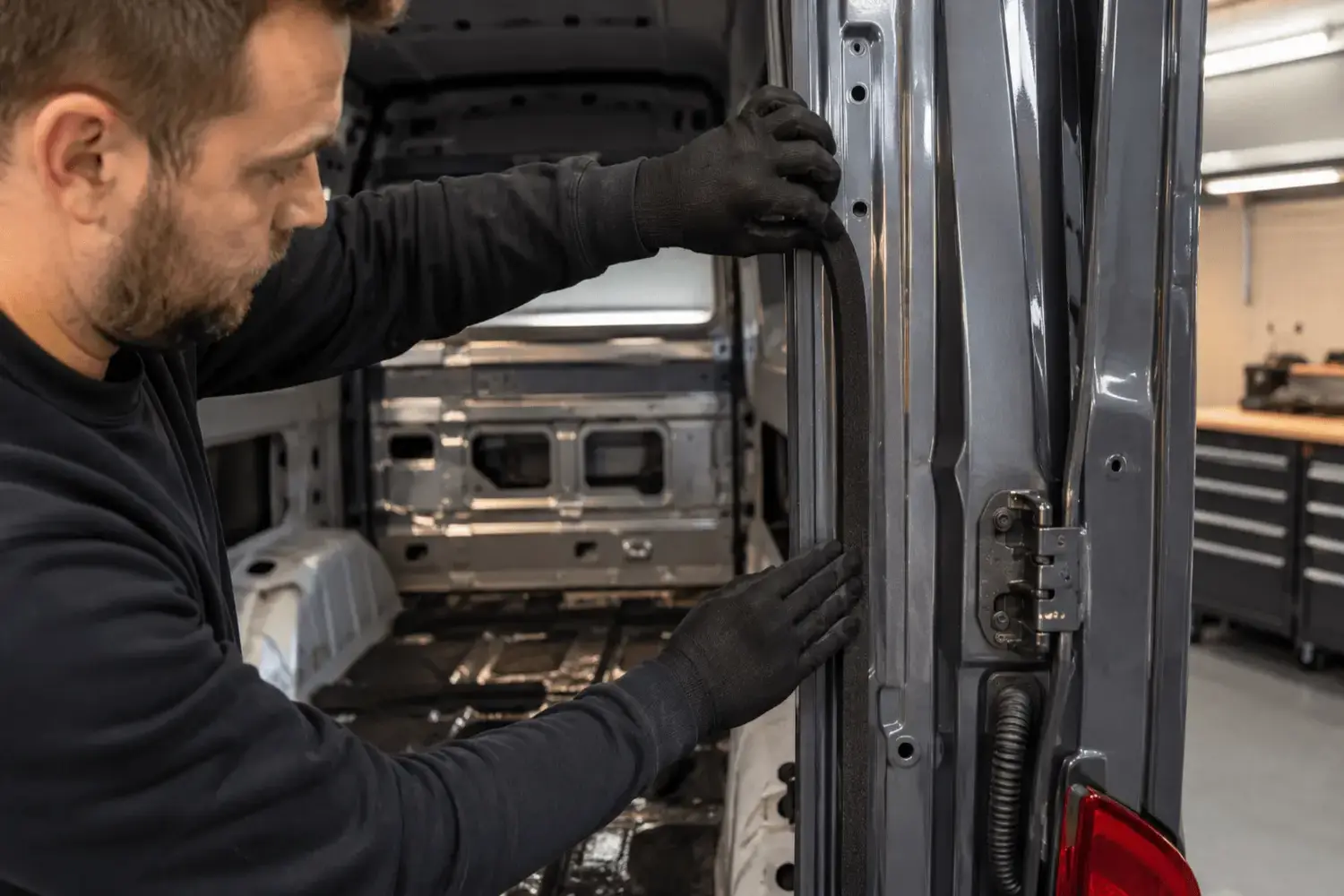
SilentDirect Seal is ideal for gaps, seams, and contact surfaces where minor air leaks or vibrations need to be reduced. The product can help both seal and reduce contact noise where two surfaces meet. Where seams in sound-insulating structures need to be kept closed, SilentDirect Aluminum Sealing Tape can be used as a practical complement.

How to Seal Joints and Contact Surfaces
Check for both visible gaps and small leak points where sound can escape past the insulation.

1. Inspect doors, hatches, panel edges, the cargo area, the trunk, and joints around treated surfaces. Look for gaps, loose parts, and areas where two materials are in contact and may cause vibrations.

2. Use the light test wherever possible. If light is visible through a gap, there is often also a risk of air and sound leakage. This is particularly useful for doors, hatches, and built-in vehicle compartments.

3. Use the pressure method by gently pressing on panels, trim, and hatches while listening for rattling or changes in sound. If the sound changes when you press on the surface, the contact area often needs to be sealed or stabilized.

4. Install SilentDirect Seal where a sealing strip is needed and use SilentDirect Aluminum Sealing Tape on relevant joints in sound-insulating assemblies. Check afterward to ensure that doors, hatches, and panels still close properly.

Add absorbent material where the sound needs to be softened

Once vibration, mass, and sealing have been addressed, you can add absorbent materials. Absorption is not primarily used to prevent sound from entering the vehicle, but rather to make the acoustic environment less harsh, less sharp, and less reflective. This is particularly relevant in engine compartments, machine enclosures, technical compartments, cargo areas, vans, RVs, and other vehicles with large hard surfaces.

For engine compartments, machine enclosures, and surfaces where a profiled foam structure can capture sound close to the source, SilentDirect Egg is a good choice. For larger or more irregular surfaces, SilentDirect Egg roll may be easier to customize. If you want a smoother sound-dampening surface for vibrations, resonances, and mechanical noise, SilentDirect Neo or SilentDirect Neo roll may be a better fit.

How to Complement with Absorptive Materials
Use absorbers as a final or supplementary layer where sound needs to be dampened near the source or softened within the space.

1. Identify surfaces where sound bounces or is amplified after vibrations and airborne sound have already been addressed. These may include cargo areas, engine compartments, machine enclosures, or utility rooms.

2. Select a product based on the surface and its function. Use SilentDirect Egg or SilentDirect Egg roll where a profiled structure is appropriate. Choose SilentDirect Neo or SilentDirect Neo roll where a smoother surface is more practical.

3. Cut the material to fit the surface and ensure it does not block ventilation, service points, hatches, wiring, or moving parts. In vehicles, practical functionality is always just as important as sound damping.

4. Consider absorptive material as a complement to—not a replacement for—vibration damping, mass, or sealing. The best results are usually achieved when absorption is used in conjunction with the proper foundational measures.

Check the results and make adjustments step by step

Once you have installed sound insulation and sound damping, you should always check the results before moving on to the next part of the vehicle. Sound often changes after each step. When one dominant sound is reduced, another sound may become more noticeable. Therefore, it is better to work step by step rather than installing everything at once without checking the results.

Test-drive the vehicle under the same conditions as when you first noticed the problem. Drive on a similar road surface, at a similar speed, and with the same type of load, if applicable. Listen to see if the noise has decreased, shifted, or changed in character. Also check that no panels, trim, carpets, or upholstery have started to rattle after being reinstalled.

How to Check and Fine-Tune Sound Insulation
Test, listen, and add insulation where it still makes the biggest difference.

1. Test-drive the vehicle on the same type of road or in the same situation as before installation. Compare road noise, engine noise, wind noise, vibrations, and rattling.

2. Inspect the treated surfaces immediately after the test. Check to see if the material is securely attached, if the panels are stable, and if any parts need to be pressed into place, sealed, or adjusted.

3. Listen for new or lingering noises. If road noise has decreased but rattling from a panel has become more noticeable, the next step may be sealing or stabilization, not adding more barrier material.

4. Add the right product for the right problem, step by step. Use more vibration damping on resonant metal surfaces, more mass where airborne sound is getting through, sealing at joints, and absorptive material where the sound needs to be softened.

Selected Articles

How do you soundproof the wheel wells in a vehicle?

How do you soundproof and dampen the noise in a van?

Converting a van into a motorhome: How do you soundproof it?

Did you know that…

Did you know that thin sheet metal surfaces in vehicles can act much like a reinforcing resonance surface? That’s why a small amount of properly placed vibration damping can sometimes make a big difference. At the same time, road noise and engine noise often require more than just soft, absorbent materials. For best results, you should combine resonance damping, mass, density, and absorption on the surfaces where each method is actually effective.

Products for sound insulation and sound damping in vehicles.

Vehicles require products that can handle sheet metal, vibrations, resonance, engine noise, road noise, and surfaces where standard room absorbers aren’t always suitable. Here are products that are ideal when you want to soundproof or dampen the noise in a car, van, RV, truck, boat, tractor, forklift, or other vehicles in a more controlled manner.

SilentDirect Hood is designed for engine hoods, vehicle sheet metal, and thin metal surfaces where engine noise or resonance needs to be dampened without adding significant thickness. It’s particularly well-suited when you want to reduce noise from the engine compartment while using a self-adhesive material on a clean surface.

SilentDirect Polaric is a self-adhesive barrier mat with an aluminum surface for sheet metal, metal, and hard surfaces. It is particularly suitable for vehicle surfaces where you want to reduce sheet metal resonance, seal gaps, and add mass in a thin layer.

SilentDirect Heat is suitable for heat-exposed automotive and sheet metal surfaces where noise, heat, and resonance need to be managed simultaneously. It is useful when the noise problem is located near the engine, hot sheet metal, or technical components where a standard material is not the right choice.

SilentDirect MLV is a heavy mass-loaded vinyl that helps dampen airborne sound through mass and density. It is suitable for vehicle interiors where you want to create a more effective sound barrier, such as in floors, walls, or cargo areas where the material can be securely installed.

SilentDirect Neo is a smooth sound-absorbing mat designed to reduce vibrations, resonances, and mechanical noise. It is suitable for vehicles, machinery, and enclosures where you want a smoother surface than profiled foam while also reducing harsh sound characteristics.

SilentDirect Neo Roll is the roll-form version of Neo and is ideal for treating larger or longer surfaces. It is practical for use in vans, cargo areas, technical surfaces, and other applications where you need to be able to cut the material to fit the vehicle’s shape.

SilentDirect Egg is a profiled sound absorber for engine compartments, machine enclosures, and surfaces where sound needs to be absorbed close to the source. It can be a good complement when vibrations and barrier layers have already been addressed and the sound needs to be softened.

SilentDirect Egg Roll is suitable for larger surfaces in vehicles or equipment rooms where the roll format makes it easier to adapt the material. It is useful when you want to cover irregular surfaces and create more continuous sound absorption.

SilentDirect Seal is a self-adhesive sealing strip for gaps, joints, and contact surfaces where small air leaks or vibrations can compromise performance. It is particularly useful in doors, hatches, cargo areas, and contact surfaces where sealing and decoupling make a difference.

SilentDirect Aluminum Sealing Tape is a self-adhesive aluminum tape for sealing joints in sound-insulating structures. It is suitable for situations where transitions, joints, or aluminum-clad seams need to be kept closed to prevent sound from leaking through.

*Free shipping

Free shipping to a pickup location

5-year warranty

5-Year Product Warranty

Fast delivery

Usually ships the same day

Sound Insulation and Sound Damping in Cars, Vans, RVs, and Other Vehicles

Soundproofing and noise reduction in a car or other vehicle involve reducing several different types of disruptive noise simultaneously. In a vehicle, noise often comes from the engine, the road surface, tires, wheel wells, vibrations in the body panels, doors, floor, ceiling, cargo area, and sometimes even from interior components rattling against the body. Therefore, it’s rarely enough to simply apply a material to a random surface. A good solution starts with understanding where the noise originates, how it spreads, and what type of material is needed in the right place.

The Difference Between Soundproofing and Sound Damping a Vehicle

Sound insulation in vehicles is primarily used to block sound from entering the passenger compartment or spreading through the body, floor, doors, and engine compartment. This requires materials that add mass, seal gaps, and reduce the transmission of airborne sound. Sound damping is used more to reduce resonance, vibrations, sheet metal noise, and harsh reflections inside the vehicle. In practice, both methods are often combined. A heavy barrier or damping mat can reduce sound transmission, while absorbent and vibration-damping materials make the sound environment quieter and less rattly.

Common surfaces to treat

The most relevant surfaces are often the floor, doors, wheel wells, dashboard, hood, roof, and cargo area. On sheet metal and other metal surfaces, it’s important to reduce resonance, since thin vehicle surfaces easily begin to vibrate when exposed to road noise, engine noise, or vibrations. For larger surfaces, products such as SilentDirect Polaric, SilentDirect Heat, and SilentDirect MLV may be appropriate, depending on whether the focus is on sheet metal resonance, heat-exposed surfaces, or an enhanced sound barrier.

Seal, fit, and the right material in the right place

Small gaps, loose joints, and leaky transitions can compromise sound insulation, especially in doors, hatches, cargo areas, and built-in vehicles such as vans, RVs, and specialty vehicles. Sealing materials like SilentDirect Seal can help reduce sound leakage and vibrations at contact surfaces. For engine compartments, hoods, and technical surfaces, factors such as heat, installation, and accessibility must also be taken into account. Therefore, materials should always be selected based on the surface, temperature, sound source, and how the vehicle is used.

A quieter cabin requires multiple measures

The best results are usually achieved in stages. Start by identifying the most disruptive noises, treat the surfaces that contribute the most, and then proceed with sealing, vibration damping, and supplemental absorption where needed. In a passenger car, doors, wheel wells, and the floor may be the most important areas. In a van or RV, the cargo area, walls, ceiling, and floor may play a greater role. In a boat, tractor, forklift, or truck, engine noise, machinery noise, and vibrations are often more dominant. By combining the right products on the right surfaces, you can create a vehicle that feels quieter, more stable, and more comfortable to drive or spend time in.