










• Free shipping
  • 5-year warranty
  • Fast delivery

Effectively reduce industrial noise – that's why sound-absorbing curtains are a smart solution

In industrial and workshop environments, noise is often one of the biggest challenges in the working environment.
Machines, compressors, welders, grinders, forklifts, and hard material surfaces create a noise level that quickly becomes tiring, stressful, and in some cases directly harmful over time. At the same time, it is rarely possible to rebuild entire premises or permanently encapsulate every source of noise.

This is why flexible, effective solutions are needed that can be adapted to everyday operations – and this is where sound-absorbing industrial curtains make a big difference.

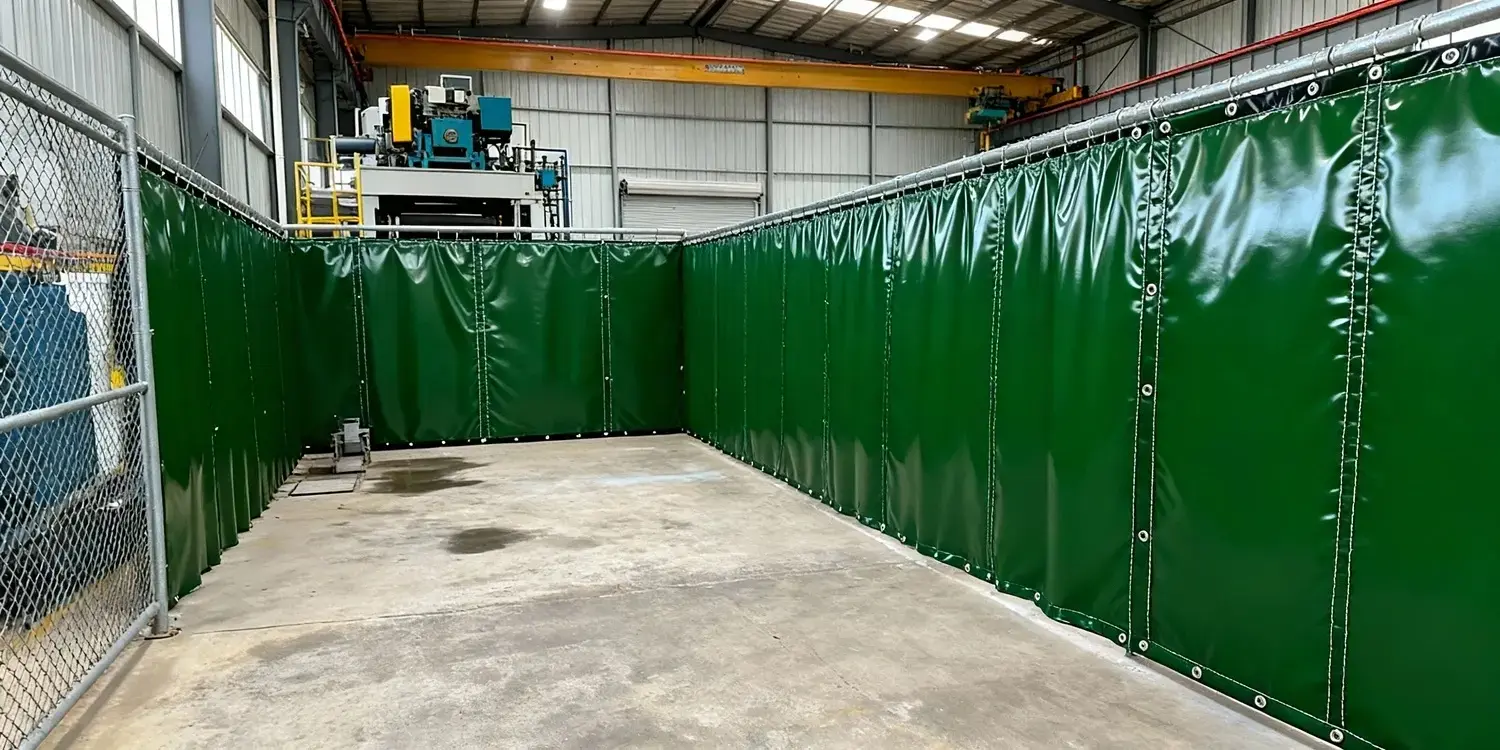
Sound-absorbing industrial curtains act as a movable acoustic barrier that both absorbs and screens off sound.
They can be used to divide work zones, reduce sound propagation between machines and staff areas, and create quieter areas without disrupting workflow or safety.
In practice, this means that you can reduce noise where it occurs, instead of trying to manage the sound throughout the entire premises.
This results in a noticeably better sound environment, clearer communication, and a more focused workplace.

In this guide, we go through how sound-absorbing industrial curtains work, what types of noise they are most effective against, and how to position them for the best results.
You will also find tips on how curtains can be combined with other acoustic solutions to create a whole that really works in industry and workshops
– whether you want to reduce noise in a machine hall, create quieter production zones, or improve the working environment in a smaller workshop space.

Recommended products

Here are some advantages of sound-absorbing industrial curtains in industry and workshops

Effective noise reduction where needed
Sound-absorbing industrial curtains reduce both airborne noise and sound propagation between workstations.
Placing curtains close to the source of the noise reduces the sound level locally, which often results in a clear improvement without the need to rebuild the entire room.

Flexible solution that can be moved and adapted
Unlike fixed walls, industrial curtains are movable. You can easily change their placement, create new zones, or open up spaces when production requires it.
This makes curtains a practical soundproofing solution in dynamic industrial environments.

Better working environment and less stress
High noise levels affect concentration, fatigue, and stress levels.
When noise is reduced, the working environment becomes calmer and more bearable, which can contribute to better focus, fewer mistakes, and a more sustainable working day for staff.

Clearer communication and increased safety
In workshops and production facilities, it is important to be able to hear instructions, warning signals, and colleagues.
Reducing background noise improves speech perception, which contributes to safer work tasks and smoother collaboration.

Creates quieter work zones without permanent interventions
Industrial curtains act as a barrier between noisy and quieter areas.
For example, you can isolate machine zones, grinding stations, or welding booths while maintaining an open and easily accessible space.

Quick installation with minimal disruption
Installing sound-absorbing curtains is often quick and rarely requires major renovations.
This allows you to improve the sound environment without long production stoppages or extensive investments.

Cost-effective alternative to fixed sound walls
For many businesses, curtains are a smart financial choice.
You get much of the sound-absorbing effect that a fixed structure can provide – but at a lower cost and with significantly greater flexibility.

Can be combined with other acoustic solutions
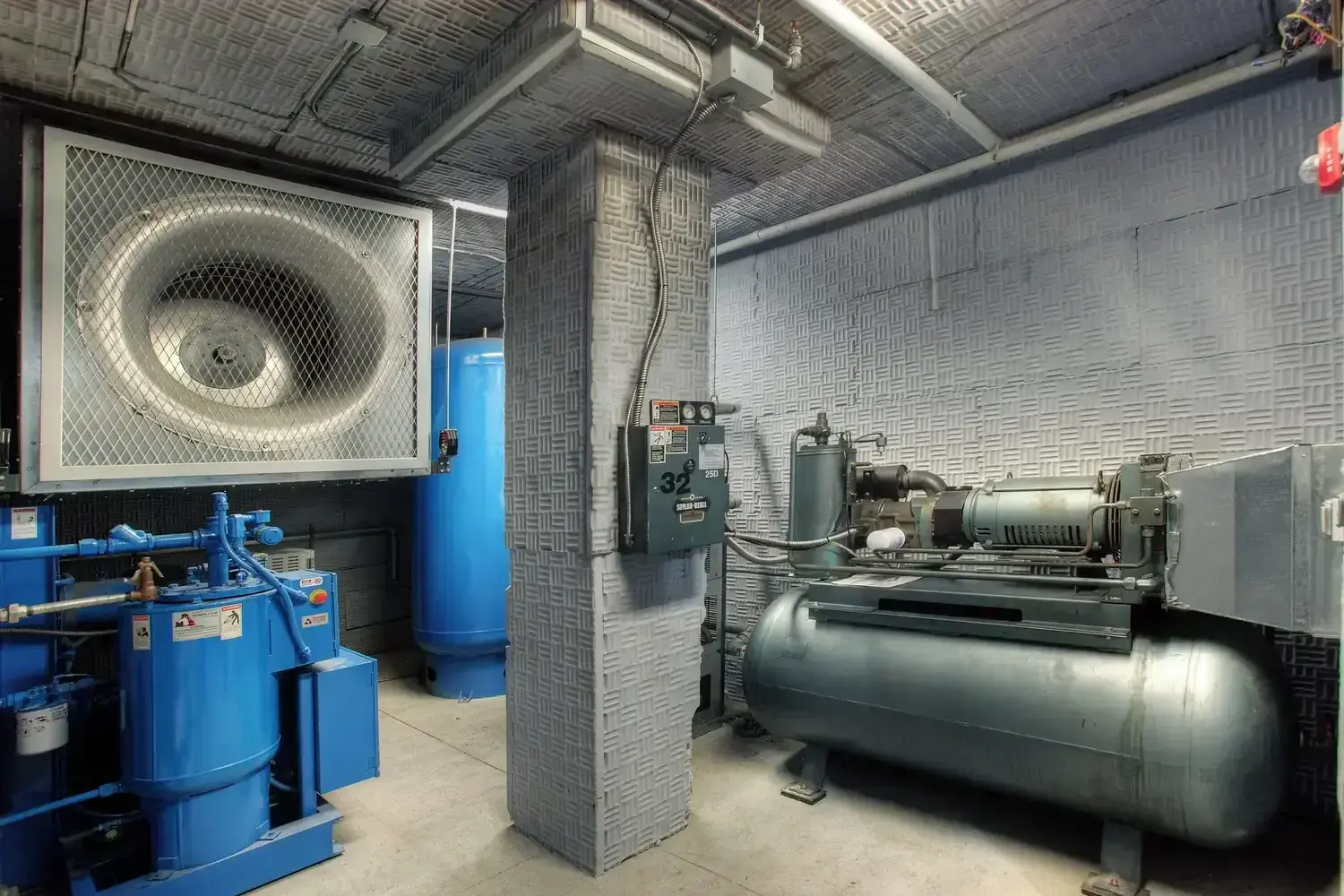
Industrial curtains work excellently in combination with, for example, ceiling absorbers, wall absorbers, or vibration damping on machines.
This combination allows you to reduce the noise level both locally and throughout the entire premises for a more balanced result.

Robust materials adapted for tough environments
Sound-absorbing industrial curtains are built for industrial use and can withstand wear, dirt, and daily operation.
This makes them a long-term solution that continues to provide sound absorption even in demanding workshop environments.

Step-by-step: How to use sound-absorbing industrial curtains for effective noise reduction

Our step-by-step guide helps you plan, install, and optimize curtains to create a noticeably quieter and more functional workspace. Sound-absorbing industrial curtains and noise barriers are one of the most practical measures in industry and workshops because they are quick to install, can be moved if necessary, and have a clear effect where the noise occurs. But for the curtains to really deliver, you need a well-thought-out plan—otherwise, you risk the sound just "going around."

Step 1: Identify the sources of noise – estimate where the noise is worst

Start by walking through the premises while the machines are in operation and identify where the noise is coming from and how it spreads throughout the premises.
This could be machines, compressors, welding stations, grinders, material handling, or forklift traffic.
A simple noise meter app or a thorough listening tour is often sufficient. Listen for:

  • Which machines/work tasks are the loudest, where the noise level is highest.
  • Whether the noise is constant (e.g., fans, compressors) or pulsating (hitting, punching, cutting)
  • How far the sound spreads before it is perceived as disturbing
    Check for open surfaces that amplify sound (large metal walls, concrete, high ceilings).


This survey shows where curtains are most useful and determines whether you should screen a specific source or divide a larger area into zones.

Step 2: Determine the target image – what do you want to improve?

Set a clear goal for what you want to achieve and plan accordingly before installing anything. Examples of goals in industry/workshops:

  • Shield a noisy machine zone to prevent noise leakage and sound propagation to adjacent zones.
  • Createquieter work areas for assembly, control, or office-related work.
  • Create temporary sound zones that can be moved or opened as needed for production.


When the goal is clear, placement and dimensioning become much easier. The purpose determines how dense and how large the curtain system needs to be.

Step 3: Choose the right layout for maximum effect – screen, wall or built-in

Industrial curtains work best when they are close to the sound source or block the direct path of sound; they can be used in three main ways.
Choose the method that matches the goal you want to achieve:

  • Straight screen: when you want to stop sound in a clear direction (e.g., between a machine and a walkway).
  • U-shape: when a machine emits sound in several directions. The U-shape reduces propagation both forward and to the sides.
  • Box/built-in: when you want maximum local attenuation around a noise source. The more enclosed, the greater the effect.


Important to consider:

That you really cover the path between the noise source and work areas, create a clear "sound barrier" in the room, and do not leave large openings where sound can escape.

The more you shorten the path of the sound, the greater the effect you get per square meter of curtain. You get the greatest effect when the curtain is as close to the sound source as possible.
The reason is simple: if you stop the sound early, you also reduce the amount of sound that has time to spread, bounce, and build up in the room.

Step 4: Ensure the correct height and coverage

Sound spreads in a three-dimensional volume in all directions, including upwards. Therefore, the curtain must cover the height at which the sound "plays out." The rule is:

  • Go as close to the floor as possible without dragging.
  • Go as high as practically possible, preferably towards the ceiling/beam.
  • Cover the entire "line of sight" between the source and the work surface.


If the curtain is too low or narrow, the sound will simply travel over or around it.

Step 5: Minimize gaps and build overlaps

Small openings leak a disproportionate amount of sound. For the best soundproofing, do the following:

  • Overlap curtains if you have several sections.
  • Pull the curtain toward thewall/post if possible.
  • Avoid large side gaps that act as "sound channels."


The tighter the shielding, the closer you will get to the attenuation that the product is capable of. Here, small details often make a big difference to the overall result.

Step 6: Combine with absorbers if the room has very hard surfaces

Curtains stop the spread, but in rooms/large halls with concrete/sheet metal, the sound can still bounce around for a long time even if the zone is shielded. If the room feels "echoey," you should supplement with:

  • Ceiling absorbers to reduce reverberation throughout the hall.
    Wall absorbers on large, reflective surfaces.
    Vibration damping at machine feet if structure-borne noise dominates.


This means that the sound level is not only stopped locally, but the entire room becomes quieter. Curtains dampen the spread – absorption reduces the "bounce" in the room. Together, the effect is much stronger.

Step 7: Test in operation and fine-tune placement

Once the curtains are installed, run production and evaluate. Check whether:

  • Has the noise level decreased in the work areas and communication become clearer?
  • Can the machine still be heard through a side gap or over the top?
  • Is a U-shape or more enclosureneeded?


Adjust the placement and move or add to the curtain where sound is still coming through. Adjustments of 0.5–1 meter can make a big difference.

Step 8: Ensure that the solution works in everyday life

A good industrial sound solution should also be practical:

  • Ensure that curtains can be opened/closed without disrupting flows.
  • Leave space for service, safety distances, and ventilation.
  • Position screens so that they do not create a risk area for forklifts or pedestrian traffic.


When acoustics and workflow interact, you get a solution that lasts over time.

Products best suited for sound-absorbing industrial curtains and noise protection

When you want to reduce industrial noise without building permanent walls, movable noise barriers and curtains are often the most practical solution.
Here are the products that are most relevant for industry and workshops, with a focus on flexible screens that both dampen and limit sound propagation.

Sound-absorbing noise barriers – SilentDirect Sound Barrier

SilentDirect Sound Barrier is the most accurate choice when you want to create a flexible, movable, and powerful sound zone in an industrial or workshop environment. The noise barrier acts as a heavy sound barrier that shields noisy work tasks, machines, compressors, generators, or construction projects where sound needs to be contained locally.

Specifications and features for noise barrier 2.48 m:
– Thick construction with high mass for effective noise reduction.
– Sound reduction up to 28 dB and NRC around 0.65, which means both barrier and absorption capabilities in the same shield.
– Weather-resistant and durable for both indoor and outdoor use in harsh environments.
– Comes with eyelets/Velcro and hooks and cable ties for quick installation on scaffolding, roof beams, railings, or walls.

Why it is suitable for industries:
Sound Barrier can be used as a freestanding noise barrier, as a curtain wall around a machine, or as a zone divider in a hall. Because it is portable and easy to hang, you can create quieter work areas without disrupting the flow of production.

SilentDirect MLV – Extra barrier in fixed sections

If you want to reinforce certain walls or create permanent noise zones behind curtains, SilentDirect MLV can be a good complement.
It is a heavy, flexible sound barrier that blocks airborne noise and is often used in industrial constructions where sound needs to be stopped through walls or cabinets. The product is combined with an absorbent such as SilentDirect Egg for the best possible results.

SilentDirect Egg roll / Neo roll – Absorbent layer behind barriers

Behind a heavy barrier (such as Sound Barrier or MLV), it is often a good idea to add an absorbent layer to reduce resonance and "bounce" in the shielded zone. SilentDirect Egg roll provides strong absorption and also helps to reduce vibrations in the structure, while SilentDirect Neo roll is a smooth alternative when space is tight but you still want to achieve an absorbent effect behind the barrier. (Neo is also available in 4mm-7mm)

SilentDirect PES wall / PES ceiling – To reduce reverberation throughout the room

In industrial premises with hard surfaces, noise can bounce around for a long time. Therefore, wall absorbers such as SilentDirect PES wall or PES ceiling can be a good complement to curtains, especially in larger halls. They reduce reverberation in the mid-range and make the overall sound level seem lower even outside the actual noise zone.

Selected articles about "Sound-absorbing curtains"

Soundproofing machines

Soundproofing machines can be difficult. But it is possible to reduce the noise of a machine if you soundproof and sound-absorb it correctly.

Density is key

Tightness is crucial for achieving effective sound insulation. Gaps in the construction can allow sound to penetrate.

How we perceive attenuation in decibels

Understanding what a decibel reduction means is not always easy. Here we explain it in simple terms.

The difference between sound insulation and sound absorption?

Here we explain the difference so that you can more easily identify your problem and find a solution.

Soundproofing machines

Soundproofing and sound isolating machines is important for creating a working environment that is both safe and comfortable.

Reduce structure-borne noise

Structure-borne noise is sound that is transmitted through vibrations from structures such as walls, floors, and ceilings rather than through the air.

Soundproof fencing

Soundproof fences offer several advantages. Do you live on a busy street, have noisy neighbors, or other problems?

How many sound absorbers do I need to install?

With our calculator, you can figure out how much sound absorber you should install.

Did you know that...

...in many industrial premises, it is not the machines that are the "problem" per se, but rather the room that amplifies them?

Hard surfaces such as concrete, sheet metal, and glass act as a giant resonance chamber.

This means that a machine that sounds moderate at its workplace can be perceived as a sea of noise thirty meters away.
The sound bounces, mixes, and builds up until it feels like the entire room is vibrating.

This is also why a noise barrier or industrial curtain can have a greater effect than you might initially think.
When you stop the sound close to the source, you actually break the entire chain reaction in the room.

You not only reduce the sound for the person behind the screen—you reduce the amount of sound that even has a chance to spread and bounce around the hall.

Few people realize that a difference of just a few decibels in a workshop can feel enormous to the body.
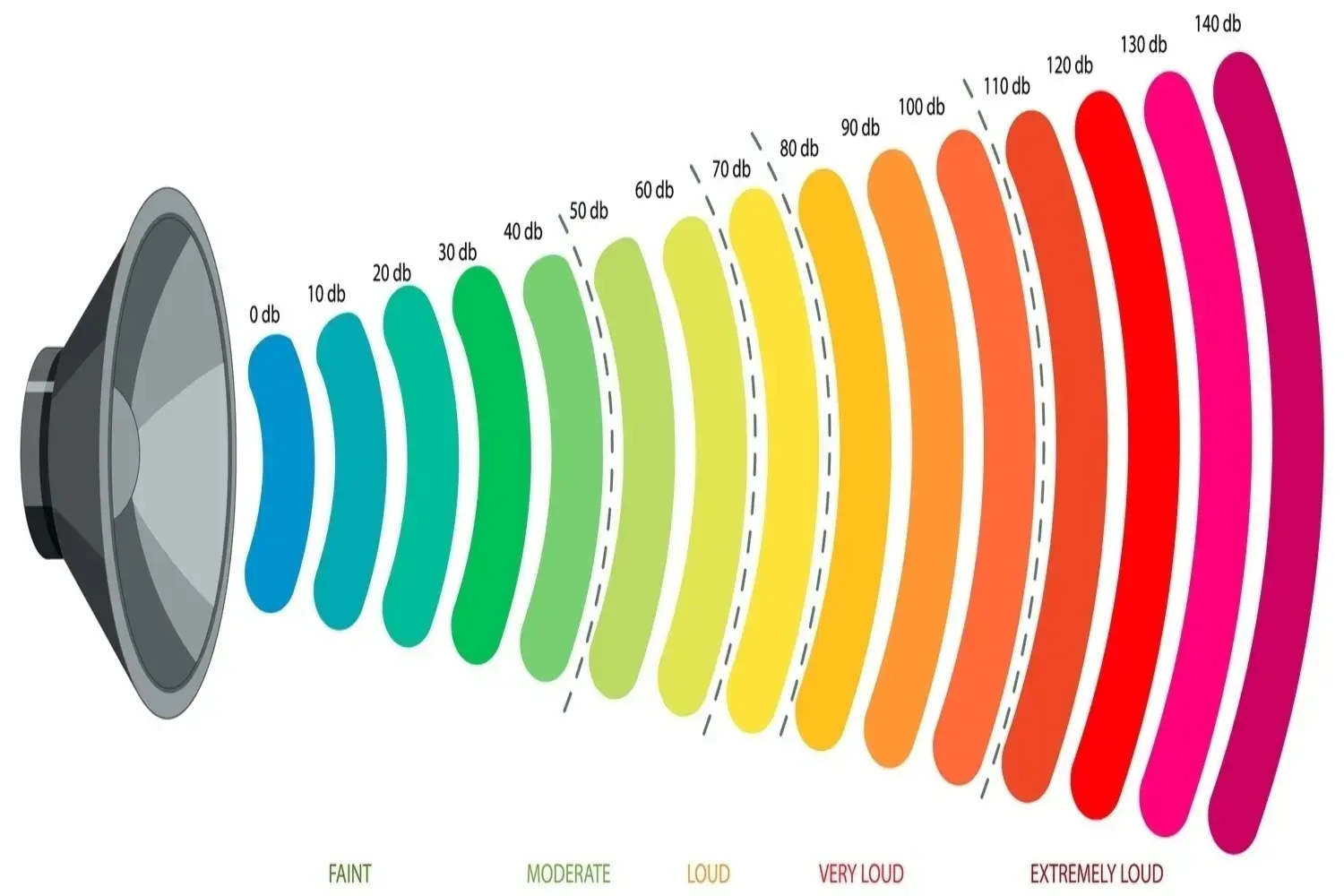
The scale is logarithmic: a reduction of, for example, 6–9 dB can be perceived as the sound being almost "halved."
That's why flexible noise barriers often have a wow effect right from day one – even if the numbers on paper look small.

And here's a real surprise: sound-absorbing industrial curtains can sometimes give better results than a solid wall – if they are placed smartly.
A fixed wall stops sound in one direction, but a curtain that forms a zone around the machine reduces the spread in several directions at once.
It's like putting a sound brake directly on the source, instead of chasing the sound when it has already spread throughout the room.

So next time you think, "We'll just have to live with the noise in industry," remember that often all it takes is the right screening in the right place to change the entire sound environment.
Sometimes it's as simple as stopping the sound before it has time to amplify in the room.

*Free shipping

Free shipping to agent

5-year warranty

5-year product warranty

Fast delivery

Usually ships the same day

Sound-absorbing industrial curtains – effective noise reduction for industry and workshops

High noise levels in industrial premises, workshops, and production halls are not only disruptive—they are also a workplace health and safety issue. Prolonged exposure to noise can lead to stress, difficulty concentrating, and hearing damage. Sound-absorbing industrial curtains are a flexible and effective solution for reducing noise directly at the source, whether it be machines, workstations, or larger spaces where traditional built walls are impractical.

How do sound-absorbing industrial curtains work?

Unlike ordinary curtains, sound-absorbing industrial curtains are constructed with multiple layers of sound-absorbing and sound-insulating materials. They dampen both airborne sound and reduce reverberation by absorbing sound waves. At the same time, they act as a physical barrier that prevents sound from spreading to other parts of the room. Industrial curtains can be hung on rail systems and moved or pulled aside as needed, providing great flexibility in environments where the layout changes frequently.

Typical uses for industrial curtains

Sound-absorbing industrial curtains are suitable for a variety of environments. In production halls, they can be used to shield noisy machines and create quieter zones for administration or assembly. In car repair shops, they can separate different work areas and reduce noise propagation between workstations. In the metal and wood industries, they can be used to enclose machines and reduce noise from grinding, cutting, and welding. They are also ideal for logistics centers, laundries, warehouses, and other large premises where acoustics need to be improved without building permanent walls.

Advantages of using sound-absorbing industrial curtains

A sound-absorbing industrial curtain is easy to install and can be customized in size and shape to suit the needs of the premises. Unlike permanent structures, it does not require building permits or major interventions. In addition, they can be combined with transparent window sections for increased light transmission and visual contact between departments. Many models are also flame-retardant and durable, making them suitable for harsh environments. The result is a quieter, safer, and more productive working environment.

Combine with other acoustic solutions for optimal effect

For best results, industrial curtains can be combined with other sound-absorbing products. By also installing acoustic panels on the ceiling or walls, and using floor mats or sound absorbers at workstations, you can create a comprehensive solution that significantly improves the acoustics in the room. SilentDirect offers a wide range of sound-absorbing and vibration-damping products that can be easily integrated with industrial curtains.

Flexible soundproofing for demanding environments

Sound-absorbing industrial curtains are a smart investment for companies that want to improve their working environment, reduce noise exposure, and increase productivity. Whether you want to create a noise-free zone around a machine or divide a larger room into smaller acoustic sections, these curtains offer an effective and cost-efficient solution. They are easy to customize, convenient to use, and powerful enough to make a noticeable difference in both noise levels and working comfort.